
Disclaimer: Some links in this post are affiliate links. If you book through them, we earn a small commission at no extra cost to you. See our Privacy Policy for details.
11 Best Things to Do in Lakshadweep: Itinerary Included
Lakshadweep is a beautiful tiny union territory, a group of 36 islands in the Arabian Sea, southwest of the Indian mainland, full of white sandy beaches and turquoise water.
When I spent a week in Lakshadweep in 2022, it truly was one of the least explored places in India.
It used to be a real hidden gem until 2023 when it made big news as people started saying, “The affordable alternative to the expensive Maldives.”
There are many things to do in Lakshadweep at very affordable prices.
With tourism emerging, people love to have a splendid vacation combined with an array of water sports, including scuba diving, kayaking, and snorkelling.
While these are the highlights, there are also some historical places to visit in Lakshadweep, which tourists often miss.
In this travel blog, I have listed 11 awesome things to do in Lakshadweep that include water sports, historical places, and ways to explore beyond the famous attractions of.
By the end of this post, you will be able to decide if you want to spend 4 days or a week in this island region. To make it easier, I have included a Lakshadweep itinerary at the end.
1. Watch your Agatti Runway from above.
Watching Agatti Airport runway from above is truly a magical experience. Unlike typical airports surrounded by cityscapes, Agatti’s 1291-meter runway has a pristine natural backdrop.
The lush green coconut groves and white sandy beaches frame the runway beautifully.
I have landed at over 30 airports across various cities in the world. Most flight journeys are boring except for Ladakh, where I was captivated by the bird’s eye view of the Himalayas.
But I haven’t seen anything like the Agatti runway!
When you are flying to Lakshadweep from Kochi, you will see a 120-meter wide black runway as you near Agatti.
It looks like it’s floating in the bright blue Arabian Sea, lined with green bushes and white sand, and wholly surrounded by bright turquoise water.

It’s a rare sight where nature and modern infrastructure blend perfectly!
As you get closer, the details become clearer. The coral reefs around Agatti Island look like intricate underwater gardens, and the sunlight filtering through the water makes them even more beautiful.
Well, you need to sit on the right side of the aircraft to witness the magic of Agatti runway. Mind you, those with aerophobia may find the landing scary, but it is one of the most beautiful sights of your life.
Capturing the Agatti runway frame is as tricky as getting a Lakshadweep travel permit. You may have to juggle with the window seat passengers.
2. Scuba Diving in Lakshadweep
Going to Lakshadweep and not scuba diving is a crime! The kaleidoscopic world underwater in Lakshadweep is completely disconnected from what happens on the surface.
Almost every Lakshadweep tour packages will have at least one scuba dive included in their itinerary – It is that beautiful and a must thing thing to do here.
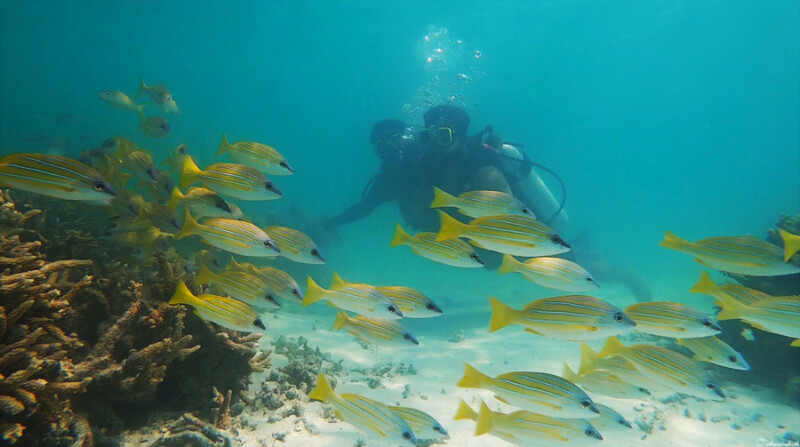
Is Lakshadweep good for scuba diving
Yes, Lakshadweep is excellent for scuba diving. Its abundant marine life, including turtles, 850 varieties of fish, and numerous corals, makes it an ideal scuba diving destination.
If you compare the marine life quantity and variety to the Red Sea, Lakshadweep is a baby. But it is still a lot for occasional scuba divers like me.
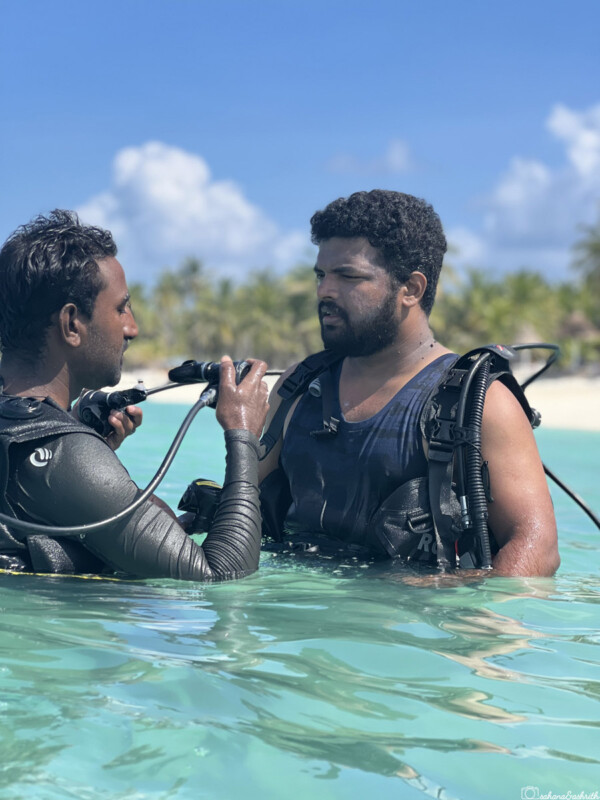
Best Diving sites in Lakshadweep
According to locals and our scuba diving instructor, the Wall of Wonder in Kavaratti, Agatti, and Bangaram islands are the best sites for scuba diving in Lakshadweep.
Diving costs range from Rs 2500 to 5000 for a 34 to 45-minute dive. Prices vary depending on the diving agency and location.
We chose Bangaram Dive Centre, where our instructor, Mukbil, and his team were fantastic, showing patience and teaching amateur divers like myself.
If you prefer to dive with a PADI-certified agency, a few are available in Lakshadweep, and you can book through them.
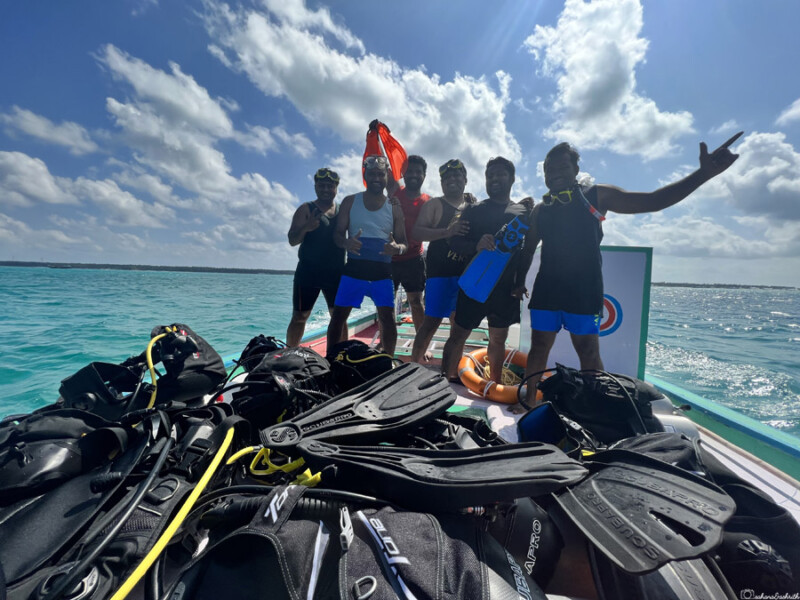
There will be forms where you need to fill in your details before diving, especially regarding health conditions.
Even non-swimmers can do scuba diving, but certain health conditions like asthma, epilepsy, and heart diseases can prevent you from diving – not just in Lakshadweep, but everywhere else too.
The instructors will decide if you are fit to dive based on your health conditions.
Before heading to deeper waters, you will have a training session in shallow water lasting at least 30 minutes.
Once the instructor feels you’re ready, they will take you to deeper waters.
In Agatti, we literally walked from shallow water to deeper areas for diving, as the marine life is very close to the shore. In contrast, for Kavaratti, we took a boat to reach the dive site.

I did three dives – two in Agatti and one in Kavaratti– and the experience was splendid.
The vibrant colours of the corals and the fish swimming around a sunken ship make you forget about the outside world.
Our diving instructor would dive deeper, snap his fingers gently, and a huge school of fish would come up to the surface.
Definitely, scuba diving is one of the finest things to do in Lakshadweep.
3. Go Snorkeling
Unable to go scuba diving during your Lakshadweep trip due to health issues? Don’t lose heart.
You can always go snorkeling in. Both scuba diving and snorkeling have their own charms, letting you enjoy the magical underwater world of corals, fish, and other sea creatures.
Scuba diving requires more equipment and training beforehand, while snorkeling is done on the surface in shallow waters. Snorkeling in Lakshadweep is a fantastic alternative.
Trust me, when you go island hopping in Lakshadweep, snorkeling becomes a ritual.

We enjoyed snorkeling so much that if we came back early to our Agatti resort, we would ask our boat to take us snorkeling in some point of island! We must have gone snorkeling four times in one week.
The equipment used includes a snorkel, diving mask, fins (optional), and a life jacket (optional).
It’s an easy and accessible way to explore the vibrant marine life without the need for extensive preparation. So, even if scuba diving isn’t an option for you, snorkeling is an adventure you shouldn’t miss.
Snorkeling prices in Lakshadweep start from Rs. 1000 per person for at least 30 minutes.
The charges vary depending on the duration, number of people, location, and guide requirements.
4. Kayaking in Kadmat island
Want to spend some relaxed time on the water other than swimming during your holiday in Lakshadweep? Go kayaking.
While kayaking, you can see various types of colourful fish and coral reefs in the crystal-clear, 2-meter deep waters.
There’s no need to worry about the risk of falling in and drowning – you can easily swim back, plus you’ll be given a life jacket!
Kayaking is one of the few activities in Lakshadweep that can be enjoyed by all age groups.
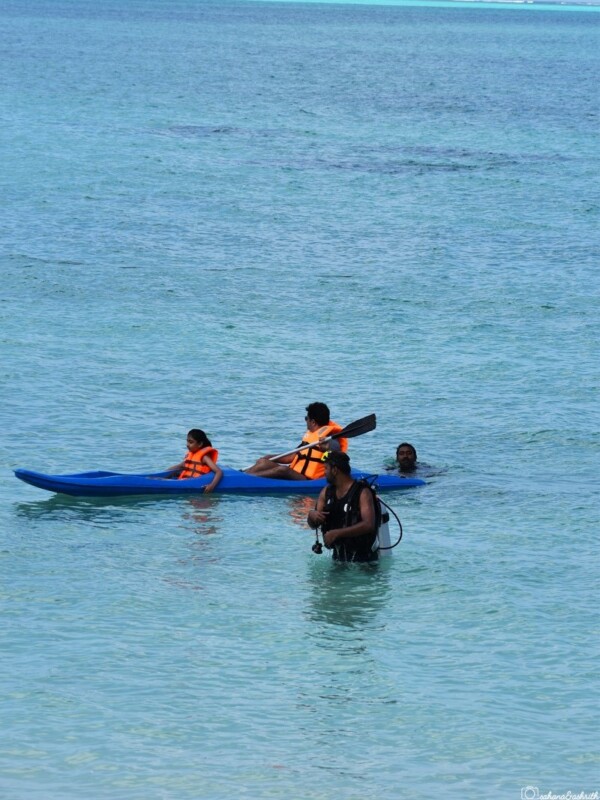
It was my second time kayaking, and I’m no pro, but it was easy. Just don’t go solo; club it with your buddy. Take it slow, don’t plan to go too far, and instead take shorter rounds. Enjoy the emerald waters of the Arabian Sea without tiring yourself out.
Another great thing about kayaking in Lakshadweep is that it’s affordable. It costs 800 to 1200 Rs per boat for a 30-minute ride!
While every island in Lakshadweep that tourists are allowed to visit has kayaking, Kadmat is best known for this activity.
Also known as Cardamom Island, it boasts a vast sea with a width of 1.5 kilometers and covers an area of 25 square kilometers.
The island is surrounded by underwater coral reefs and clean seagrasses, making it perfect for kayaking.
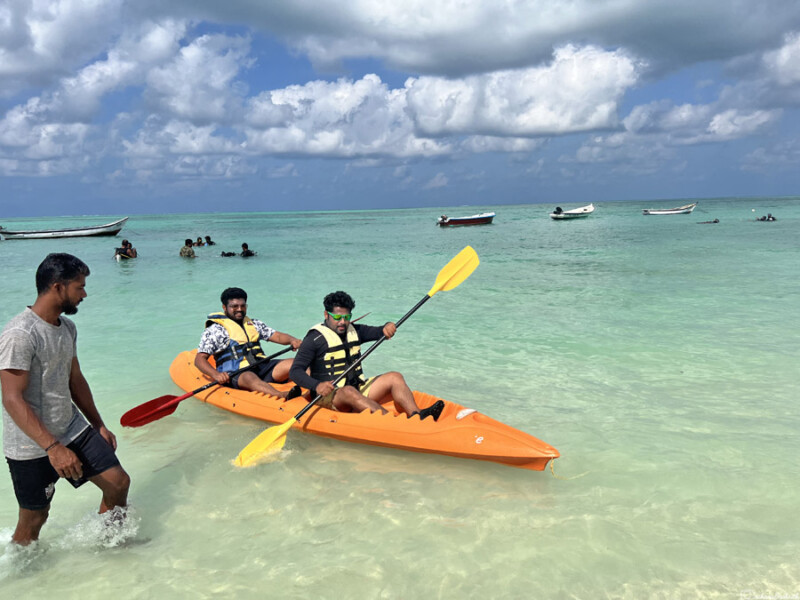
The next best island for kayaking is Bangaram island. The serene beauty and calm waters of Bangaram provide an excellent setting for a memorable kayaking experience.
5. Explore Urban Scenes of Kavaratti Island
Have been exploring the beaches and marine life of Lakshadweep and wonder what town life is like? Go to Kavaratti.
It is a 4 square kilometer and 6-kilometer long island and the capital of Lakshadweep. It is one of the most populated islands in Lakshadweep. It is the perfect mixture of natural beauty and cultural heritage with a small-town vibe.
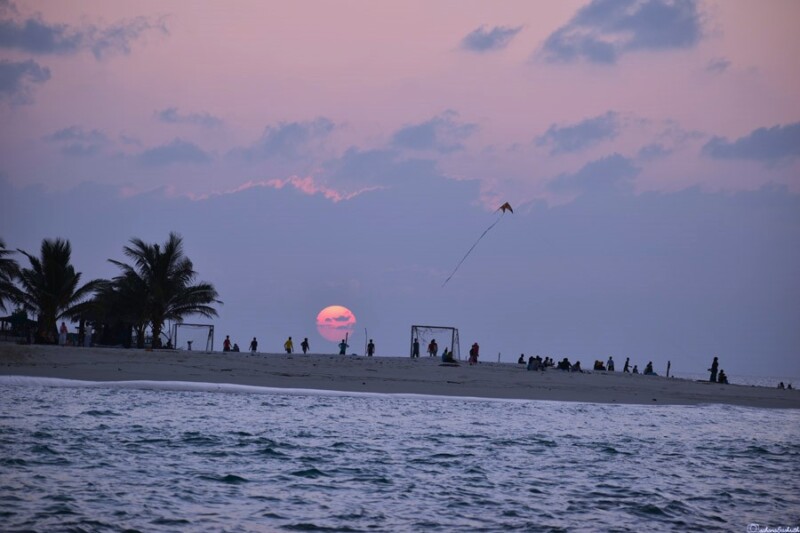
With Islam being the major religion of the region, Kavaratti has 52 mosques! One of the most beautiful and architecturally unique is Ujra Mosque, built in the 17th century.
I truly enjoyed visiting the Marine Aquarium and Museum. There are fossils and bones of strange-looking marine creatures that I never knew existed.
Probably, Kavaratti is the island with the highest number of restaurants! Most of them serve non-veg Kerala-style food.
With tourism in Lakshadweep booming, they also make some North Indian cuisines catering to tourists.
Royal Arabia Restaurant is one of the famous spots. They serve South Indian meals and good shawarmas.
6. Walk along Kalpitty Island beach
If you love walking on beaches with nothing but pure nature around, Kalpitti Island is your best bet. Like other islands of Lakshadweep, Kalpitti (also spelt as Kalpatti), has white sandy beaches and a blue ocean.
What makes it unique is that it is uninhabited, making it a prime spot for turtle nesting and bird watching.
When I visited Kalpitti Island in January, I didn’t see any turtles, but there were plenty of other marine arthropods like crabs!
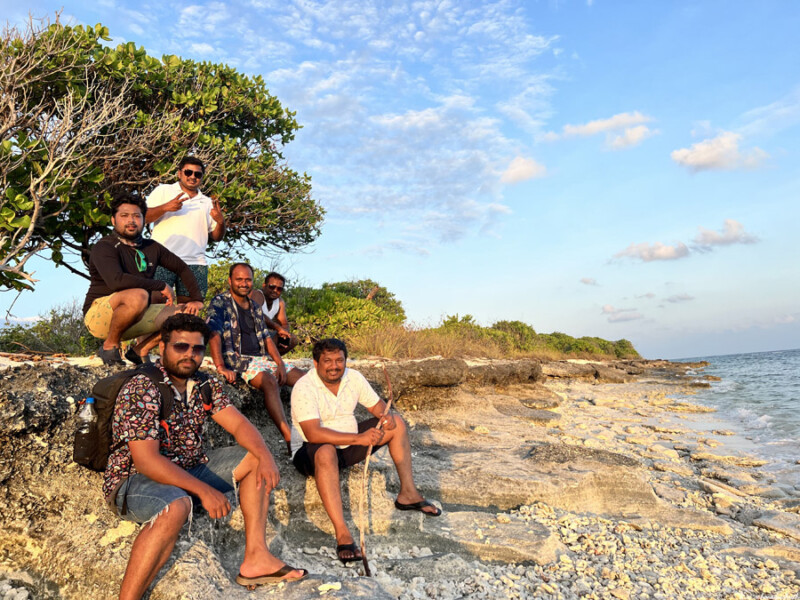
The shore is covered with soft white sand lined with green plants. At some spots , the rock formations and old coral deposits cover the sand.
So one of the unique things to do in Lakshadweep is to take a walk on Kalpitti Island before sunset and watch the sun go down behind a huge shipwreck.
Kalpitti Island is actually part of the Agatti Atoll, located at the southern tip of Agatti Island.
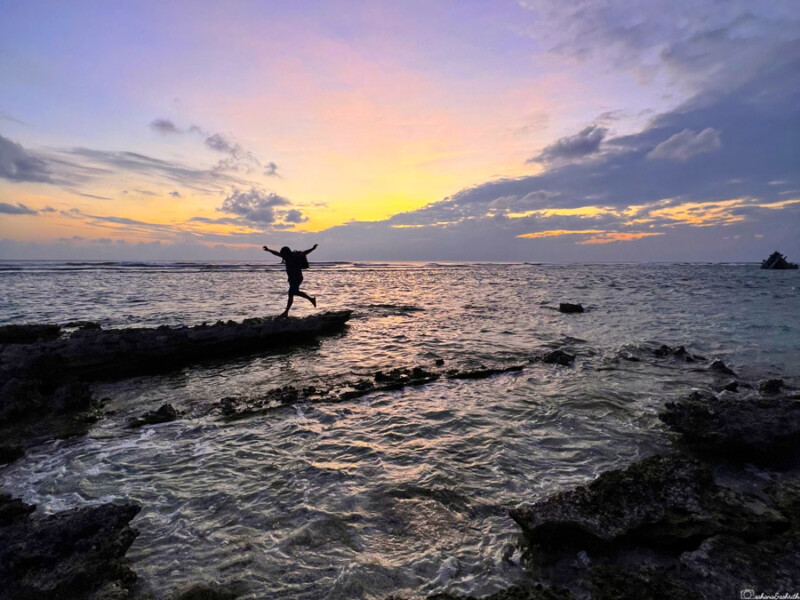
Our boatman told a surprising tale about Kalpitti. There were once plans to connect Kalpitti to Agatti to create a longer runway for larger aircraft. Thankfully, this idea was abandoned.
7. Explore Agatti Island
Agatti Island is where Lakshadweep Airport is located and is one of the best spots for scuba diving.
The land of Agatti is equally charming. It is not as populated and developed as Kavaratti.
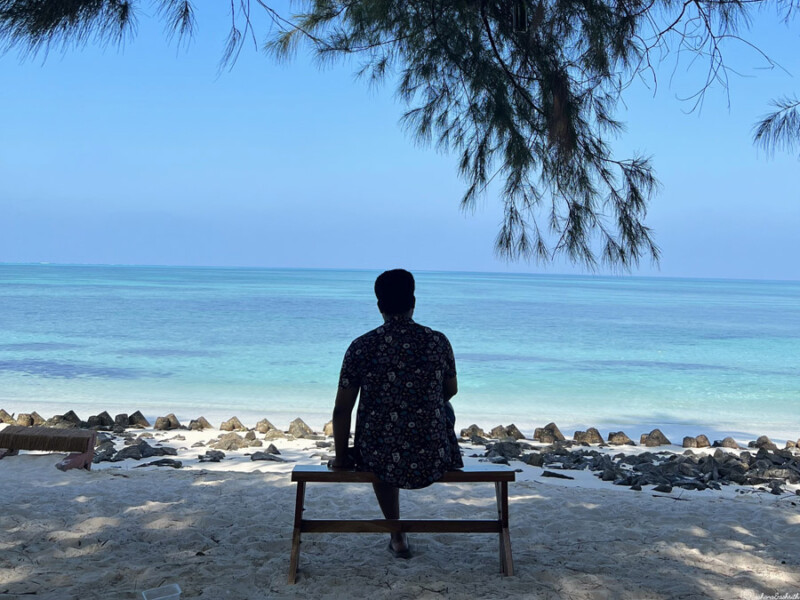
Imagine a small village on an island with small sloped-roof houses, schools, and mosques all surrounded by coconut groves. That’s Agatti for you.
Many private resorts are hidden in the coconut groves, and local houses pop up here and there.
The narrow road is always shaded with towering palm trees. So our stay in Agatti for a week felt like we lived with locals and not tourists.
In our opinion, Agatti is the best island in Lakshadweep to go biking around, meet local people, and chat.
Honestly, people here are super kind and love to share stories about their region.
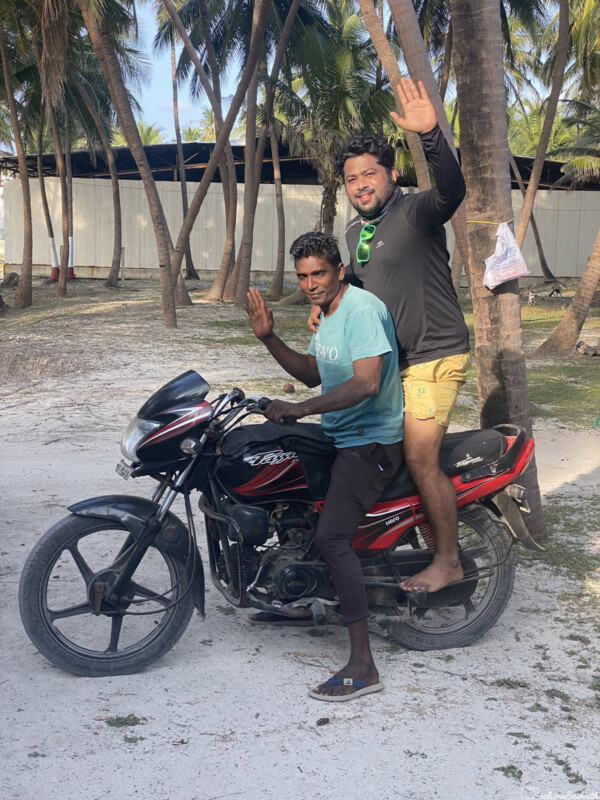
A Chaiwala who had a bunch of locals hanging around told us some fascinating facts about Lakshadweep, like how their came to know of Mahatma Gandhi’s assassination 14 days after it happened.
Two days later and stories of Muslim saints and Kochi kings.
I really wish they would introduce Curated heritage walks or Bicycle tours in Lakshadweep.
This would help visitors understand history of Lakshadweep, beyond its natural beauty
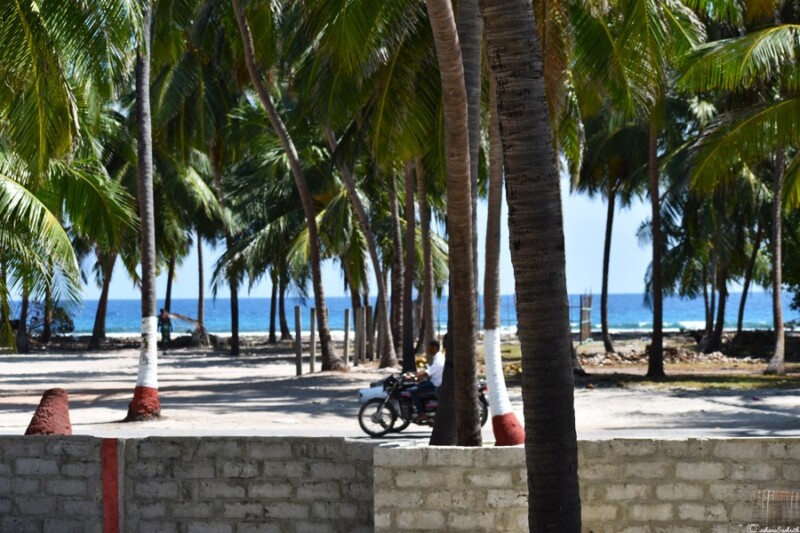
8. Enjoy Local Lakshadweep Food
Beyond its natural beauty, Lakshadweep has great culinary treats.
Being an island region, lakshadweep cuisine is heavily influenced by its coastal location, featuring seafood and rice as staple ingredients.

With coconut being a major crop of the region, Lakshadweep food uses plenty of coconut products – grated coconut, oil, and milk.
As a Mangalorean and a seafood lover, I can vouch that Lakshadweep folks know how to use coconut with seafood perfectly.
Evenings and mornings are always chai time. You can have plenty of sweet tender coconut water fresh from the farm anytime of the day.
What is the famous food of Lakshadweep?
Some of the most famous Lakshadweep you must try are
- Mus Kavaab (boneless fish with coconut and spices)
- Maas Podichath (dried tuna with coconut, similar to Sri Lankan Sambol)
- Kallummakaya Curry (mussels with coconut milk)
- Kakka Irachi Ularthiyathu (octopus stir-fry)

Another speciality of Lakshadweep local food is its spiciness, as it uses a lot of local spices and chillies. Typical breakfast options are similar to those of Kerala, including Appam (fermented rice pancakes), Puttu (steamed rice cakes with coconut), and Idiyappam (string hoppers with coconut milk).
The local desserts we tried were Kadalakka (cake with chana dal, eggs, cashews, and almonds), Mutta Mala (sweet dish with eggs and coconut milk), and Kinnathappam (sweet rice delicacy with coconut milk and jaggery).
Tips for Finding the Best local food in Lakshadweep
To truly taste authentic Lakshadweep food, you must specify to your accommodation host that you want only local food.
Otherwise, you might be served generic dishes like paratha and butter chicken.
Most resorts and restaurants in Lakshadweep serve “made for tourists” food.
Although international cuisines (like muesli or bacon for breakfast) are unavailable, they tend to offer North Indian dishes like dal chawal, aloo paratha, or Indian versions of Chinese food like fried rice.
These don’t always taste great. You’d love to eat parathas in Varanasi and try butter chicken in Delhi, but not in Lakshadweep, right?
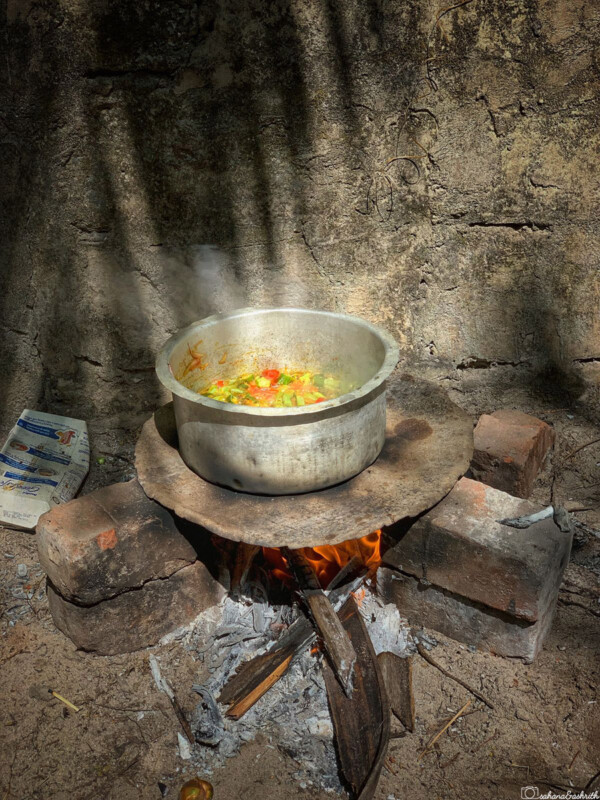
On our first day at Agatti Resort, this happened to us – we were served an overly spicy, garam masala-infused chicken curry with rubbery parathas for dinner.
They tried their best to make North Indian food instead of Local Lakshadweep food. It was bad.
Then, we asked the resort caretaker if they eat this every day.
Once he told us they eat a different kind of food and his favourite dish is Kakka Irachi Ularthiyathu (octopus stir-fry), we said we wanted the food they eat!
The next morning, we were served delicious appam with kadala curry.
There was no looking back in terms of the delicious food we got – local and fresh.
9. Visit Coconut Coir Fibre Workshops
Coconut in Lakshadweep isn’t just meant for drinking and eating; it is their main livelihood.
While many parts of India where coconut is grown use its coir and shell for various purposes, the locals here skillfully transform these materials into a wide range of products, showcasing their craftsmanship and creativity.
So exploring the coir industry is one of the interesting things to do in Lakshadweep.
Even the Portuguese, who conquered Kochi in 1490, came to loot Lakshadweep for its coir. So, Lakshadweep coir is pretty famous in India.
The coir industry in Lakshadweep is big on islands like Kavaratti, Amini, and Kalpeni.
These places are well-known for using coconut shells and coir, which boosts their local economies.
The Coir Board of India shop in Kavaratti is a must-visit for its range of coconut shell products, from useful cutlery (which I bought as a souvenir) and bowls to cute animal figurines.
10. Spend time at Bangaram Lake
Bangaram Island is known for its crystal-clear turquoise waters and white sandy beaches.
Most visitors who travel to this island are unaware of a hidden gem: a lake on one of the uninhabited islands Bangaram.
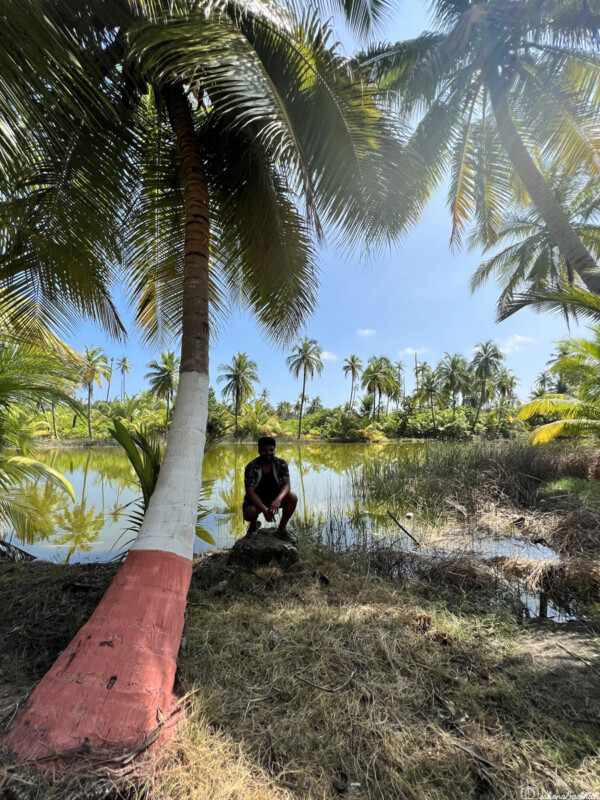
If you walk 200 meters from Bangaram Resort through the coconut grove, you’ll arrive at a pickle-green coloured narrow lake. It is surrounded by coconut farms, and nothing here is polished – it’s in the true lap of nature! Apart from locals who come to pick coconuts, you’ll find solitude here.
So, if you want to spend some time away from the beach, under the trees, or have a quiet picnic, Bangaram Lake is the place to be.
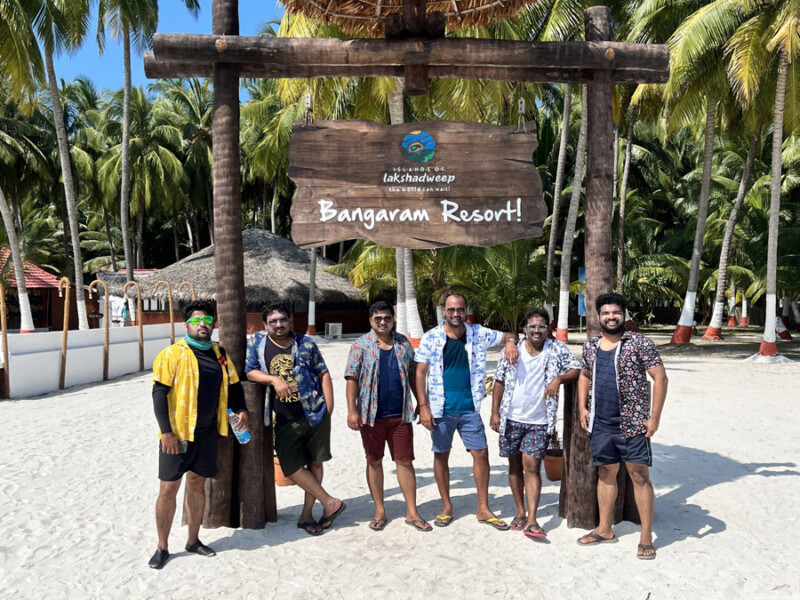
11 .Go fishing with Local Fishermen
Almost every tourist will take private boats to go island hopping in Lakshadweep – it’s kind of an obvious choice. But on one of the days, do something different.
Ask your organiser if you can go on a fishermen’s boat. It may not be from island to island, but just to a fishing site nearby the island where you stay!
To ensure sustainable practices and prevent illegal fishing, the government has regulations in place.
This means you can’t fish at every island and reef.
Key fishing islands in Lakshadweep are Kavaratti, Amini, and Kalpeni.
Our boatman, Syed, mentioned that each community or group of fishermen has its own designated fishing site, like an unspoken rule.
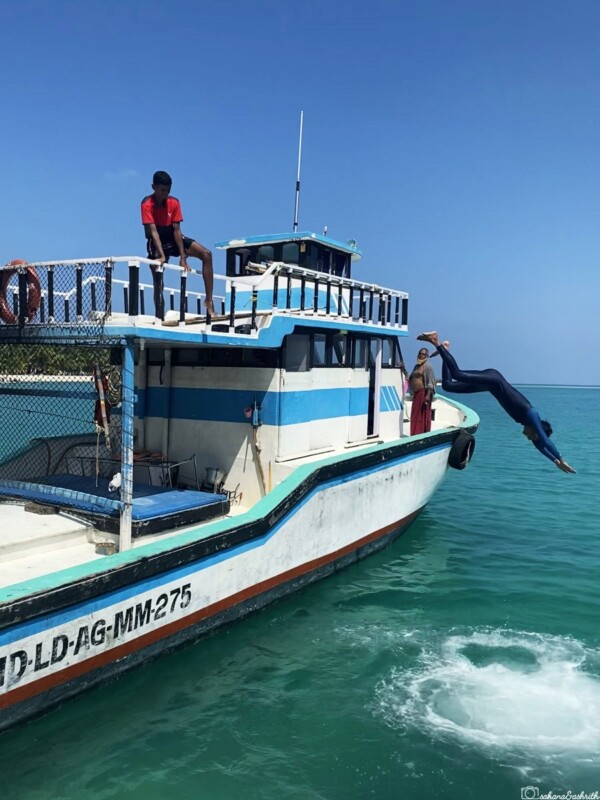
There are many things I loved about going on a boat with Lakshadweep fishermen. Their boats are unique!
The boats even have a toilet?a toilet with no door where you can poop with a view (they have septic tanks at the bottom, so the waste doesn’t go into the ocean).
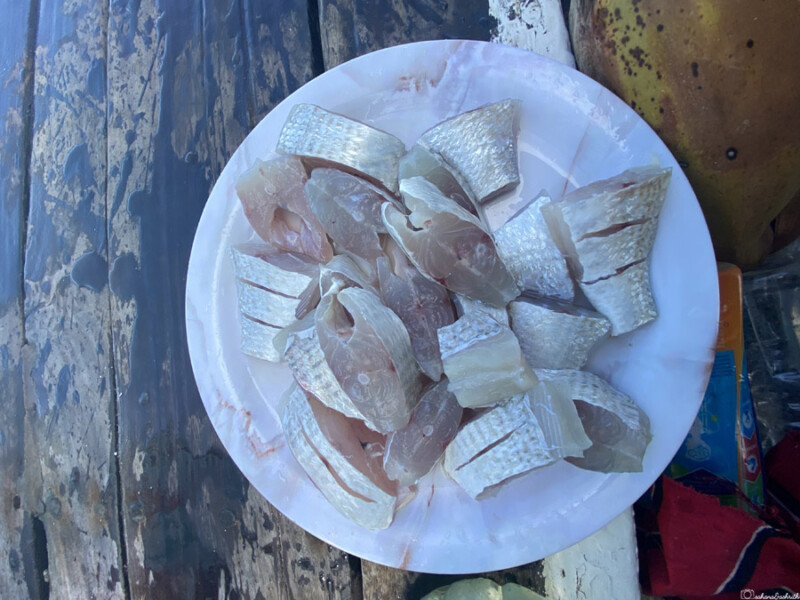
They even cook on the boats with the freshly caught fish. So one of the unique things to do in Lakshadweep is to devour the fish curry they make on these boats.
It was the best food I had in Lakshadweep. These boats even have a toilet?a toilet with no door where you can poop with a view (they have septic tanks at the bottom, so the waste doesn’t go into the ocean).
The fish curry I had on these boats was the best food I had in Lakshadweep.
You also get to learn a lot and hear many stories from the fishermen, from historical facts to ghostly encounters. It’s fascinating!
Additionally, you get to see pole-and-line fishing techniques, where they catch one fish at a time. This fishery is the only one in India (Maldives uses a similar technique) that still catches tuna this way.
A flexible yet strong pole is attached to a string with a fish-shaped lure tied to it. Small dried fish are used as bait, and fishermen throw the string into the water. After a while, the bait is caught, especially tuna.
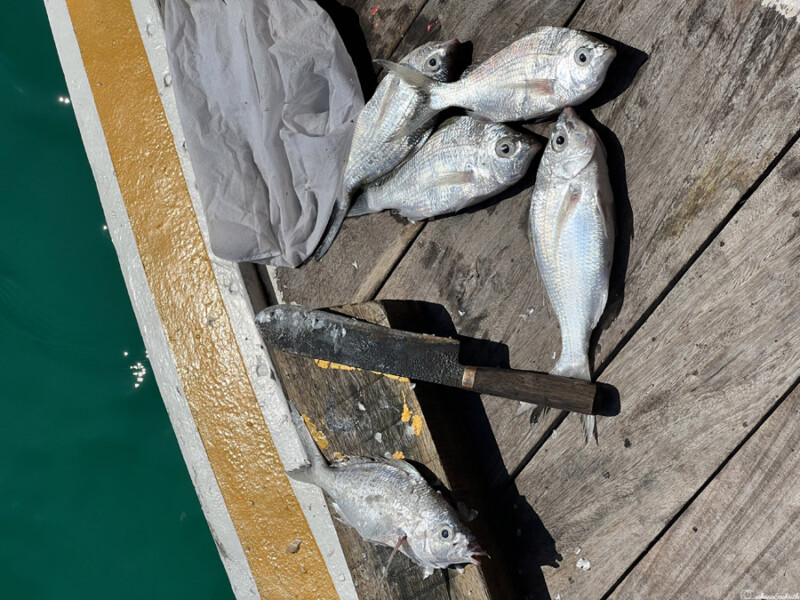
We tried our hands at fishing but only caught small silver fish. To catch tuna, you need to go to particular bays early in the morning.
Nevertheless, our fishermen cooked delicious fish curry with what they caught on the boat.
Lakshadweep Travel Itinerary
4 Days Lakshadweep Itinerary
Day 1: Arrive at Kochi, take a flight to Agatti in Lakshadweep. Walk around the village, enjoy the white sandy beaches in Agatti.
Day 2: Take a private boat from Agatti to Bangaram (30 minutes by speedboat), Spend the day at Bangaram by snorkelling and kayaking, picnicking at Bangaram Lake, and trying local delicacies made on a woodfire. Back to Agatti
Scuba dive, and visit Kalpitty Island beach by late afternoon to explore rocky and dried coral-filled beaches. Head back to Bangaram.
Day 3: Go Scuba diving in Agatti, and visit Kalpitty Island beach by late afternoon to explore rocky and dried coral-filled beaches. Head back to Agatti.
Day 4: Spend morning at Agatti beach. Catch a flight back to Kochi, and then home.
5 Days Lakshadweep Itinerary
Follow the 4-day Lakshadweep itinerary until Day 3.
Day 4: Take a private boat ride from Agatti to Kavaratti Island (2.5 hours). Go scuba diving or snorkeling, relax at the beach.
Post-lunch, go kayaking, visit the Ujra Mosque, Marine Aquarium, and Museum. Leave Kavaratti before sunset and watch the gorgeous sunset of Kavaratti by boat on the way to Agatti.
Day 5: Spend morning at Agatti beach. Catch a flight back to Kochi, and then home.
7 Days Lakshadweep Itinerary
Follow the 5-day Lakshadweep itinerary until Day 4.
Day 5: Go on a boat ride with fishermen in the morning, spending the evening at Agatti Island beach.
Day 6: Head to Kadmat Island by private boat from Agatti (2 to 3 hr), go kayaking. Spend the day at Kadamt.
Day 7: Spend morning at Agatti beach. Catch a flight back to Kochi, and then home.
FAQ
Do Indians need visa for Lakshadweep?
Indians don’t need a visa to visit Lakshadweep. However, every Indian must obtain a travel permit before arriving, which can be acquired through the government e-portal or a local travel agent in Lakshadweep
Does Indian SIM work in Lakshadweep?
Indian SIMs with BSNL work better in Lakshadweep. While Airtel claims to have network coverage, it works poorly.
Which month is best for Lakshadweep?
October to March is the best time to visit Lakshadweep, with average temperatures ranging between 27-32 degrees Celsius. This period offers better underwater visibility, making it ideal for scuba diving.
Is Lakshadweep like Maldives?
Maldives and Lakshadweep share common geographical features like white sand and blue beaches. However, Maldives has a culture distinct from India’s Lakshadweep. Maldives is famous for its luxury resorts, making it a more expensive holiday destination, while Lakshadweep is more affordable.
Why tourism is less in Lakshadweep?
Due to its remote location, 400 km from India’s mainland, limited connectivity, and the extra travel permit required, tourism in Lakshadweep is less developed.
Found ot list of awesome things to do in Lakshadweep interesting? Let us know in the comment section below.


