
Disclaimer: Some links in this post are affiliate links. If you book through them, we earn a small commission at no extra cost to you. See our Privacy Policy for details.
17 Interesting Facts about Lakshadweep Travellers Must Know
Lakshadweep, the smallest union territory of India, is located in the Arabian Sea off the southwestern coast of India. This beautiful island group is renowned for its pristine blue waters, white sandy beaches, coral reefs, and vibrant marine life.
Many Indians travel to Lakshadweep to experience this serene nature. But only a few know the super interesting facts about Lakshadweep and it’s unique history.
Like every other tourist, I thought of Lakshadweep as just beaches and knew nothing about its historical facts until I spent a week there.
However, as I interacted with the locals of the beautiful Agatti Island and read more, I was shocked to learn how a tiny island region can have such jaw-dropping stories behind it.
So here are some interesting facts and history about Lakshadweep that can inspire you to travel there and make your holiday even more meaningful.
Table of Contents
1. Why is Lakshadweep called island?
Lakshadweep is called an island group because it comprises 36 islands in the southwest of India.
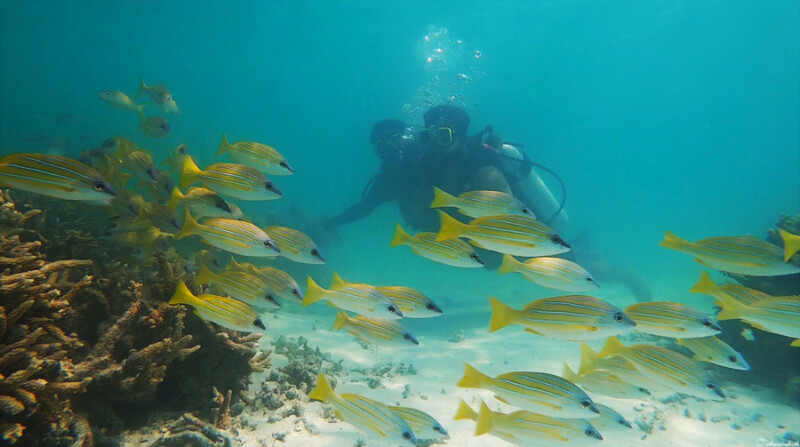
Less than 1% of Lakshadweep is land mass; the rest is turquoise water lined with snow-white sand, hiding rich marine life and vibrant coral reefs. That is why Lakshadweep is one of the popular scuba diving destinations in India.
2. What was Lakshadweep called before?
The name ‘Lakshadweep’ means ‘a hundred thousand islands,’ derived from ‘Laksha’ (million) and ‘Dweep’ (island). While there are no million islands, these 36 islands cover 32 square miles, with only ten inhabited.
Even today, many constitutional acts of India formed during British rule refer to Lakshadweep as Laccadive. An example is the Laccadive Islands and Minicoy Regulation, 1912.
3. What is the story of Lakshadweep?
First humans to set foot on Lakshadweep?
Locals believe that King Perumal from the Chera dynasty converted to Islam and left for Mecca in 600+ AD from his Malabar empire. So, a set of Hindu sailors came searching for him later when he didn’t return. Their ship got wrecked in a fierce storm near Lakshadweep, and they landed in Bangaram island. Once the weather was fine, they went back to Malabar, observing other islands in Lakshadweep on their way back home. A few months later they came back from the Malabar to settle in Amini island forever.
Muslim saint from Mecca brought Island to Lakshadwep
They say a Muslim saint had a dream where Prophet came in his dream asking him to spread Islam across the world. The saint left Jeddah and ended up in Lakshadweep. Initially, the Hindu inhabitants were reluctant to listen to his speeches and sent him away.
A girl from the island fell in love with the saint, and they both tried to leave the island. This offended the headman, and they wanted to get the saint killed. At this moment saint called the god for help, islanders turned blind.
When the saint and his wife left the island, all citizens got their vision back. He left to another island performing such miracles and spreading Islam all across.
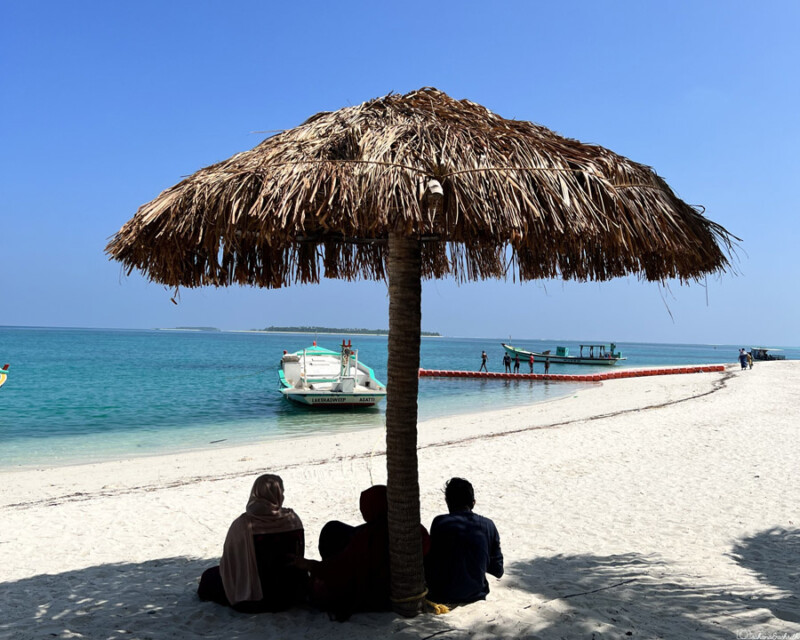
After several incidents, Lakshadweep people believed in him and accepted Islam as their religion. His grave today is a sacred place at Andrott island. So you see Islamic culture mixed with Hindu traditions in Lakshadweep.
The Portuguese & British invasion
The Portuguese came to Kochi to colonise in the 1490s, and residents chased them away. Having Goa in their hands, they made Lakshadweep the seafarers’ centre and looted finely spun coconut coir. Luckily islanders cleverly chased them away after a while.

Karnataka’s Tipu Sultan ruled Lakshadweep for a while
Life went on, Malabar royal houses ruling Lakshadweep changed, and the Arakkal family took care of Lakshadweep. They say that the rulers were oppressive, which made local islanders approach Tipu Sultan in Mangalore(my hometown) of Karnataka. Tipu was the ruler of Sri Rangapatna near Mysore in Karnataka because he was a good friend of the Arakkal family at that time.
After Tipu talked to the queen of Arakkal, some parts of Lakshadweep was handed over to him!
So Tipu ruled Lakshadweep. After he died in the 1790s in a battle with the British, five islands under him fell to the hands of the British. So you may find some Kannada speaking citizens in Lakshadweep, they say, but we never met one.
Lakshadweep was sold to British
One of the rarely known facts about Lakshadweep is that it was sold to the British by an Indian king!
A king from the Arakkal family who was ruling Lakshadweep came to the island with a British officer in 1905.
Seeing so many challenges in that isolated land, the king borrowed money from British officers to provide basic facilities for the islanders.
4 years later, unable to repay the loan, he sold the island to the British in 1908. Lakshadweep remained under Brtisih rule until India gained independence in 1947.
Pakistan was about to occupy Lakshadweep
After 1947, when independent India was figuring out things as an individual country, geographically isolated Lakshadweep was eyed by Pakistan. Though the physical distance between Pakistan and India is tremendous and sounds illogical for Pakistan to occupy Lakshadwep, Sardar Patel (Home minister then) understood the situation and took immediate action.
Mudaliyar brothers from Malabar left to Lakshadweep on Sardar Patel’s command with battalion available and hardly any weapons to hoist our flag on the island. After hoisting the flag, they saw a ship with a Pakistan flag sailing towards Lakshadweep to take over Lakshadweep! This is literally like a hairline finish!
4. Lakshadweep is away from India’s Mainland
Lakshadweep is isolated from mainland India, with Kochi about 404 km away from its capital, Kavaratti. This isolation led to some unique historical anecdotes.
For example, due to poor communication -people in Lakshadweep only came to know of Mahatma Gandhi’s assassination 14 days after it happened. A chai seller told me this story in Agatti. I did cross verify to see if this is just a story of fact. Indeed there are historians who state that it really happened.

Connectivity has greatly improved in Lakshadweep since 1947. Mobile networks are now available, keeping island residents up to date with current affairs. However, only BSNL works perfectly, while Airtel’s network is weak. I struggled with my Airtel SIM during my Lakshadweep trip.
5. Everyone including Indians need special permit to visit Lakshadweep
Everyone, including Indians, needs a special permit to visit Lakshadweep to protect its fragile ecosystem and preserve the indigenous culture.
The permit system helps control tourism and prevents environmental degradation, ensuring the sustainability of the islands’ natural resources and the well-being of the local community.
Getting travel permits for Lakshadweep isn’t rocket science, but it can be a bit tricky.
Many Indians assume they need a visa or an Indian passport to get the permit for Lakshadweep, which isn’t the case. You don’t need a visa, just a special permit. This permit can be obtained using your Aadhaar card, driver’s license, or voter ID.
You can’t just book a flight for an instant holiday; you need to plan in advance. This requirement often leads many Indians to drop the idea of holidaying in Lakshadweep.
6. Lakshadweep is important to India
Lakshadweep is important to India for several reasons. Its strategic location near international shipping routes and coastal Karnataka makes it ideal for trade and cargo logistics, as well as monitoring the Arabian Sea.
The Indian Navy also has two bases in Lakshadweep, enhancing its strategic significance.
The islands’ Exclusive Economic Zone (EEZ) holds natural resources that can boost the economy.
Additionally, Lakshadweep’s beautiful beaches, clear blue waters, and exotic islands make it a popular tourist destination.
7. Language spoken in Lakshadweep
The main language spoken in Lakshadweep is officially considered a dialect of Malayalam but sounds more like Tamil. Only a small part of the population speaks Kannada. On Minicoy Island, located over 300 km from Agatti, the primary language is Mahl, which is also spoken in the Maldives.
With tourism developing in Lakshadweep, signboards are in English, and the islanders speak some Hindi and English.
8. Lakshadweep Festivals
The traditional festival of Lakshadweep is the “Minicoy Festival,” held every December on Minicoy Island. It features the “Jahadhoni” boat race, similar to Kerala’s boat races.
However, it isn’t as popular due to Minicoy’s remote location?there’s no airport, and it takes about 8 hours to travel from Agatti. The colourful snake boats race in the ocean’s bright blue waters, making it a unique and vibrant event.
Being a Muslim-majority region, Lakshadweep also celebrates Islamic festivals like Muharram, Eid-ul-Fitr, and Bakrid.
9.Buying land in Lakshadweep?
Only residents of Lakshadweep can own land in the islands, meaning non Lakshadweep residents can’t buy property here. This restriction aims to protect the local community and environment. The population mainly comprises indigenous people classified as Scheduled Tribes.
Unlike Goa, where many Indian billionaires and film stars have holiday homes, such properties are not found in Lakshadweep.
This is why large hotel groups are absent in Lakshadweep.
Staying on any Lakshadweep islands has a very local touch. The resorts and guesthouses, run by locals, provide basic amenities, including air-conditioned and well-maintained rooms?no extravagance. Due to this local management, international cuisines are almost absent in Lakshadweep.
However, recent developments suggest that these hotel chains might have the possibility of opening resorts in Lakshadweep. We still have to wait and see. Despite this, buying land for non-islanders remains restricted and is almost impossible.
10. Coconut is the only thing they grow
Except for coconut, almost nothing is grown in Lakshadweep.
Everything else related to food. groceries and spices is shipped to the islands from mainland India almost every day. There have been efforts to develop vegetable cultivation, which is taking baby steps.

11. Electricity in Lakshadweep
Being away from the mainland, with no geographical features like waterfalls or streams to produce electricity, Lakshadweep relies entirely on Diesel Generator (DG) sets and partly on grid-interactive Solar Photovoltaic (SPV) power plants for electricity.
Along with groceries, diesel is imported to the islands almost daily.
12. There is Plenty of Tuna fish in Lakshadweep
One of the fascinating facts about Lakshadweep is that the sea here has plenty of tuna fish. It is estimated that the islands can harvest up to 100,000 tonnes annually.
Lakshadweep tuna is highly valued in the global market due to its low histamine content and premium quality.
The islands’ fishery uses a combination of traditional pole-and-line fishing techniques and modern technology, making it the only fishery in India that still catches tuna in this way.
It is really fun to go on a trip with fishermen on their boats to see how they use pole-and-line fishery like we did.
I wondered if the people of Lakshadweep make anything similar to Japanese sushi with tuna. However, their way of using tuna is different. Islanders have developed a way to preserve tuna by making “Masmin” that involves cooking, smoking, and sun-drying the tuna.
13. Is Maldives and Lakshadweep similar?
Lakshadweep is often promoted as an affordable alternative to the Maldives because both feature white sand beaches, turquoise waters, and great marine life. However, the Maldives is much larger, with a total land area of 298 square kilometers compared to Lakshadweep’s 32 square kilometers.

Despite a few similarities, such as Mahl being a common language in Minicoy and the Maldives and both places using pole-and-line fishing to catch tuna, they are culturally and historically different. The Maldives, as a nation, is much bigger than the Union Territory of India, Lakshadweep.
14. Shipwrecks are part of Lakshadweep
Since the 1400s, when colonisers sought to loot Lakshadweep, boats, ships, and cargo vessels have passed through this area. Now, with the sea being the major connection between mainland India and these islands, plenty of ships, both cargo and passenger, sail through here.

However, not all sea trips end well, and many vessels have met their fate on the treacherous reefs and shallow waters around the islands. Their remains often wash up on the shores of Lakshadweep and become part of the shore silhouette.
Weirdly, these shipwrecks add beauty to the landscape of Lakshadweep. Don’t call me a sadist, but seeing these shipwrecks, like the ones in Bangaram and Kavaratti, really excites me.
There are many such sunken or broken vessels all over Lakshadweep. Apparently, the wreck of the Princess Royal, which sank in 1808 near Minicoy Island, is especially beautiful.
15. Alcohol is banned in Lakshadweep
Being a Muslim-dominated region, the sale of alcohol was banned in Lakshadweep in 1979 following a community demand to preserve their culture. However, on Bangaram Island, an uninhabited island where a resort was built, there is a well-stocked bar. Therefore, you can only drink alcohol on Bangaram Island.
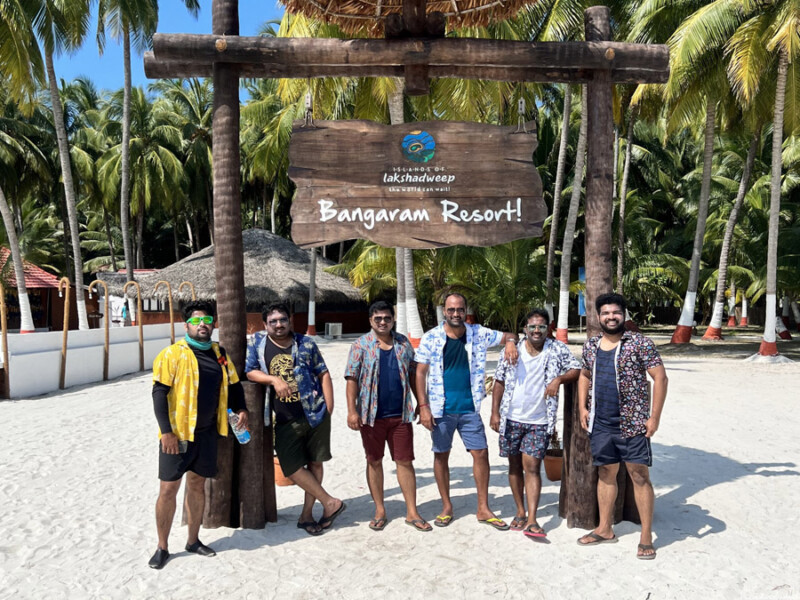
Although the administration attempted to revoke the ban in 2021, public protests ensured that the ban remains in place.
For some reason, many online blog posts on Lakshadweep promote Bangaram Island as a party place. Honestly, other than getting beer and whiskey, nothing else happens here. Bangaram is a beautiful island, but it is not a party place at all.

16. The Short Agatti Runway
Among the many unique facts about Lakshadweep, the Agatti runway stands out. It is the only airport providing air connectivity to the island from the rest of the world. However, the catch is that the Agatti runway is just 12 meters wide and 1291 meters long, making it one of the shortest runways in India.

When you fly from Kochi to Lakshadweep, you’ll see the narrow runway surrounded by the blue Arabian Sea and coconut trees. I call Agatti Airport the “Floating Airport” because it really feels like that when you see it from above.
17. Is Tourism going to ruin Lakshadweep?
If the government continues to regulate tourist influx by keeping the same travel permit restrictions and maintaining the alcohol ban, tourism won’t ruin the beautiful Lakshadweep islands.
The moment they waive off travel permits and allow alcohol, the serenity of the place is at risk. Many forums discuss easing travel to Lakshadweep, but I believe they shouldn’t.
Most people travel to places like Goa because it’s easy to travel and there is alcohol.
We should keep in mind that the percentage of responsible tourists who think of eco-sensitivity and respect a place’s culture is very low. Responsible tourists are actually a minority.
And locals try their best to do everything for their guests in Lakshadweep. Sometimes, due to bad weather or a technical issue with the boat, your boat rides may be delayed by 15 minutes. Lakshadweep is a remote place. Not everything will be available 24/7.

Our Agatti Resort host mentioned that some tourists in Lakshadweep are so demanding that they can’t bear even a minute’s delay. Some guests get angry for not being served jalebi or dosa for breakfast. If travelling to Lakshadweep becomes easier, it will invite all kinds of travellers.
I was watching the series “Crown” recently for the second time. The queen’s mother (actress Victoria Hamilton) says that she is going to stay at a particular place in Scotland.
The queen acclaims that it is “an end of the world” spot and asks the mother if she is sure of going. When the queen mother lands in that place where the sea meets mountains, she replies to her host greets, “Finally you made it.”
She replies “If it were easy, everyone would have come.”
That sentence reminded me of Lakshadweep solely. In the name of travelling and tourism, we humans invade every place. I realised why a few true travellers talk about off beaten destinations to spread the travel crowd everywhere instead of overloading a place. Everyone deserves to travel for whatsoever reason.
But making it easy is to boost the economy is the most dangerous step in losing mother earth. Thankfully, getting to Lakshadweep is not as easy as getting to Maldives or Bangkok. So mass tourism hasn’t advanced to Lakshadweep yet. If the strict rules continue, Lakshadweep remains as it is.


