
Disclaimer: Some links in this post are affiliate links. If you book through them, we earn a small commission at no extra cost to you. See our Privacy Policy for details.
Spirited Away Vibes: Is Kiyosu Castle Near Nagoya Worth It?
Anime is deeply woven into Japanese culture, and its influence has spread worldwide. For Ghibli fans like us, visiting real-life anime locations was a dream come true on our first trip to Japan.
Our love for Spirited Away started with it being our first Ghibli film. Like many fans, we longed to see all the Spirited Away locations.
But with Japan’s endless attractions, narrowing down the options was overwhelming—especially since many of these anime locations are scattered across the country.
Luckily, one charming gem stood out—Kiyosu Castle, near Nagoya. Not only is it a historical landmark, but it’s also tied to the magical world of Ghibli.
In this post, I’ll share if Kiyosu Castle is worth visiting, how closely it resembles the Spirited Away bathhouse, practical tips to get there, entrance fees, and everything you need to know to plan a half-day trip.

Why is Kiyosu Castle Compared to the Spirited Away Bathhouse?
The bathhouse in Spirited Away is famously based on Dogo Onsen near Matsuyama, about a 3-hour drive from Hiroshima.
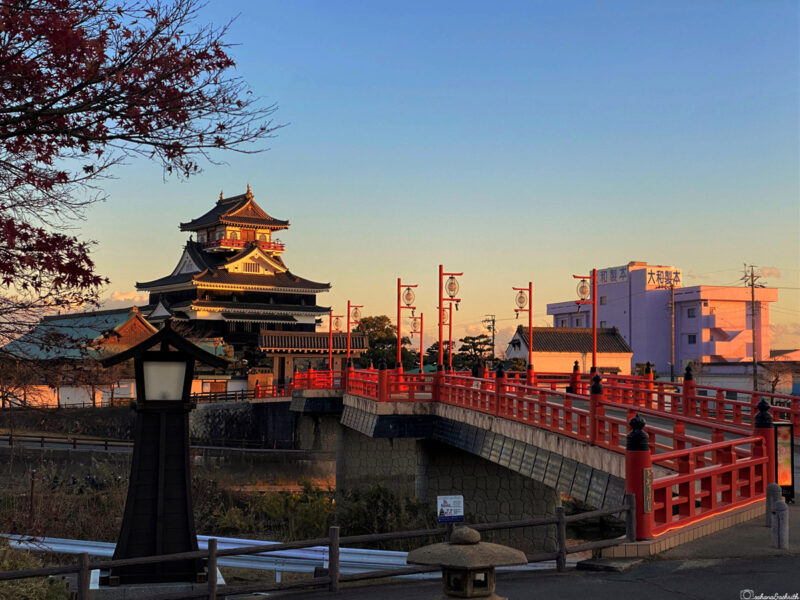
But Kiyosu Castle, located just 6 km from Nagoya, carries its own mystical charm, especially with its red-turreted Otebashi Bridge and layered roofs that evoke Spirited Away vibes.
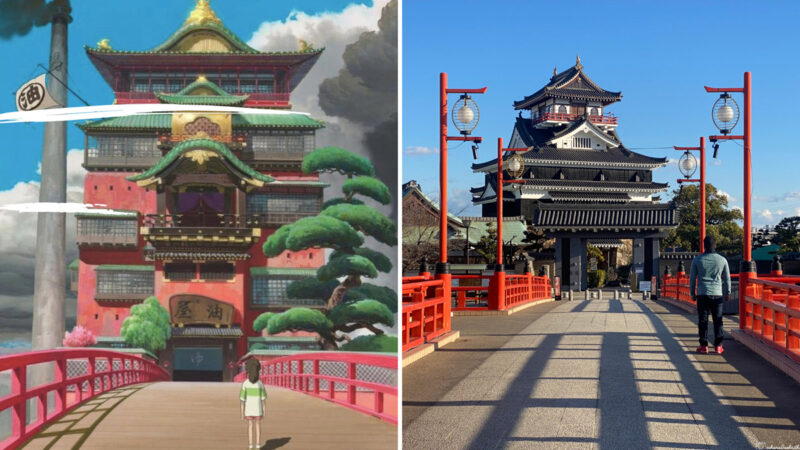
Take the red bridge, for example. In the movie, Chihiro crosses an iconic red bridge into the spirit world. Standing on the Otebashi Bridge at Kiyosu Castle, it’s easy to feel like you’ve stepped into Ghibli’s magical universe.
While the Spirited Away bathhouse boasts green roofs and warm red tones, Kiyosu Castle exudes elegance with its black-and-white facade accented by pops of red.
The castle’s quiet, traditional surroundings—steeped in history—add to its tranquil, mystical allure.
At dusk, I could almost imagine spirits and kami walking beside me. It might not be the exact bathhouse, but Kiyosu Castle certainly brings the same magical feeling.
What Awaits You at Kiyosu Castle: Peaceful Charm in Aichi
Walking into Kiyosu Castle, just a short trip from Nagoya, feels like stepping into a quieter, more charming slice of Japan.
Crossing the vibrant Otebashi Bridge, we were greeted by serene surroundings—a castle framed by a carp pond, a small rock garden, and neatly trimmed trees. It felt like stepping into a postcard-perfect scene!
For fans of anime travel in Japan, this setting captures the essence of peaceful charm.

Kiyosu Castle history
Kiyosu Castle goes way back—over 600 years! It was originally built between 1394 and 1407 and became the stronghold of Oda Nobunaga, one of Japan’s most legendary samurai leaders.
Fun fact: Nobunaga was kind of a mentor to Hideyoshi Toyotomi, the guy who went on to build Osaka Castle.
Hideyoshi ( Husband of Nene, a famous love couple whose cute statues you find at Kyoto’s most beautiful Todai-ji entrance) started as a loyal general under Nobunaga and rose to become one of Japan’s great unifiers after Nobunaga’s death.
Pretty impressive, right?
The original Kiyosu Castle didn’t last forever, though—it was dismantled in 1610 when the ruling family moved to Nagoya Castle.
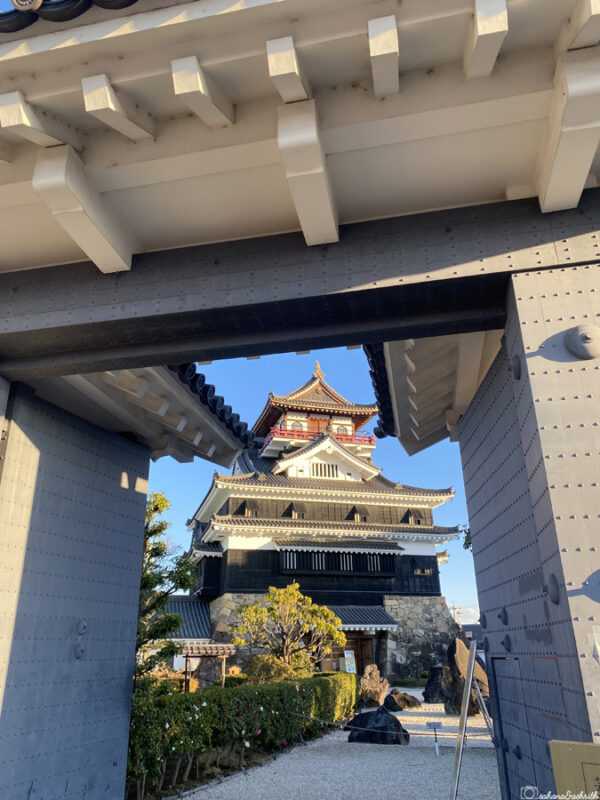
What stands today is a gorgeous 1989 reconstruction, inspired by Inuyama Castle.
So while it’s not the original, it’s packed with history and gives you a peek into Japan’s samurai era, complete with plenty of photo-worthy charm!
What is inside the castle?
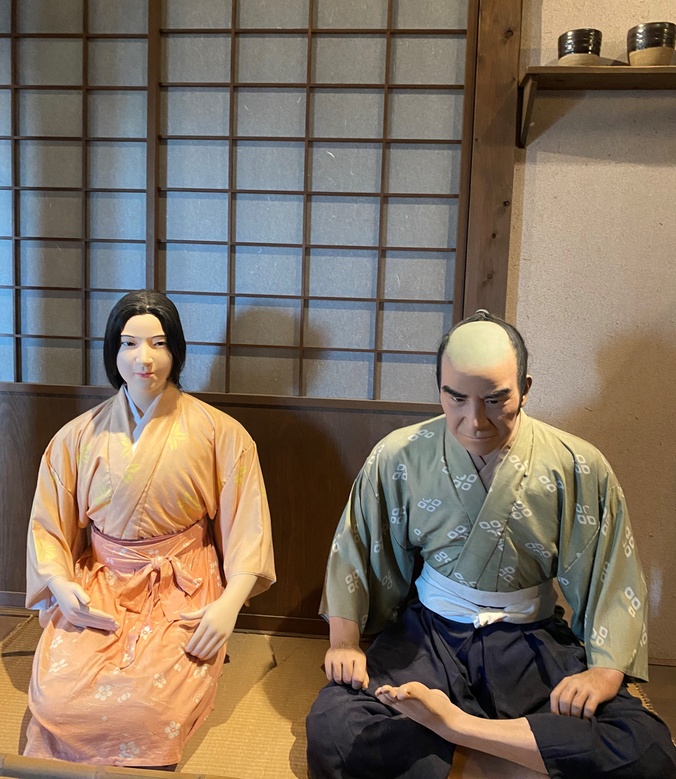
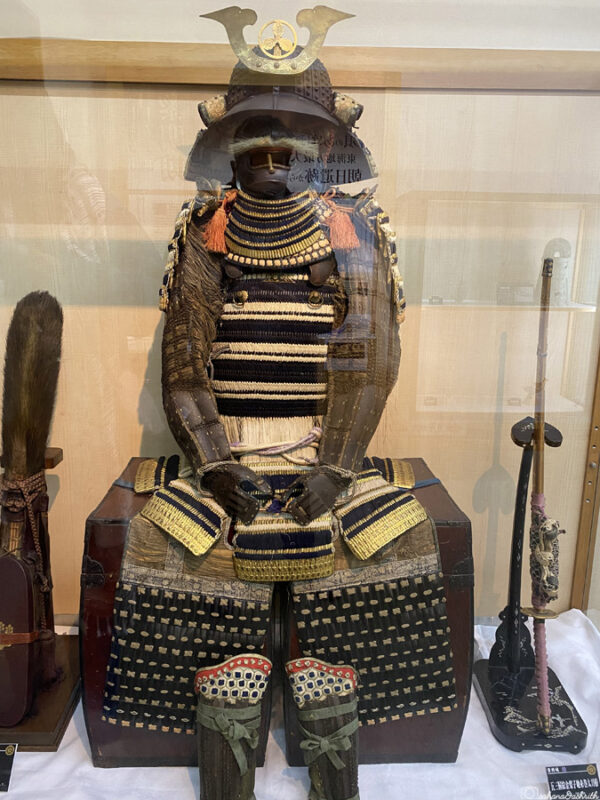
Inside Kiyosu Castle, you’ll find four floors packed with samurai-era vibes—armour, swords, pottery, and even costumes from Japanese period dramas – Japan history dates back beyond world wars.
There’s a short film about its history, and the fourth floor features a balcony with a stunning view of Kiyosu, the surrounding industrial area, Nagoya City, and distant mountains. Small, but full of character!
Weekend Shows of Local Arts and Crafts
One thing we loved about Kiyosu Castle was how it wasn’t just about history—it also had some lively local culture on display.
On weekends, you’ll find the Performing Arts & Culture Hall hosting shows featuring traditional crafts and local arts.
We stumbled upon some beautifully intricate pieces that gave us a deeper appreciation for the region.
If you’re lucky, you might even catch a live demonstration of an art form you’ve never seen before. It’s like a mini cultural treat right in the castle grounds!
The Aerial View from the Last Storey of Kiyosu Castle
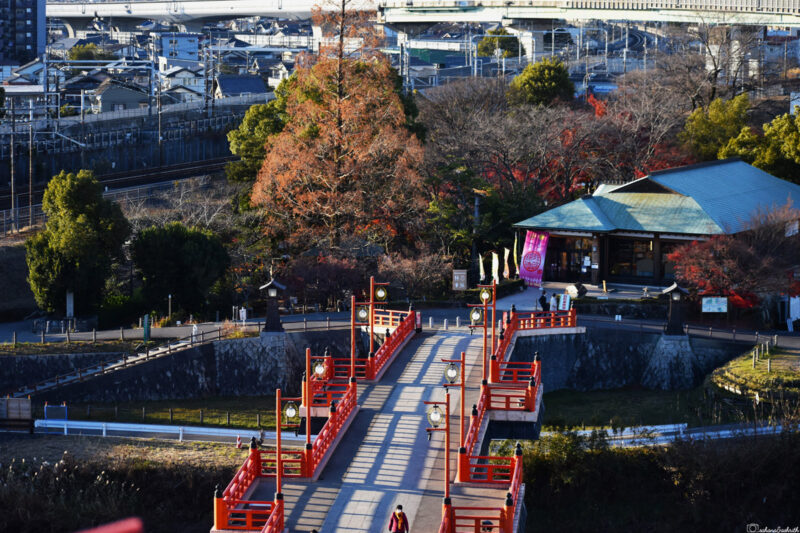
Reaching the top floor of Kiyosu Castle was hands-down the highlight of our visit. The balcony offers a panoramic view that’s so unique—industrial factories, sprawling plains, and Nagoya City’s skyline, all framed by distant mountains.

And in the immediate context, you see a traditional bridge with turrets, a typical Japanese gravel garden with giant boulders, and the shimmering Gojo River

The castle park and nearby Gojo walking path, lined with trees – The contrast of thick city versus this calming area is super surreal.
There’s even a telescope up there—just pop in a coin, and you can zoom in on the details of the landscape.
We stood there for ages, watching trains pass by and marvelling at how history and modern life coexist so effortlessly here.
It is the kind of spot that makes you slow down and appreciate the moment.
Kiyosu castle illumination
The Kiyosu Castle light show timing varies with the season, and in December, the lights came on around 5:30 PM.
We stayed until dusk to catch the castle’s night view, but let’s just say it wasn’t quite what we expected.
While the idea of the castle glowing at night sounded magical, the reality felt more like festive Christmas decorations than a proper castle illumination.

The lights on Otebashi Bridge posts, which could’ve added a mystical vibe, wasn’t lit up at all.
Instead, the colour-changing lights on the castle roof were the main attraction, and while they were nice, they didn’t exactly take our breath away.
If you go with low expectations, it’s still a pleasant sight, especially against the deep blue of the evening sky. But if you’re hoping for something truly spectacula, this might not be it

Practical Information
Kiyosu Castle Entrance Fees and Timings
- Entrance Fee: Free to view the castle from the bridge. Entry to the first courtyard and beyond costs 500 yen per adult.
- Timings: Open from 9:00 AM to 4:30 PM daily, except Mondays when it is closed.
- Note: Check the official website for the latest timings and ticket prices
How Long Should You Spend at Kiyosu Castle?
Spend at least 1.5 hours exploring the castle interior, walking along the Gojo River, and sitting in front of the Otebashi Bridge to watch people pass by. If you have time, 2 hours is ideal
How do I get to Kiyosu Castle?
Getting to Kiyosu Castle from Nagoya is super easy by train. There are two train options, each stopping at different stations near the castle. Both take about 25 minutes from Nagoya:
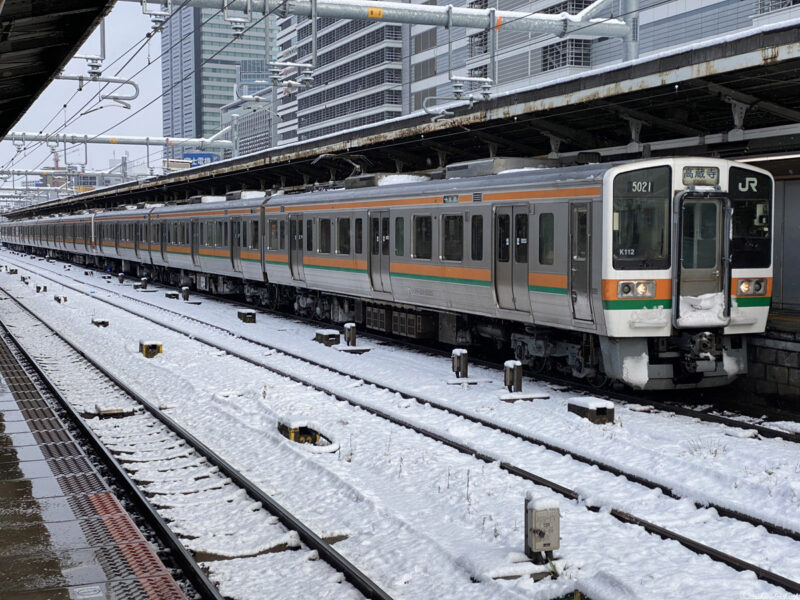
We took the JR Tokaido Line since it’s covered by the JR Pass, which we had activated during the last 7 days of our three and a half-week Japan trip.
The Japan Transit Planner on our phone was super useful in figuring out what suited us best and we also had a data enable local Japanese SIM to track routes all the time.
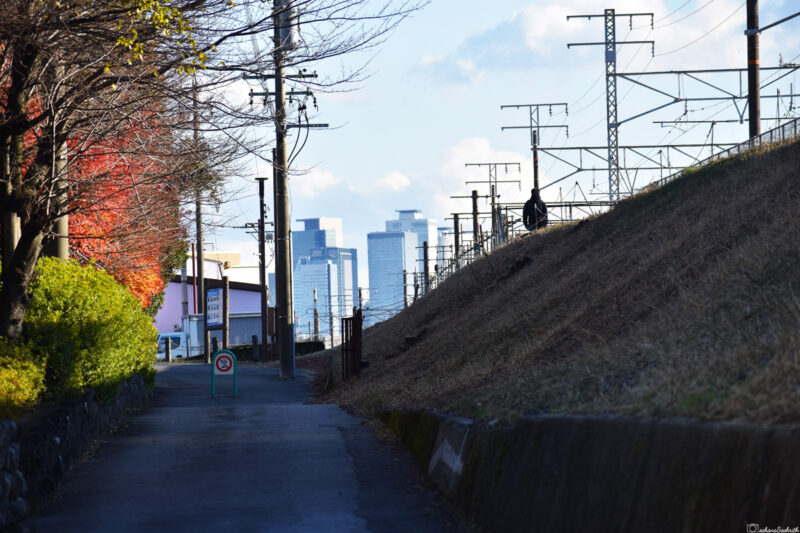
The walk from Kiyosu Station to the castle is easy, passing through residential neighbourhoods, parks, and the silhouette of industries and Nagoya’s skyscrapers in the horizon.
It’s a peaceful stroll that adds a nice touch to the experience before you reach the castle.
Places to eat in Kiyosu
Compared to Nagoya, dining options in Kiyosu are fewer. However, the good news is that most eateries here cater to locals rather than tourists.
This means you can enjoy authentic local cuisine at affordable prices.
Expect dishes featuring beef, pork, and eel as the main highlights. Vegetarian options, however, are quite limited like in other parts of the country.
Here are some recommended places to eat in Kiyosu, suggested by the castle guide:
Things to do near Kiyosu Castle
Kiyosu is a small town & got a few other interesting spots besides the castle. There’s a small park with old ruins, Kirin Brewery, Japan’s iconic beer brand, and Hiyoshi Shrine—known as the shrine of monkeys and believed to be the birthplace of Toyotomi Hideyoshi’s mother.
Don’t expect snow monkeys or the spiritual vibe of Miyajima’s Thousand Lantern Temple at Hiyoshi Shrine. However, travellers say it’s a peaceful spot near Nagoya, tucked away in the woods and perfect for a quick escape from the city.
Most other attractions travellers might enjoy are located in nearby Nagoya.
If your budget allows, you can combine Kiyosu Castle with a visit to the Kirin Beer Factory and Hiyoshi Shrine for a unique experience.
For an even better deal, consider booking a guided tour that starts from Nagoya Station.
A professional guide will take you by train to Kiyosu, show you around, and include a tour of the Kirin Brewery Nagoya Factory—complete with three beers to enjoy during the visit!

Conclusion
Kiyosu Castle -Spirited Away: Is It Worth Visiting?
Kiyosu Castle is worth visiting for its peaceful, off-the-beaten-path charm.
Rising above quiet residential streets, its serene surroundings, black-and-white facade, and Spirited Away-esque vibes make it stand out from larger Japanese castles.
While the evening illumination isn’t impressive, the daytime experience and magical dusk views make it a memorable stop, especially if you’re near Nagoya.

My experience
When I first saw pictures of Kiyosu Castle, I assumed they were over-edited and braced myself for disappointment. But as we approached, the castle, peeking above rooftops with the vast sky as its backdrop, was unexpectedly breathtaking.
The orange-turreted Otebashi Bridge in the foreground added a magical touch, with the tranquil Gojo River flowing gently beneath it.
What struck me was how peaceful and unassuming the area felt.

Calming neighbourhood – away from rush
There were no competing landmarks or skyscrapers, just the castle dominating the skyline. Its black-and-white facade, gravel garden with boulders, and trimmed trees gave it a distinct charm, unlike the grander castles like Osaka.
After climbing the windy terrace, we lingered at the top, soaking in views of industrial plains, Nagoya’s silhouette, and distant mountains.
The serenity below was infectious, and chatting with the caretaker made the experience even more personal. He shared tidbits about the nearby Kirin beer factory, local food, and life in the area.
The castle park, with almost bare trees in winter, was a great spot to relax and people-watch.

Locals walked their dogs—everything from energetic Shibas to fluffy Bernese Mountain dogs crossing the bridge like models on a runway.

The setting felt like a scene out of a picture book, wholesome and heartwarming.
As the sun dipped, the castle glowed against an orange sky, and I couldn’t shake the feeling that kami and wandering souls were walking beside us. It felt spiritual, almost otherworldly.
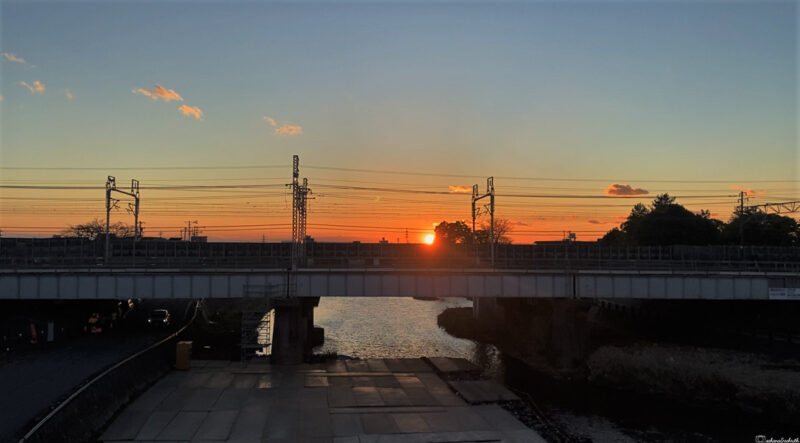
Back to Nagoya with Kirin employees.
On the way back to Nagoya, the train was lively with Kirin brewery employees going back home- but still calm.
Unlike Tokyo’s silent commutes, people here whispered, laughed, and chatted quietly—a happy contrast.
It was the perfect end to a calm, reflective evening at Kiyosu Castle, a destination that stays etched in my memory for all the right reasons.
FAQ
Is Inuyama and Kiyosu Castle same?
No. They are located in Aichi prefecture but 22km away from each other. They look similar in their outer appearance. nuyama Castle was built in 1537 by Oda Nobuyasu, the uncle of Oda Nobunaga, where Nobunaga built Kiyosu castle in 1427
What should I wear to Kiyosu Castle in winter?
Wear warm layers, a good jacket, and comfortable walking shoes. Winters can be chilly, and you’ll be outdoors crossing the bridge and walking through the gardens.
When is the best time of year to visit Kiyosu Castle?
Autumn (October-November) are ideal for pleasant weather and colourful scenery. Winter has a unique charm but is colder, while summer can be hot and humid. Sakura season can be over crowded.
Is Kiyosu Castle worth visiting at night?
Not really. The castle illumination is underwhelming, and the bridge lights are not lit, which diminishes the charm. It’s better to visit during the day or around sunset for the best experience.
Can you visit Kiyosu Castle on a JR Pass?
Yes! The JR Tokaido Line is covered by the JR Pass and stops at Kiyosu Station, just a short walk from the castle.
Can I combine Kiyosu Castle with a visit to Inuyama Castle?
Yes! Inuyama Castle is about 22 km away, and you can visit both in a day if you start early—Kiyosu Castle in the morning and Inuyama Castle in the afternoon. However, keep in mind that Nagoya offers better places to explore than Inuyama.
Found our Kiyosu castle blog useful? Would you call this “Spirited Away Castle”? Let us know in the comment section below


