
Disclaimer: Some links in this post are affiliate links. If you book through them, we earn a small commission at no extra cost to you. See our Privacy Policy for details.
Vegetarian Food in Japan: A Traveller’s Survival Guide
One of the things Ashrith and I enjoy most during our travels is tasting local food. Being a non-vegetarian, Ashrith usually has a great time- So did he devoured a lot of seafood and meat in Japan.
As for me, a vegetarian traveller, it depends on the destination – I might enjoy local veggie dishes in places like Turkey or face challenges, like in Iran.
I spent 24 days travelling around Japan and loved so many things about it – efficient public transport, cleanliness, polite Japanese manners, and beautiful locations.
But when it comes to finding local vegetarian food in Japan I had my own share of struggles. Although I had vegetarian Sushi, Okonomiyaki which is modified to make veg, some convenience store vegetarian food which I loved – But it wasn’t easy to find them.
If you’re a picky vegetarian eater, you might find Japan eating in Japan tricky.
But if, like me, you’re happy with any local vegetarian and dairy-based food, even from convenience stores, this guide is for you.

Vegetarian Guide to Japan: Cultural Context
One of the many surprising facts about Japan is that it was a vegetarian country from the 6th century until the Meiji Restoration in 1868, thanks to Buddhism and Zen.
Even today, Zen Buddhist monks in Japan continue to follow a vegetarian diet. The percentage of vegetarians in Japan is about 4-5%.
While in India, around 45% of the population is vegetarian.
I actually found some of the best veggie food in Austria, where 11% are vegetarians.
With less than 1% vegetarians, even Turkey has loads of veggie dishes.
So, you can imagine how limited vegetarian options are in Japan, where only 4% of the population avoids meat, and seafood is a staple in most meals.
Challenges for Vegetarians Travelling in Japan
Vegetarians in Japan often struggle to find food without fish flakes or pork broth—even so-called ‘vegetarian’ dishes can have hidden meat. Most menus and labels are in Japanese, making it hard to know what’s safe to eat.
To make it trickier, many locals think seafood counts as vegetarian!
On my first day in Tokyo, feeling pretty confident, I bought a cup of noodles at Lawson. The storekeeper assured me it was vegetarian, so I grabbed it and headed to my hotel.
But as soon as I opened it, I saw pinkish flakes on the noodles, which I thought were radish. Then I added hot water and immediately smelt fish!
I went down to reception, showed them the cup noodles, and they told me it had fish flakes called “Dashi.” Many other foods also have pork broth, so be cautious!
Sometimes even the vinegar and Soy Sauce they use will have meat extract – I got to know about it only when I went for shopping authentic Soy sauce in Nishiki Market.
Another time, I was about to buy Maitake mushroom rice at 7/11—a rice dish with maitake mushrooms, lotus root, and sweet potato. But it also had dashi (fish) stock!
If it’s your first trip to Japan, like it was ours, and you’re new to the language, you’ll likely pronounce Japanese vegetarian food names completely wrong! This can leave the waiters, the owners, and even yourself a bit puzzled.
To compare, I found more local vegetarian food in Thailand than Japan. I never struggled in Thailand for veg cuisines and hardly ate in 7/11 there in search of meatless food.
A common challenge for all travellers, not just vegetarians, is using chopsticks! You hardly find spoons or forks, and there’s very little finger food in Japan. So, learn how to use chopsticks before you go!

Main Ingredients of Japanese Veg Food
Main ingredients of Japanese vegetarian food include rice, tofu, seaweed (nori, kombu), soy sauce, miso, vegetables (like daikon, eggplant, spinach), mushrooms (shiitake, enoki), edamame, and grains like soba or udon noodles.
If you’re like me and have wondered whether seaweed is vegetarian or not due to its slimy texture and the fact that it grows in water, don’t worry! From a culinary perspective, seaweed is considered a vegetable, though it isn’t classified as one botanically.
Traditional Veg Meals at Temples.
Because of the Zen Buddhist community, you’ll find traditional vegetarian food mainly in temples and a few restaurants in Japan.
Buddhist temple meals are called shojin ryori and consist of onigiri (rice balls with simple fillings), tofu, and other plant-based dishes.
We had one such temple meal in Arashiyama near Kyoto – it was good, healthy, and light, but a bit pricey ( 3500 Yen or 18 USD per person)!

Japanese Vegetarian Cuisine also includes some unique dishes that you may not find elsewhere, such as Kabocha no Nimono and Agedashi Tofu.
There are some desserts too, like Higashi (dried, pressed sweets), Daifuku made with mochi (sticky rice), and Mitarashi dango (rice cakes on a skewer with a sweet soy sauce glaze)
If you’re eyeing popular treats like jiggly sponge cake in Osaka or Taiyaki (the cute fish-shaped pastry with red bean filling), keep in mind they usually contain eggs.
Surviving Japanese Food Markets as a Vegetarian
Check Out the Condiments: Japan has some fantastic vegetarian-friendly condiments like soy sauce, miso paste, and sesame dressing that taste amazing. Just watch out for fish flakes (bonito) or fish broth (dashi) sneaking into sauces. I once bought soy sauce without checking properly and ended up with a bottle that had prawn extract!
Ask for Help: Don’t hesitate to ask vendors if something is vegetarian. Most will do their best to help, especially if you throw in a few Japanese words.
Think Twice Before Buying Fruits: In most countries, fruits are a vegetarian’s best friend, but not in Japan! If you’re planning to survive on fruits here, be prepared to spend big—one apple can cost anywhere from 280 to 400 yen (2 to 3 USD).
Local Markets Can Be Intense: Japanese local markets, whether in Osaka’s Namba or Tokyo, are packed with seafood, with only a few areas selling fruits and vegetables.
If you’re sensitive and can’t handle all the seafood, it’s best to avoid these markets. I’m not usually sensitive, but seeing those red octopuses in Kanazawa was quite a shock at first!

Identifying Vegetarian Options on Japanese Menus
Learn a Few Key Phrases: Try saying “I’m vegetarian” in Japanese: “Watashi wa bejitarian desu.” Or “No meat, no fish” – “Niku to sakana wa tabemasen.” Keep it simple!
Ask for Customisation: Politely ask if dishes can be made without meat, fish, or dashi. Use the phrase “niku to sakana nashi de” (without meat and fish).
Ask How It’s Made: Politely ask, “Can this be made without meat or fish?” (“Niku to sakana nashi de tsukuremasu ka?”). It helps to know what’s going in your food!
Opt for Simple Dishes: Choose dishes like plain rice, vegetable tempura (check the batter), edamame, pickles, or tofu dishes.
Be Nice and Chill: Japanese folks appreciate politeness. A little patience and a smile can go a long way when asking for changes!
Bring a Translation Card: Carry a vegetarian card or screenshot explaining your dietary restrictions in Japanese; this helped me alot!

How to Read Labels and Avoid Animal Products
Japanese convenience stores don’t usually use red or green marks to indicate vegetarian or non-vegetarian food. So, you’ll need to check the packaging carefully.
Most labels are in Japanese, so using a translation app like Google Lens to scan ingredients is essential.
Familiarise yourself with key Japanese words related to meat and animal products, like “niku” (meat), “sakana” (fish), or “dashi” (fish broth), to spot vegetarian options more easily.

How to Find Vegetarian Food in Japan with apps
Finding local vegetarian food in Japan isn’t impossible, but it’s not easy either—it takes a bit of effort! In fact, it’s easier to find vegan restaurants than vegetarian ones in Japan using apps.
Happy Cow: This app is great for finding vegan restaurants and covers most cities in Japan. Even though I’m not vegan (I love and eat a lot of dairy), I found it easier to eat at vegan places than to find vegetarian ones, so I used the Happy Cow app a lot.
Vegewel: It offers fewer options, but I still preferred using Happy Cow more.
To access these apps that are a vegetarian’s lifesaver, always have either a pocket WiFi device or a data-enabled local Japanese SIM card for your phone.
What to eat in japan as a Vegetarian?
Nasu Dengaku: Grilled aubergine glazed with sweet miso paste. Rich and savoury—I’m an aubergine lover, and it reminded me of Saganaki from Greece.
Kabocha no Nimono: Pumpkin simmered in a light soy and sugar broth. Soft, sweet, and savoury, this hot soup is often found at food trucks.
Kitsune Udon: Thick wheat noodles in a light broth topped with sweet fried tofu. Simple and comforting.
Agedashi Tofu: Deep-fried tofu in a savoury soy broth. Crispy on the outside, soft on the inside.
Goma-ae: Vegetables, like spinach or green beans, tossed in a sesame dressing. Nutty, flavourful, and great as a light side dish.

Modifying Japanese Dishes to Be Vegetarian-Friendly
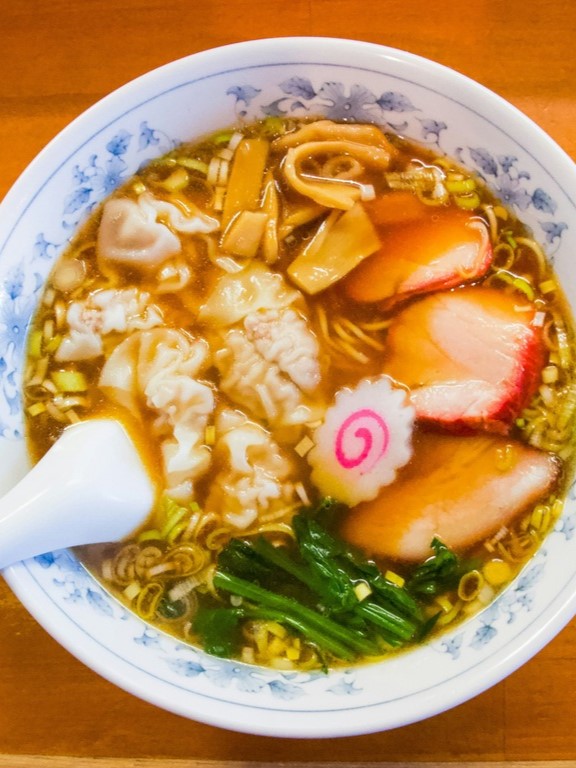
Ramen: Ask for vegetable broth instead of the usual meat or fish-based broths. Skip toppings like pork slices (chashu) and request extra vegetables, tofu, or seaweed.
Tempura: Go for vegetable tempura, but check if the batter is made without eggs. I’m not too fussy, but you might also want to ask if it’s fried in oil that hasn’t been used for seafood.
Miso Soup: Request miso soup without dashi (fish stock), which is commonly used as the base. Opt for a seaweed or kombu-based broth instead.
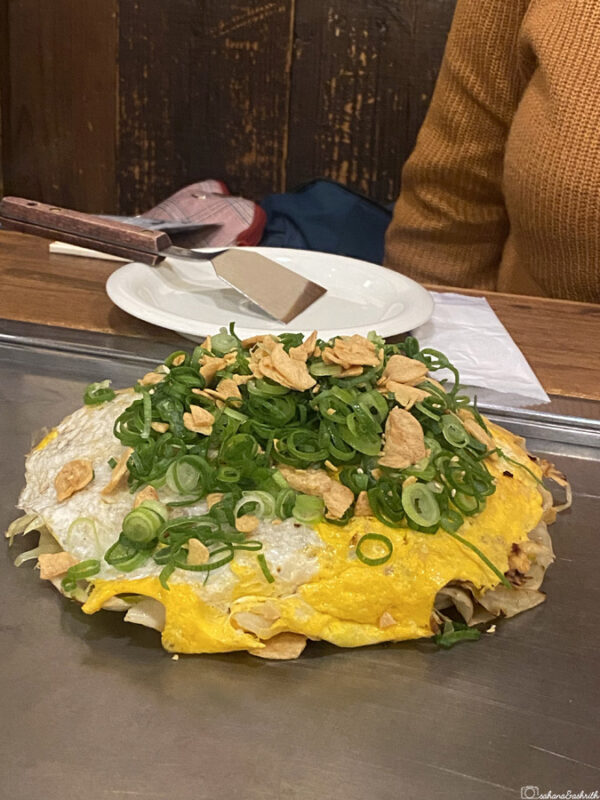
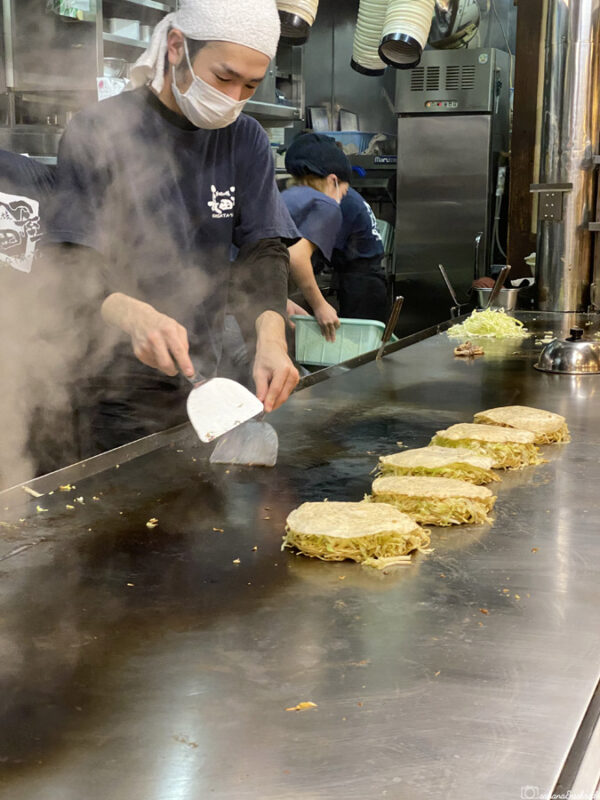
Okonomiyaki: This savoury Hiroshima-style pancake can be made without meat or seafood. Ask for a vegetable version and request no bonito flakes or mayo, which might contain fish ingredients.
Soba and Udon Noodles: Go for cold soba or udon with dipping sauce, but check that the sauce is not made with dashi. Alternatively, ask for a simple soy sauce-based dipping sauce. I found veg soba and udon super tasty and never missed a chance to eat them!
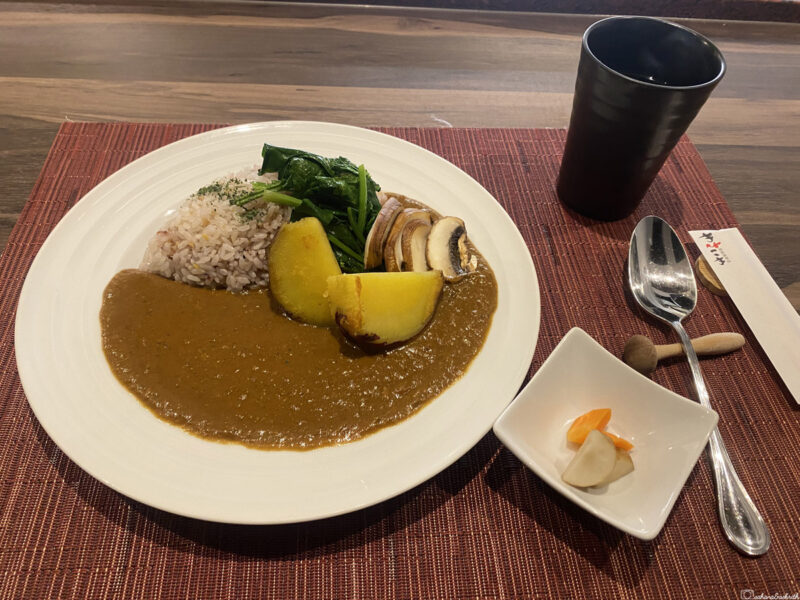
Japanese Curries: Many Japanese curries use beef or pork broth, so ask for a vegetable-based curry or one without meat stock. They’re tasty but rare—I think I had it only once in Tokyo.
Sushi: Sushi can be both vegetarian and non-vegetarian. Traditional sushi often includes fish or seafood, while vegetarian versions use ingredients like avocado, cucumber, and tofu. The type of sushi depends on the ingredients used.
Choose vegetarian options like cucumber rolls (kappa maki), avocado rolls, or tamago (sweet egg omelette – I loved this) sushi. Ask them to skip bonito flakes (katsuobushi) often sprinkled on top.
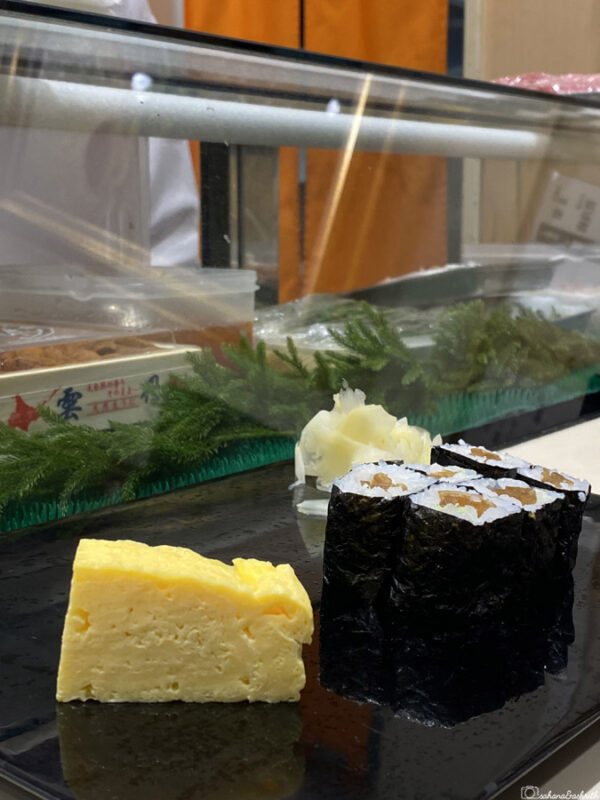
Best Vegetarian Street Food Options in Japan
Dango: Skewered rice dumplings, glazed with sweet soy sauce or covered in red bean paste. They’re chewy and satisfying; you’ll find many carts selling these in Kyoto.
Mochi: Soft, chewy rice cakes with different fillings like red bean paste or matcha. They’re a bit sticky, but that’s part of the fun! I loved munching on these while exploring shrines; they’re available throughout Japan.
Onigiri: Rice balls wrapped in seaweed with fillings like umeboshi (pickled plum) or seaweed. They’re an easy, quick snack. Many sushi places in Tokyo and Osaka serve these.
Yaki Imo: Roasted sweet potatoes sold from street trucks, especially in winter. They’re warm, sweet, and filling—perfect for a chilly day. I found myself craving these after just one bite on Kyoto’s Hanamikoji near Matsubara Dori
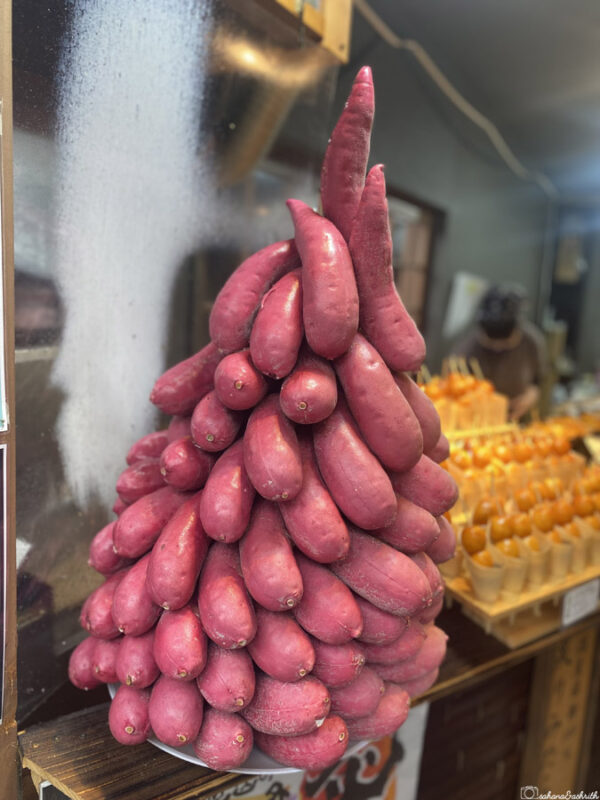
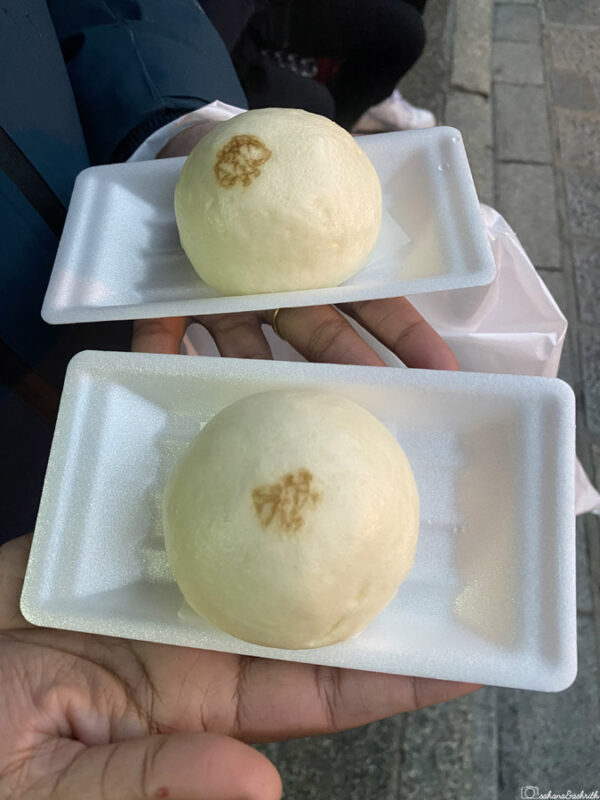
Steamed Buns (Nikuman): Fluffy buns filled with sweet red bean paste (Anman) or savoury vegetables like mushrooms or bamboo shoots. I found them to be the perfect snack on the go—light, warm, and so satisfying, especially on chilly days in Kyoto!
Tsukemono (Pickled Vegetables): Japanese pickles, like daikon radish or cucumber, often served with meals. They’re crunchy, tangy, and great for a palate cleanse.
Negi (Grilled Japanese Scallions): Smoky, slightly charred green onions grilled to perfection, offering a simple yet flavourful vegetarian street food option.

Vegetarian Food in Japanese Convenience Store
Kombini, or convenience stores, are the best places to find vegetarian food in Japan.
Eating at a kombini is the easiest way to save money as a traveller in Japan. We relied on them for 24 days during our trip! They offer both non-veg options and plenty of vegetarian food too.
The great thing is that many of these foods can be heated in-store—just ask the cashier while paying, and they’ll let you know if it can be warmed up or eaten cold.
The main thing to remember when buying vegetarian food at Japanese convenience stores is to use Google Lens to translate the ingredients. The food names are often in English, but the ingredients usually aren’t.
Heads up: Most bread and noodles here are made with eggs. If you don’t eat eggs, it can be hard to find suitable food in Japanese convenience stores.
Even if you buy your breakfast or lunch from a kombini, you should never walk while eating in Japan—it’s considered rude and bad manners.

Best Vegetarian food at Japan 7/11 stores
Soba Noodles with Grated Yam: Chilled soba noodles topped with grated yam. The grated yam is a blend of sticky yamato yam and finely textured, soft yam, served with a sweet broth.
Shinshu Eggplant Topping Somen Noodles: A refreshing dish made with somen noodles and deep-fried aubergine in soy sauce.
Vegetable Fried Dumplings: (Contains egg)
Melon Cream Water Bun: A sweet treat.
Choreogi Salad: A delicious salad with a sauce infused with sesame oil and garlic, soft lettuce, cucumber, and seaweed.
Yakisoba Bun: Hot dog buns filled with wheat noodles.
Mochifuwa Pancake: Don’t underestimate this ordinary-looking pancake—it’s packed with syrup and butter that oozes out with every bite. No wonder both locals and tourists can’t get enough of it!
Sandwiches: Vegetable sandwiches with broccoli, tomato, onions, radish, and more. When buying, it’s easy to spot if they have egg flats or ham by their appearance.

Lawson Speciality veg food
MILK Castella with Banana: A soft and fluffy cake with a banana flavour, available at Lawson.
Condensed Milk with Fruit Sandwich: A sweet sandwich filled with condensed milk and fresh fruit, available at Lawson.
Milk Kokumi Condensed Milk Sauce: A rich and creamy condensed milk sauce, also found at Lawson.

Food Chains in Japan that are vegetarian friendly
Starbucks
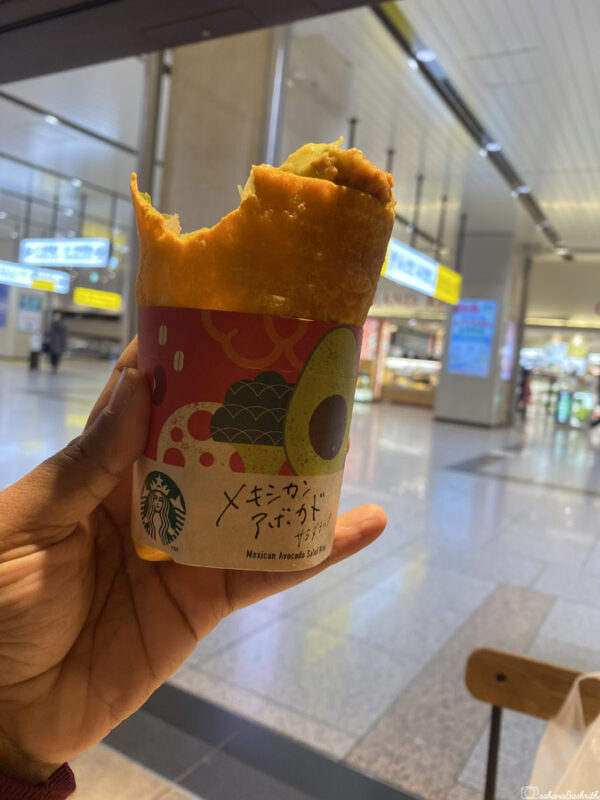
Japan’s Starbucks are cheaper than those in any other country I have ever visited. They serve more than just coffee – The cakes and drinks made with Matcha at Japanese Starbucks are epic.
They also offer got of vegetarian options, like semi-dried tomato toast, Mexico Avacado Salad wrap, and corn and spinach soy sandwiches. Keep in mind that these menus change seasonally.
Mos Burgers
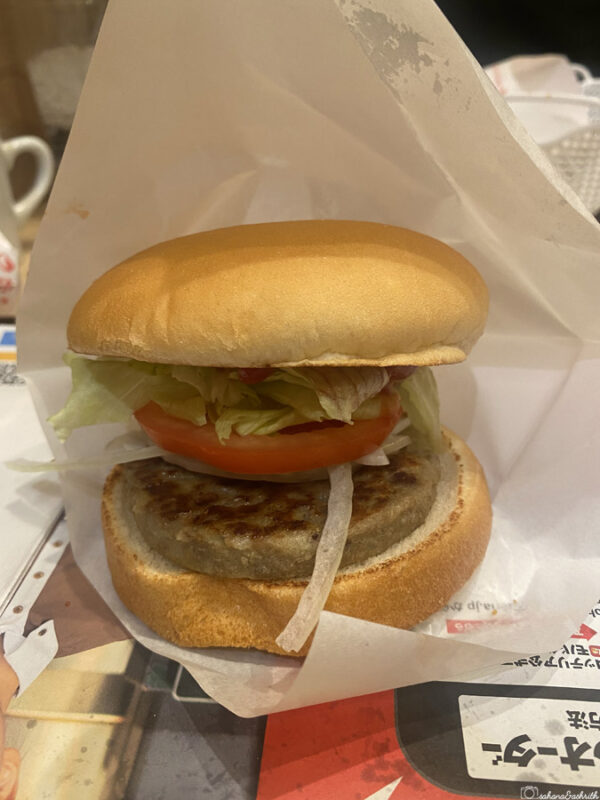
Japan’s own burger joint “Mos Burgers” serves burgers with local flavours, mainly teriyaki chicken. However, they also have at least five varieties of vegan burgers with soy patties wrapped in lettuce and other veggies, as well as vegetarian burgers with lots of cheese.
Tully’s Coffee
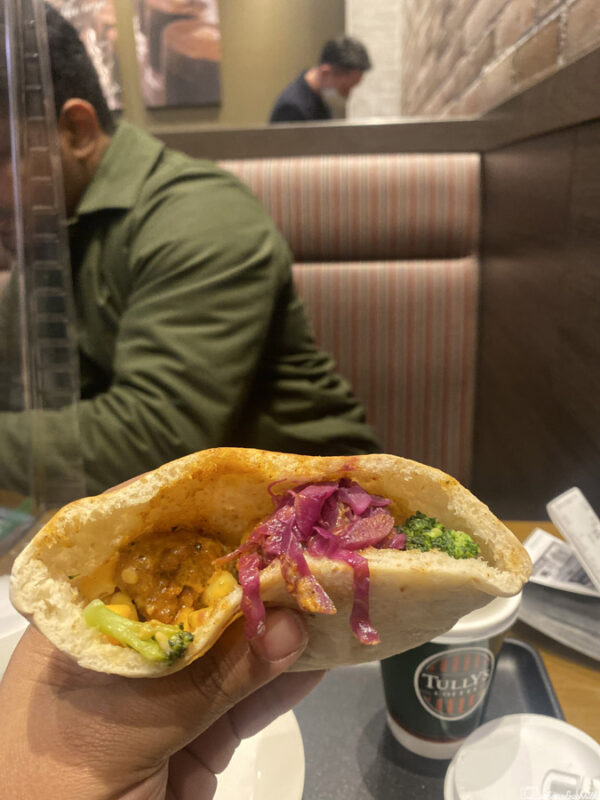
Tully’s Coffee is Japan’s newest hotspot and works more like a co-working space than a café. They are known for their drip coffee and matcha. They do have one option for vegetarians – Veggie Pizza Tomato. Just ask them to skip the bacon when ordering
Heads up : Neither McDonald’s nor KFC in Japan has any options for vegetarians other than french fries. Burger King joints, at only select locations, offer red bean-based paste on french fries.
Best Vegetarian-Friendly Restaurants in Japan’s Cities
Tokyo
Iso Sushi: One of the finest places for both sushi and vegetarian sushi in Japan is Iso Sushi, a perfect spot for breakfast near Toyosu Fish Market (even Jeff Bezos has tried sushi here!).
Kyushu Jangara: A ramen chain across Tokyo that offers one vegan ramen as part of their extensive non-veg menu. I ate Vegan ramen at their Akihabara main store—it’s affordable, delicious, and local.
Saint Marc Cafe– A bit more expensive than the other places, but a great spot for Japanese curry with rice.
Kyoto
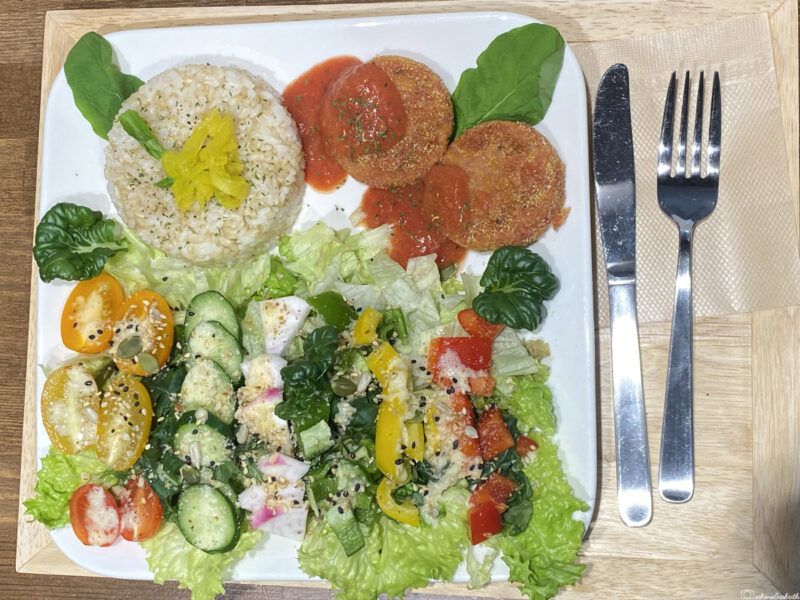
Zirael Vegan Restaurant: This vegan restaurant in Kyoto, near Gion, serves a super delicious salad meal with rice and tasty desserts. It’s run by a Japanese man and his Russian spouse. The vegan food here is great, and the hosts are lovely!
Shigetsu Tenryuji Temple Zen Restaurant, Arashiyama: Located near Tenryuji Temple, this is an expensive place to try temple meals, but the prices are worth it for their unlimited tofu, lovely ambiance, and friendly hosts.

Kichi Kichi Omurice: The social media sensation chef, known for his flying omelettes, also makes vegetarian rice. Though his cooking is more of a show than about eating, the taste is good. From chicken rice to vegetarian and vegan rice, he can make almost anything for you.

Ain Soph near Nishiki Market: Serves both Western and Japanese food. I tried their famous soy chicken on rice, and it was surprisingly delicious.
Hiroshima
Nagataya : One of the oldest places in Hiroshima for Japanese pancakes. They offer traditional okonomiyaki with beef and chicken, a vegetarian option with lots of cabbage, and even vegan ones.
Nagano
Hanamaru Udon Midori, Nagano: The best udon I had in Japan was at Hanamaru Udon in Nagano railway station. The hint of radish and soy sauce was refreshing and super healthy!
Tips to Vegetarian Dining at Japanese Temples
Shojin Ryori: This traditional Buddhist cuisine is entirely plant-based, focusing on seasonal vegetables, tofu, seaweed, and grains. It’s all about simple, balanced flavours and beautiful presentation—perfect for vegetarians and vegans.
Main Food: In Shojin Ryori, tofu is usually served in a large bowl on a small burning stove right in front of you.
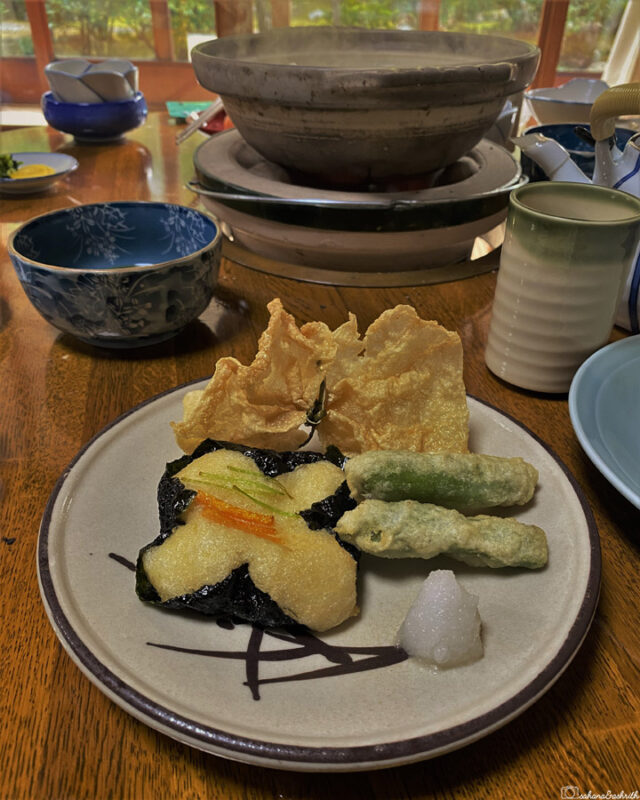
Dips and Sauces: In Japanese temple meals, you get at least 10 different side dishes, including dips. Each dip has its own purpose. For example, Kombu (a seaweed broth and soy sauce mixture) is specifically for dipping rice.
Follow Temple Rules: Every temple has its own rules—where to sit, how to serve yourself, etc. Pay attention and go with the flow.
Sit on the Floor: Japanese temples that serve meals require you to sit on tatami floor mats with your knees folded. Remove your shoes and socks if possible before eating.
Ask for Help: The waitress usually brings a booklet explaining which food is which and which sauce goes with what. If they don’t bring it before you start, just ask.

Be On Time: If you’ve made a reservation (sometimes you need to), show up a bit early. Being late isn’t cool and can come off as disrespectful.
Keep It Quiet: Many temples encourage eating in silence to keep things peaceful, so try to keep your voice low and avoid loud chatter.
Show Gratitude: Before you eat, say “Itadakimasu” (I humbly receive), and after you finish, say “Gochisousama deshita” (Thank you for the meal). It’s a nice way to show respect.
Finish Your Food: Shojin Ryori is all about respecting nature, so try to eat everything on your plate and avoid wasting any food.
Use Chopsticks Properly: Avoid sticking your chopsticks upright in your food or passing food directly from chopstick to chopstick—these are considered bad manners.
Dress Modestly: Temples are sacred places, so dress modestly. Avoid flashy or revealing outfits.
Vegetarian Survival Packing Tips for Japan
As a vegetarian in Japan, I definitely had some tricky moments finding veg food, but I never starved for two reasons: there is vegetarian food around, and I’m okay with eating eggs, so grabbing stuff at convenience stores wasn’t a problem.
Sure, I didn’t have the fancy meals like in Turkey or Egypt, but I didn’t go hungry! If you’re super picky or have a specific veg diet, it might be a good idea to pack a few snacks just to be safe.
Carry Packed Meals from Home: If you’re from India, things like thepla or MTR ready-to-eat meals are super handy.
Stock Up on Convenience Store Veggie Options: Whenever you find vegetarian-friendly foods like milk cream buns, salads, or snacks at convenience stores, grab a few and keep them for later. They’re a lifesaver when you’re in rural areas of Japan. When we went to Kawaguchiko, these snacks were a real rescue!

General Dining Rules in Japan
Breakfast: A typical Japanese breakfast can include sushi or rice. Don’t be surprised if the ryokan you’re staying at offers rice with dips, sauces, or even sushi for breakfast
Japanese Drinks: Matcha tea is often served with all three meals of the day. Besides Matcha, you can get coffee with breakfast, while sake is usually served at night.
Each person must buy at least one food and drink: So, two in a restaurant buying one dish may not be allowed in some places.
Use wet towels provided at restaurants to clean only your hands before eating: I wiped my camera body with it once and got a puzzled look from the chef!
Japanese say “Itadakimasu” while receiving food from waiters: It means “I receive the food with gratitude,” and it’s nice if you do the same.
Busiest restaurants may have a time limit for sitting: Like one or two hours.
Restaurants with viewpoints are expensive: Although the viewpoints won’t have any entrance fees, the food joints might require you to buy something to access a particular spot. If you buy one dish, only one person is allowed.


Did we answer your question “What to eat in Japan as a vegetarian?” Let us know in the comment section below.


Hi I am currently living in Japan as an exchange student and would like to add some clarification. I am not vegan or vegetarian (non-veg Hindu) but having any dietary restrictions means I need to be very aware of what is in foods. Unless you are going to a specifically vegan/vegetarian restaurant udon (ie kitsune udon ) and any noodle soup (soba, ramen which has pork) are likely to be made with a non veg broth like non-veg dashi and I highly doubt there would be any vegetable broth on hand that could be swapped right away. If you came across some places aside from the normal vegan ramen places that can do that I would love to know. The same goes for okonomiyaki, as far as I know it has non-veg dashi in the batter normally. Same with agedashi tofu, it’s right in the name age”da ashi”. Also nikuman normally have gelatin added (I saw a pizza man at 7/11 but it had gelatin ?) A good way to know is look up a recipe and see how it is made. Also for vegans, if you swap the beef patty for soy patty at Mos Burger it is not vegan because apparently the buns or sauce have dairy/eggs. A good way to check is at larger chains or restaurants ask for the allergen information. That will hopefully include certain meats like chicken, beef, pork, certain fishes, eggs, milk. There are 8 allergens that have to be labeled in certain circumstances by law and another 20 that are recommended. Unfortunately the mandatory 8 do not include certain meats. For more info on Japanese labels check out the blog isitveganjapan.com Some other things to watch out for as a Hindu are consomme and demiglace sauce both of which have beef included. Also gelatin (made from pigs and cows) is in a lot of places you wouldn’t expect. Some times even in a rice ball or egg sandwich. If you are a tourist without any knowledge of Japanese foods I would suggest you check everything you buy with google translate, maybe make a card explaining what you can eat, plan out where to eat (veg friendly restaurants), and ask for allergen information at larger restaurants.
Thanks Sriya for the detailed insight 🙂