
Disclaimer: Some links in this post are affiliate links. If you book through them, we earn a small commission at no extra cost to you. See our Privacy Policy for details.
Ultimate Sri Lanka Travel Guide for 8 days
Map out your extraordinary journey through Sri Lanka using our all-encompassing travel guide!
Whether you adore trekking mountains or unwinding on beaches and find solace amidst Buddhist chants, Sri Lanka offers it all.
With delightful cuisine, a rich cultural tapestry, and a harmonious blend of ancient and modern, akin to Geoffrey Bawa’s works, Sri Lanka is a gem, though not hidden.
Traveling in Sri Lanka is straightforward?it’s a backpacker’s favorite destination in Asia, and they often spend months exploring it.
However, if you’re like us, taking vacations between 9-5 work, you’ll need to plan at least a bit to make the most of a Sri Lanka trip in 8-10 days – We help you exactly with it.
Explore budget-friendly travel tips with our ‘How to Plan your Sri Lanka Trip’ guide, navigating the tropical paradise while veering slightly off the typical tourist routes for an honest experience.

1. Preparing for Your Trip
Sri Lanka Tourist Visa
Getting a tourist visa for Sri Lanka isn’t too much hassle, it’s quite straightforward. But their rules keep shifting. One thing that stays the same is that all folks need a visa, and most can go for an e-Visa.
To avoid any confusion, we suggest checking iVisa to confirm if your nationality requires a tourist visa for entry into Sri Lanka. Once you have this information, you can move on to the next steps accordingly.
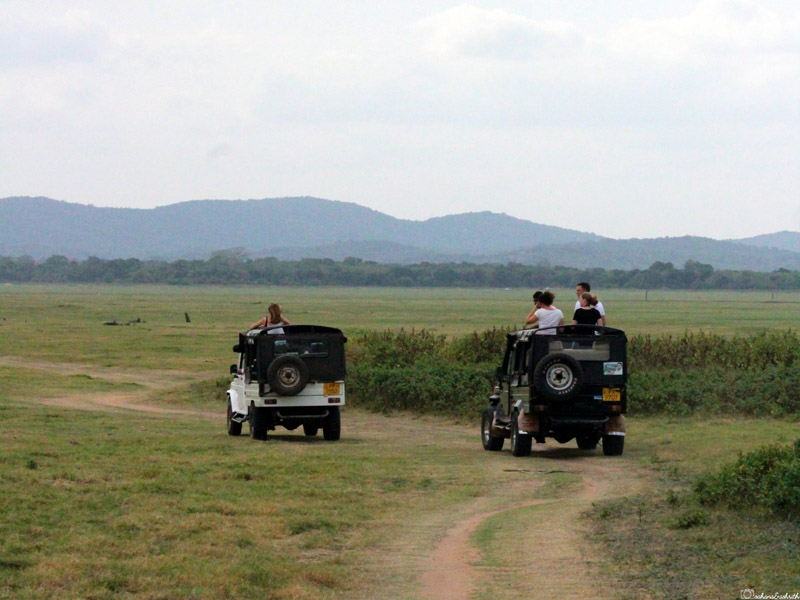
In October 2023, Sri Lanka started allowing visitors from India and six other countries?China, Russia, Malaysia, Japan, Indonesia, and Thailand?to enter without a visa. It’s a trial project to amp up tourism from India. So, stay tuned to their Ministry of Foreign Affairs website for the latest updates.
Take a look at our post titled “Getting a Sri Lanka Tourist Visa Hassle-Free,” part of our Sri Lanka Travel Guide. It should help clear up any doubts you might have about the process.
Air Connectivity
Though there are two international airports in Sri Lanka, Bandaranaike International Airport (CMB) is the most active. The Mattala Rajapaksa International Airport (MRIA – an airport built using China’s loans) stands as one of the world’s most deserted airfields and happens to be Sri Lanka’s second-largest international airport. So you will land in Colombo airport.
Flights to Maldives or Australia from Asian countries such as India and Nepal will usually have a layover at Colombo. Interestingly, Sri Lanka does offer transit visa for two days where you can see the town colombo for two days. Hence we recommend you check on skyscanner for various options available for your air connection
Once you’re in this small country, you won’t need flights for your travels within it. Srilanka, resembling a teardrop ( or a mango), spans approximately 415 km north to south and 220km east to west. Trains and buses are decent enough to take you around.
You don’t need a COVID-19 vaccination certificate or a negative PCR test to get into Sri Lanka anymore. However keep an eye on their official website before leaving.
Currency
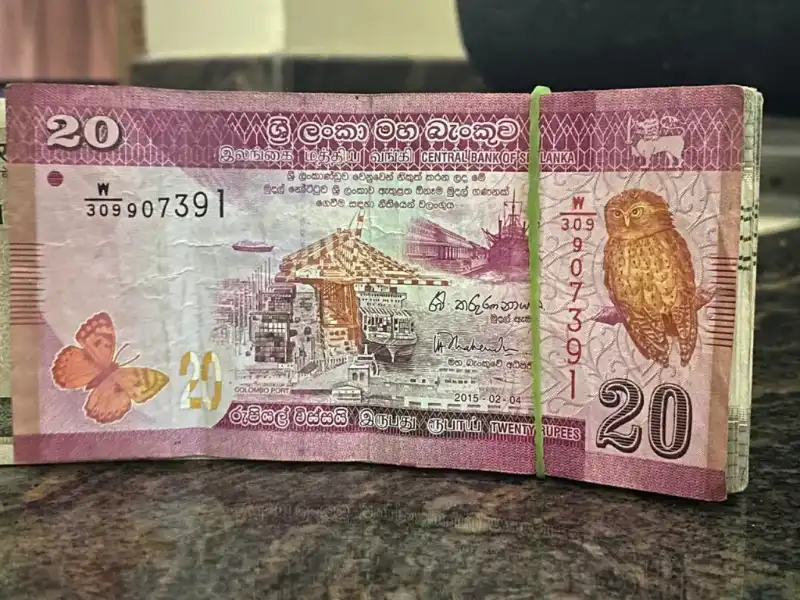
The official currency in Sri Lanka is the Lankan Rupee (LKR). If you’re thinking, like we did, that Indian Rupees can be used for currency exchange just like in Bhutan, you’re mistaken. Turns out, Indian Rupees aren’t accepted anywhere in Sri Lanka.
It’s best to carry USD or Euros for currency exchange, with USD being the preferred choice. While exchanging money at the airport might be a bit pricier, it’s advisable to prevent getting fake currencies in town. There are a couple of currency exchange spots in Colombo, but smaller towns might not have any. ATMs aren’t widespread except in Colombo.
Card Payments
Very likely, your American Express cards don’t function anywhere, but international Visa and Mastercards worked in some restaurants. Our Indian National Bank Mastercard could withdraw cash from ATMs, but it was declined when used at restaurants. Cash is the way to go in Sri Lanka
Don’t rely on cards for monument entry fees.
You might find yourself borrowing cash from a local and arranging a wire transfer later, just like we had to in Dambulla. We assumed card payments would cover the entry fees, but they didn’t.
2. Sri Lanka Travel Cost
Sri Lanka happens to be one of the most budget-friendly countries we’ve ever visited. For us, the cost of living turned out to be cheaper than Thailand but a bit pricier than Iran. And definitely, Sri Lanka is cheaper than India for tourists.
- Cost Estimates: In 2019 April, as budget flashpackers, our average daily spend was 5400 Lankan Rupees per person.
- This includes:
- Three meals a day at budget cafes and restaurants
- Accommodation at guest houses
- Transportation via Tuk Tuk, bus/taxi
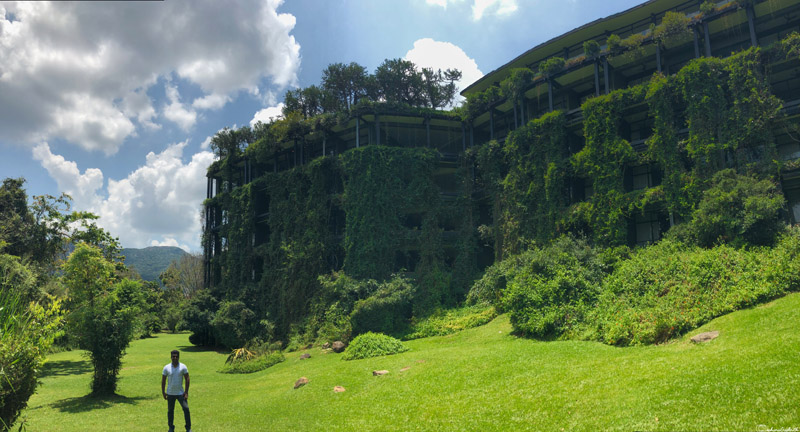
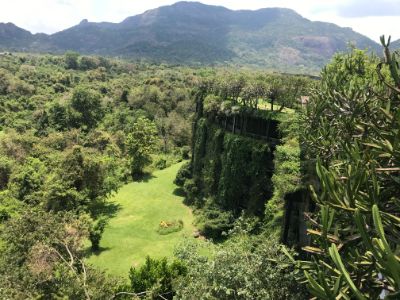
- Excluding international airfare and one-night stay at Luxury hotel Heritance Kandalama.
- Now you can consider upto 8000 Lankan Rupees for the same during offseason – The prices have gone high a lot due to their economic crisis!
Finding right accommodations
In Sri Lanka, you’ll discover a diverse array of places to stay, covering every budget. From simple beachside shacks to grand colonial mansions and lavish five-star resorts, there’s something to suit everyone’s taste. Travelers with budget constraints often opt for guesthouses, typically family-run spots either within or adjacent to the owners’ homes.
While branded luxury hotel chains exist, I suggest seeking out luxury hotels designed by Geoffrey Bawa for an authentic Sri Lankan experience.
The hostel culture is quite noticeable here. Just a tip: opt for rooms with AC, especially during summer! Back home in India, I’m not used to AC rooms, but trust me, Sri Lanka’s summer heat is something else.
For booking accommodations in Sri Lanka, Booking.com is your buddy.
They’ve got everything from hostels to 5-star resorts all in one place. Their messenger feature is a lifesaver?you can chat directly with your host. It’s crucial to let your guesthouse owners know if you’re arriving at midnight or later.
3. Essential Information
Language Spoken in Sri Lanka
Sinhala is the official language of Sri Lanka. We could catch a few words that sounded similar to Sanskrit and our state language Kannada when the Sri Lankan air hostesses made announcements.
- “Karunakara” – Kindly
- “Naama”-Name
- “Samaipa” – Nearby
For us South Indians, understanding Sinhala language comes a bit easier. But for everyone else, getting by in English isn’t hard. Signboards often display English, Sinhala, and Mandarin in many spots. We managed fine in English while communicating with guesthouse owners, bus conductors, and tuk-tuk drivers.
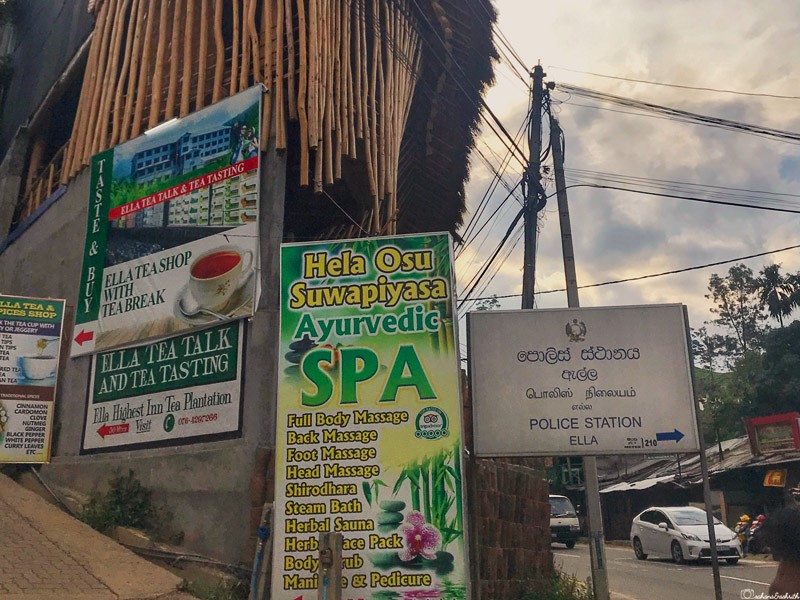
Quick heads up: There’s a common myth among Indians that all Sinhalese speak Tamil, but that’s not the case.
Sri Lanka People and Culture
Their main religion is Buddhism, and many people there are quite religious. It’s pretty normal for them to ask about your religion, just as they’d ask your name. They don’t hold back at all?a taxi driver in Dambulla straight-up asked us, “Are you Muslim or Hindu?”
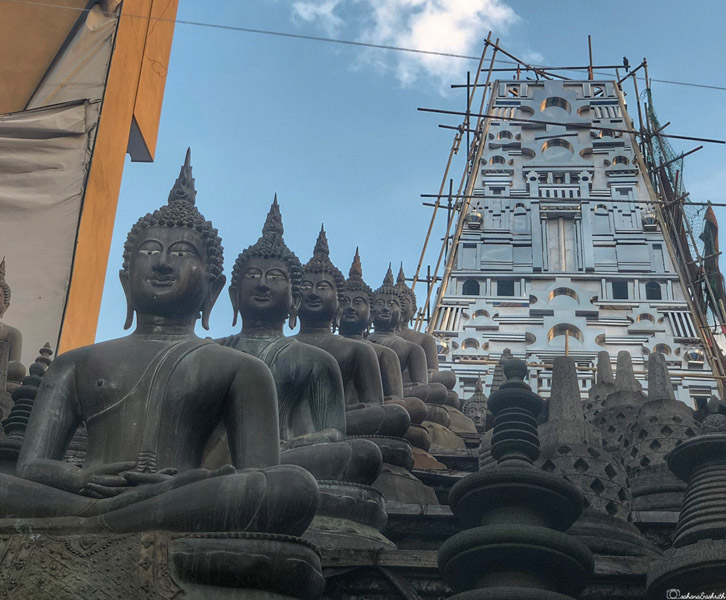
Friendliness and Hospitality
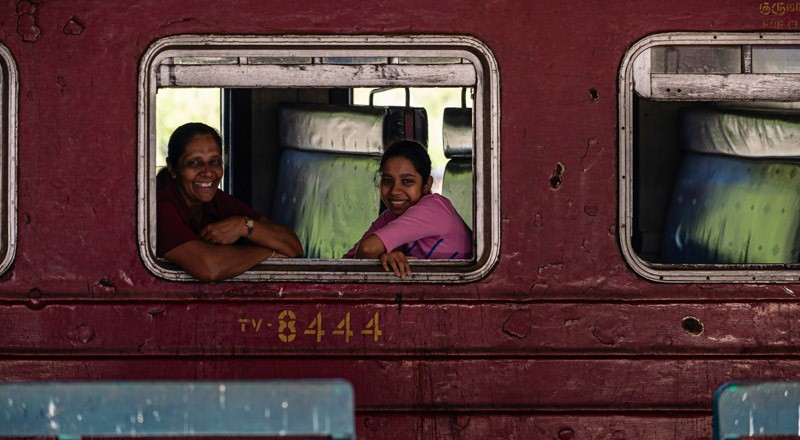
Sri Lankans definitely aren’t grumpy! But, you might find it uncommon to smile at strangers and exchange greetings like “good morning/hi/hello.” However, when you approach them for any touristy help, they tend to smile and offer assistance. Whether it is getting help from bus driver in Bandarawela or a coconut vendor, they are happy to help those who ask.
The cafe owner at Secret Beach is the one who saved my life when I was almost swept away by the waves.
When I was dealing with foot pain from sea urchins, the owner of the Mirissa guest house went out of his way. He called up his family doctor and was all set to take us there. Chaminda from Dedunu Homestay in Bentota was an absolute gem of a host. In Ella, the lady who cooked us delightful home meals wasn’t too pleased with her cooking because we didn’t eat as much as she expected us to.
Curious why I nearly met my end in Sri Lanka? Check out my story about a silly mistake that nearly got me killed. It’s a lighthearted part of our Sri Lanka travel guide!
The tint of racism
Similar to many other countries, the obsession with fair skin exists in Sri Lanka as well. However, there are fewer fairness skin ads on billboards compared to India and Egypt. But, there’s this kind of racism present in Sri Lanka. We often faced judgments based on our skin tones too. For instance, a guest house in Galle had a sign saying, “Accommodation for white people only.”
Some even openly displayed hatred towards Muslims! The Muslim population is smaller in Sri Lanka, and many people might directly ask if you are Muslim. If you say no, it’s quite likely that some may express relief and say they’re glad you’re not Muslim.
There’s a noticeable fondness towards China, particularly evident at airports, malls, and various public places.
The displays of affection towards China, though not always from locals, are noticeable. With China’s loans to Sri Lanka, there’s a clear warmth shown towards the country. . At the Colombo airport, there were boards that said, “Dear Chinese, welcome to Sri Lanka. Many of our staff speak Mandarin. Please feel free to converse with them in Mandarin.” Airport staff actively assist Chinese tourists with their luggage while the rest of the crowd manages on their own.
Comparing Sri Lanka to India can get you in trouble
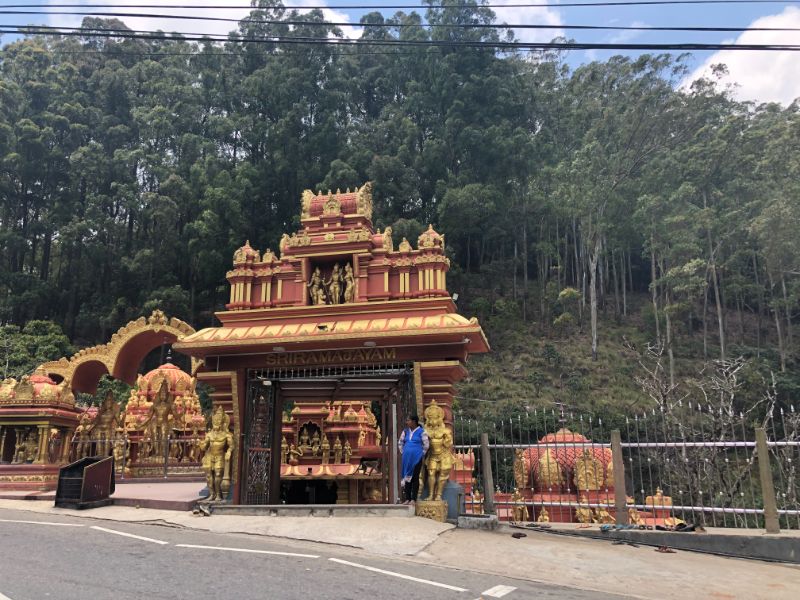
Few Sri Lankans, less than 10%, are Tamilians. Don’t assume all Sri Lankans speak Tamil. When we asked our Mirissa guest house owner if he spoke Tamil, he was offended, saying, “I am Sri Lankan; why would I speak Tamil?” Sri Lanka faced civil wars from 1983-2009 between a Sinhala Buddhist-dominated government and Tamil rebels seeking a separate state. While resolved, scars remain, much like the complexities of the Israel-Palestine situation.
Sri Lankans claim that the Indian government supported Tamil Nadu in training LTTE, but India denies it. (There’s more to this political tangle).
The Mythological Connections
We (Indians) claim that Rama Sethu AKA Adam’s Bridge is built by Hindu Lord Rama. On the other hand, Sri Lankans believe it was created by King Ravana from Lanka (the rival of Rama). Both Indians and Sri Lankans adore cricket and are strong contenders against each other.
It isn’t Sri Lankan population hating India or Indians. However, they’re not fond of being associated or compared with Indians. Any sentence comparing Sri Lanka with India could spark heated and unhealthy conversations with Sri Lankans. We’re two separate nations with some similarities.
How to dress in Sri Lanka?
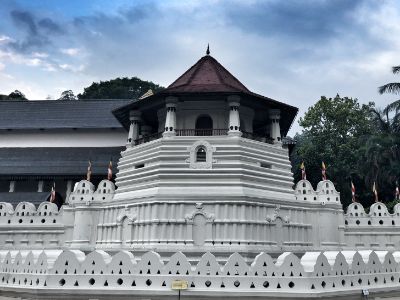
Plus, unlike in Japan where you can wear almost anything to the temple, Sri Lanka does have strict dress codes for all while entering Buddhist temples.
Sri Lankans dress up modestly and are very religious. So you see boards in homestays that say,” Please wear modest clothes inside our house premises.”
Any tattoo or T-shirts of Buddha’s face or image on it must be hidden or not worn. It is considered very disrespectful, and for sure you will get into trouble with locals.
You don’t have to unpack your bikinis, but there are some restrictions to keep in mind.
Check out our post titled “What to Wear in Sri Lanka as a Tourist?” as part of our extensive travel guide to figure out your packing list.

Safety Concerns
I can’t lump Sri Lanka into one category. I’d say it’s definitely not unsafe. However, it’s wise to avoid being out at night, refrain from getting too drunk in public, and stick to places where there are people around. If you’re heading to an isolated area, it’s good to go with a guide or a reliable local. Solo travelers have varying opinions on safety in Sri Lanka. As a couple of travelers, we’d say Sri Lanka is generally safe.
A Case in Point:
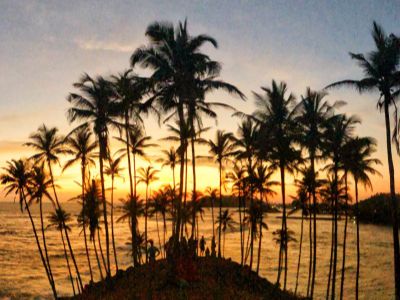
Around 7 PM, we strolled down Coconut Hill after enjoying a stunning sunset with other tourists. When we reached the main road, tourists headed to their homestays, and very few of us headed towards the restaurants. Two men in a jeep started following us, calling out names in a language we didn’t know. We were dressed modestly and didn’t have flashy jewelry to attract thieves.
As we were the only ones going in that direction, they followed us. Seeking refuge, we entered a nearby grocery shop and pretended to shop. They waited outside while we were in the shop. The shopkeeper noticed and signaled for us to stay. Pretending to inquire about potato and onion prices, we bought a few items. Later, the shopkeeper said, “I’ll come with you.” When those two men saw a local man walking with us, they got in their jeep and left.
We’re really grateful to the man who saved us from whatever was about to happen. Our guesthouse owner came outside, saw us with a stranger, and got what was going on. He said, “Sorry about that. In Mirissa, there are bag snatchers and thieves targeting isolated tourists. Wait in your room for a bit, then head out after to avoid those two men.”
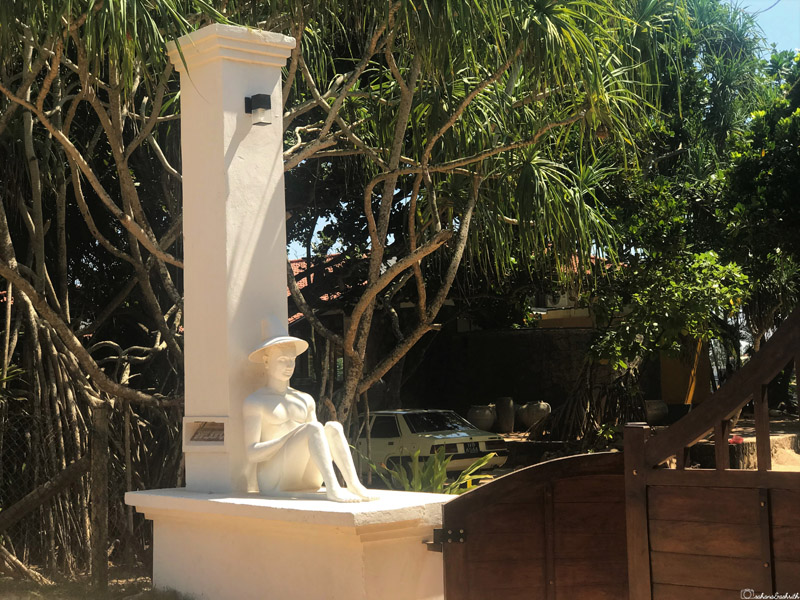
This could be a situation even in a city like Paris or New York. So I won’t label Sri Lanka as unsafe. Take precautions that you would take in any other country. Avoid going to isolated places.
Tourist Scams in Srilanka
- Tuk-tuk scam: Exploiting tourists with inflated prices.
- Fake precious gemstones: A significant scam.
- Stilt fisherman photo at Koggala: Tourist trap, demanding payment for posing.
- Unauthentic tea estate tour near Nuwara Eliya.
- Poor quality and overpriced spice gardens in Ella.
- Faulty railway ticket scams.
4. Practical Travel Tips for Sri Lanka
Mobile SIM and Connectivity
We grabbed two Mobitel SIM cards with a tourist deal for international calls and 4G internet. But the network wasn’t great, especially in places like Ella and remote areas. You better check out another service provider. Public Wi-Fi is almost nowhere to be found, even at airports. Thankfully, the guesthouse Wi-Fi worked enough to make calls on whatsapp.
Plug Sockets and Adapters
In Sri Lanka, power plugs and sockets (outlets) of type D, type M and type G are used. The standard voltage is 230 V at a frequency of 50 Hz. Check if your country needs a plug adapter here. I carry a universal adapter.
Tipping Culture
In Sri Lanka, tipping isn’t really anticipated. However, Tuk-tuk drivers sometimes keep the loose change after you pay them. For instance, if your bill is 92 LKR and you pay them 100 LKR, they might assume you don’t want the 8 LKR back.
5. Getting Around Sri Lanka
Roads and Driving
In Sri Lanka, they drive on the left side, akin to India and other nations colonised by the British. The driving style resembles India’s without honking and is deemed better than in Iran due to fewer motorbikes on the roads. The traffic in Colombo is among the worst I’ve experienced. If you’ve mastered crossing streets in cities like Bangkok, Cairo, and Indian cities, navigating here will feel like a breeze.

Renting cars and bikes
Driving yourself is one of the cheapest and best ways to enjoy Sri Lanka if you’re used to driving in chaotic conditions. At first, we planned to rent a car from Malkey Rent-A-Car and go on a self-driven road trip until we realised we didn’t want to risk getting stuck in traffic jams. Also, you’ll need an international driving licence to drive in Sri Lanka. If you don’t have one, you’ll have to apply for a temporary driving permit in Colombo, which could take up to 7 days for approval.
Public Transport Overview
When it comes to getting around in Sri Lanka, you’ve got a bunch of options.
- Trains
- Ferries
- Buses
- Tuk-tuks
For checking local routes or intercity buses, try using Routemaster. They provide detailed information on local bus numbers and all stops along the way.
Sri Lanka’s train booking website is just as ‘non-user friendly’ as those in India or Egypt. Use 12 Go Asia for bookings?they display all available options from point A to B, covering both trains and buses. And it is easy to book using your cards.
Railways in Sri Lanka
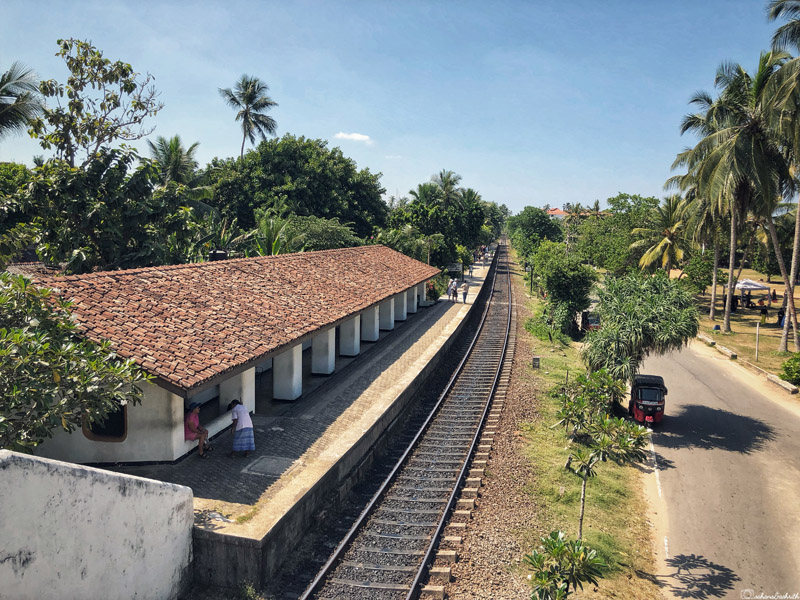
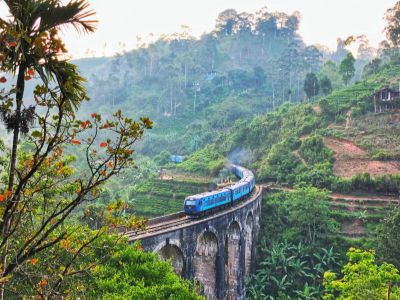
Sri Lankan train journeys are among the most beautiful experiences you can have on the rails. These rides wind through tea estates and along the ocean, offering incredible scenery. While there’s usually a delay of around 15 minutes, locals adore their trains for their affordability and reliability. For budget-conscious flashpackers, traveling around Sri Lanka by train is a top choice. Ella to Kandy is one of the most scenic trains route in the world – Not an exaggeration!
Public buses
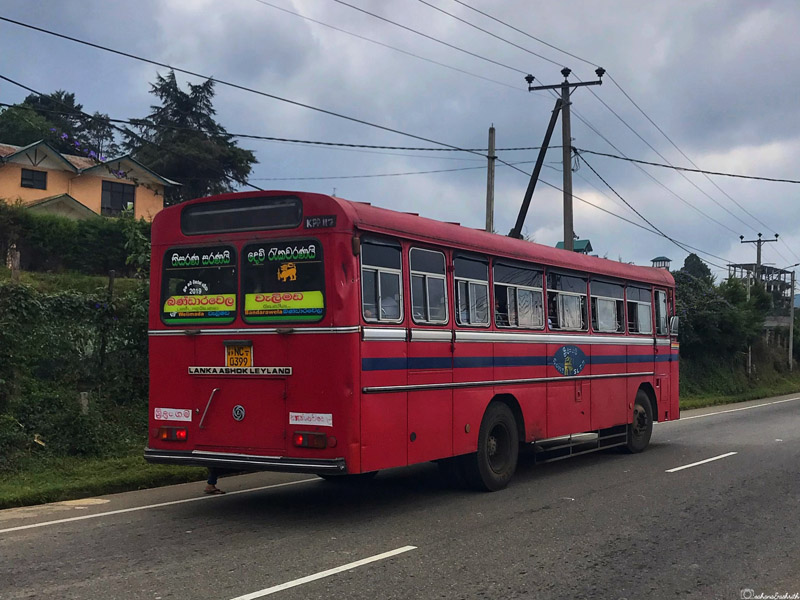
Taking public buses in Sri Lanka is a super cheap way to travel between towns, but get ready for a bumpy ride and to sweat it out on the SLTB non-AC buses. We’ve hopped on similar buses in India for shorter trips, but the ones in Sri Lanka can be really exhausting?yet they save you a ton of cash. If comfort is a priority, private buses with air conditioning are available, but they’ll cost you more.
During the tourist season, it’s wise to pre-book your bus tickets for AC coaches via 12 Go Asia. But if it’s not peak season, you can easily grab tickets a day in advance from local agencies or directly at the bus stands.

Tuk-tuks
Tuk-tuks in Sri Lanka stand out from Thailand’s and are more similar to India’s, but the coolest part is their vibrant colours. They’re not just rides; they’re cityscape characters. Serving as the heart and soul of the pearl island, they connect everything. Whether you’re traveling from Dambulla to Heritance Kandalama or off to the secret beach in Mirissa, Tuk-tuks are your trusty mode of transport.
Make sure to confirm the deal and clearly communicate your stop before starting the ride. If needed, don’t hesitate to ask for help from the locals.
Taxi
Uber was not that famous in Sri Lanka back in 2019. Locals used an app called “Pick me” for booking cabs & Tuk-tuks.
Cycling in Sri Lanka
From the beautiful rice fields to the vast tea plantations, rustic villages to wildlife-filled nature reserves, Sri Lanka’s mix of geographical and cultural wonders is incredible. Exploring it all on a bike is simply the best way to experience it if you are fit.
Keep in mind, you’re in a tropical paradise, so expect to sweat more than you would in the Alps. When cycling in Sri Lanka, it’s best to avoid November, the wettest month. Also, make sure to stay well hydrated along the way!
6. Amenities
Public Toilet Policy
In Sri Lanka, mid-range guesthouses and restaurants usually had bathrooms with commodes, jet sprays ( imagine me grinning), and toilet paper. Public toilets, however, often had not-so-clean squat toilets equipped with jet sprays. If you’re not accustomed to jet sprays, consider carrying pocket tissues. It’s better to use washrooms in private cafes or restaurants. Public toilets aren’t widely available, and where they are, you might need to pay to use them.

Public Hygiene
Culturally, historically, and ethnically, India and Sri Lanka may share some similarities. However, Sri Lanka sets a noteworthy example, particularly in public hygiene, surpassing India’s standards. In towns like Bentota, it’s common to witness local residents meticulously cleaning streets using coconut tree leaves and broomsticks. Lankans demonstrate a stronger civic sense in maintaining cleanliness. We observed immaculate streets everywhere, even in the busiest tourist spots like Bentota beaches.
Drinking Tap Water
In Sri Lanka, it’s not advisable to drink tap water. It’s better to stick with bottled water for drinking purposes.
7. Sri Lanka Food and Alcohol Etiquette
Srilankan Cuisine Overview
Sri Lanka is a food haven for both vegetarians and non-vegetarians. Their cuisine boasts rich flavors due to the abundance of spices like cardamom and cinnamon. While Indian and Sri Lankan food are often thought to be hot and spicy, the truth is that both nations use spices for taste rather than just heat. Sri Lankan food offers a range of flavors?bland, spicy, sweet, and sour?all packed with rich taste, primarily based on coconut oil and coconut paste.
Typical Sri Lankan meals
A typical Sri Lankan breakfast includes Appam (resembling an inverted Dosa found in Kerala), steamed rice Shavige (string hoppers) paired with coconut-based chutneys. They also serve fresh fruits, varying according to the season, along with egg toasts.

Curries take the spotlight in Sri Lankan meals. While rice remains the main staple, they also serve up wheat rotis paired with flavorful veg or delicious fish/prawn curries. And when it comes to seafood, the island nation knows how to nail it!
Tips to Vegetarian Dining in Sri Lanka

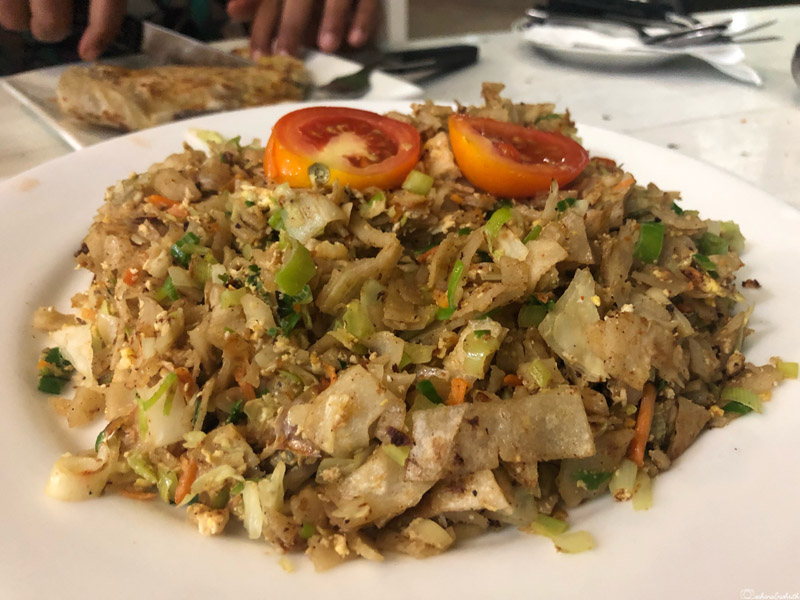
Sri Lanka, being a tropical paradise, is brimming with fruits, veggies, and an array of herbs and leaves used in their cuisine. Veg food is easily found across the island, even in remote areas, as Sri Lankans naturally include vegetables and curries in their daily meals. Dishes like Kottu Paratha (scrambled roti), Godamba roti (similar to Kerala paratha), Pol Roti (coconut flatbread), and Indiappa (String Hoppers or Shavige) can be paired with various curries, including Kadju (Cashew) and Potato curry.
The most delicious dip AKA chutney you’ll taste is Coconut Sambol, made by grinding red chilly, coconut, and onion into a dry paste. Just check if they’ve added Maldives fish, especially if you’re a vegetarian enjoying Coconut Sambol with any rotis or rice.
If you are a vegetarian and not enthusiastic about local Lankan food, you can always rely on their fresh and juicy fruits. Sri Lanka is a tropical paradise that grows juicy Mangoes, sweet & sour pineapples and Passion fruits. Also, do not forget to try Strawberries in Nuwara Eliya.
Sri Lanka and Tea
Tea arrived in Sri Lanka in 1824, and today, it’s the fourth-largest tea producer globally. Ceylon tea is renowned worldwide for good reasons. Locals typically enjoy their tea without milk and slightly sweetened. Ceylon black tea is considered almost a national beverage. However, for coffee enthusiasts, there’s good news?a coffee comeback is happening in Sri Lanka.
Drinking Culture and Smoking
Sri Lanka is renowned for its stunning turquoise beaches, but it’s not a place known for heavy drinking and partying. Lion Stout stands out as their popular beer brand, found in beach shacks across the country. In towns like Kandy known for their religious significance, it’s essential to be mindful of your surroundings while enjoying a drink.
Smoking is banned in many public indoor and outdoor spaces. Yet, you can smoke at open beach shacks and on guesthouse balconies.
8. Best times and spots to visit in Sri Lanka.
Recommended Duration: How Many Days
Before heading to Sri Lanka, one thing to note is that it ranks among the top 75 smallest countries globally. Your duration of stay depends on your interests and vacation plans. We spent around 8 days and 9 nights there, which covered some of Sri Lanka’s main highlights. As part-time travelers, being from tropical India, this time allowed us to relax on the beaches and experience peaceful temple visits at a leisurely pace.
We suggest spending around 7-10 days for an ideal Sri Lankan visit. If you’re aiming for a super-relaxed vacation, especially lounging on the beach, think about extending to 2 weeks. Some backpackers delve deeper into Sri Lanka’s vibe, spending almost a month exploring offbeat places like Northern Sri Lanka, including Jaffna, which aren’t typically on the tourist trails.

Best time to visit Sri Lanka
Like many tropical spots, the best time for beaches in Sri Lanka is from December to April when it’s more pleasant. Avoid the end of December and the start of January due to high prices and crowds. November’s the wettest, April to June’s the hottest. We went in scorching April for our first anniversary. To stay cool, we stayed indoors at noon or took buses around that time.
If you are planning to visit Sri Lanka to watch whales
- For Mirissa, November to April is ideal.
- Trincomalee offers the best sightings from May to September
9. Places to visit
Guide to crafting Sri Lanka Travel Itinerary
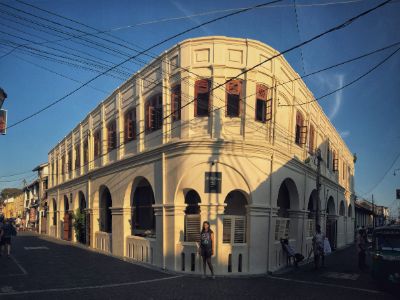
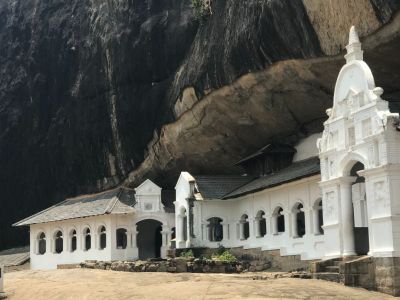
The major draw in Sri Lanka is its coastline – it’s pretty irresistible! Besides that, there are captivating ancient temples, a few hiking trails, and some national parks. It’s better to explore a bit of everything on a short visit to Sri Lanka rather than sticking to one type of place.



10. Booking Tickets for Activities
Booking activities in Sri Lanka can vary depending on your interests. Some popular activities that might require advance booking include:
- Wildlife Safaris: Bookings for national park safaris (like Yala or Wilpattu) to spot leopards, elephants, and other wildlife are advisable.
- Whale Watching: If you’re interested in whale watching in spots like Mirissa or Trincomalee, it’s wise to book a tour in advance during the respective seasons.
- Guided food tours.
- Tea Plantation Tours
One thing I’d suggest is booking Paramotoring in Bentota at least a week beforehand. It’s an amazing experience that fills up quickly during peak season. Also, the flying slots during the day are limited due to weather and seasonal shifts.
Found our Sri Lanka Travel Guide useful? Let us know in the comment section below.


Wow, shout out to the cafe owner at Secret Beach who rescued you from the waves! Must have been a terrifying experience. I appreciate you listing the Sri Lanka scams to watch out for. Very informative post!