Disclaimer: Some links in this post are affiliate links. If you book through them, we earn a small commission at no extra cost to you. See our Privacy Policy for details.
Ultimate Way to See Sumo Morning Training in Tokyo
Japan is this wild mix of futuristic tech and deep-rooted traditions, and nothing captures that better than sumo wrestling.
Once performed for Shinto gods, it’s now the country’s national sport. Sure, watching a live match is thrilling, but have you ever wondered what it’s like behind the scenes?
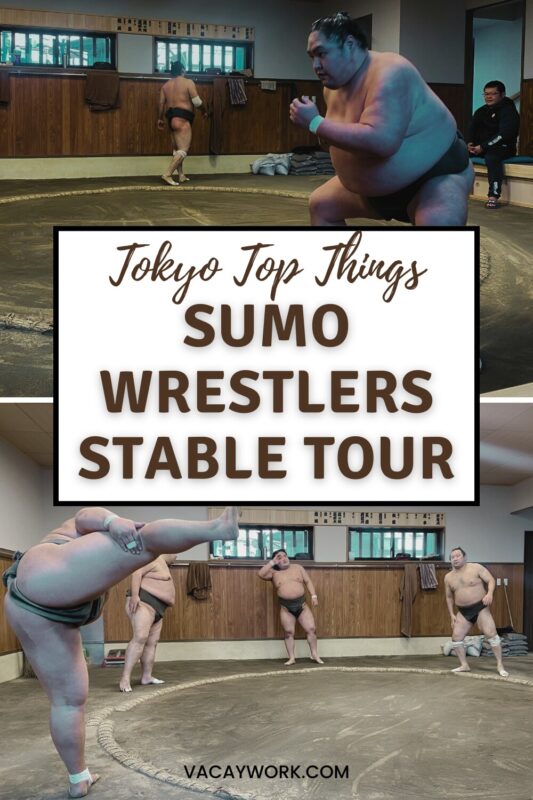
Imagine seeing the sumo wrestlers (Rishikis) in their morning training grind. If you’re curious, a sumo stable tour in Tokyo is a must!
When I visited during my 24-day trip to Japan, I did just that. And wow—it gave me a whole new appreciation for sumo!
You’re not just a spectator, you’re right there, up close, watching their intense training and discipline.
In this post, I’ll show you how to book this tour, what to expect, and why you definitely shouldn’t miss out!”
What is a Sumo Stable Tour
It’s your backstage pass to sumo life, offering a rare insight into the sumo wrestler’s lifestyle. It’s where the rikishi (wrestlers) live, eat, and train together, all under the watchful eye of the stable master.
You’ll get to see them in their morning practice. It’s intense, and not every stable opens its doors to tourists. The few that do? You’ll need a guide who knows the ropes—and speaks Japanese.

Is watching Sumo practice worth it?
Watching sumo practice in Japan live is definitely worth it. You don’t get a chance to see sumo wrestlers up close every day, and the sumo stable visit offers a unique perspective

So it surely is one of the must things to do in Tokyo
Before I went, I didn’t fully understand the deep traditions and rituals behind Sumo. I thought it was all about size and strength. But watching them practise, I realised it’s so much more.
The discipline, the agility, and the power behind every move!
With a local guide sharing all the cool history and details about their lifestyle, you’ll come away with serious respect for these athletes.
What I loved about visiting Sumo training stable in Tokyo?
It’s not just about sitting there and watching them practice – the sumo training tour is about gaining a deeper understanding of the Sumo tradition. Plus, it’s incredibly fun to watch.
You will learn a lot on the Sumo stable visit
Sumo wrestlers in Japan typically join a stable at 15, after completing their education, and stay with the same stable throughout their career.
They usually retire by 30-35, although some go on until their 40s.
Rikishis are heavy, but much of that is muscle from their intense training and high-calorie diet, which includes chanko nabe—a hearty stew.
There are no weight classes, so being heavier is an advantage in the ring.
Before things get started, your guide explains how the session works and the meaning behind key movements and exercises.
You’ll also learn which exercises help tone specific muscles or improve particular skills.
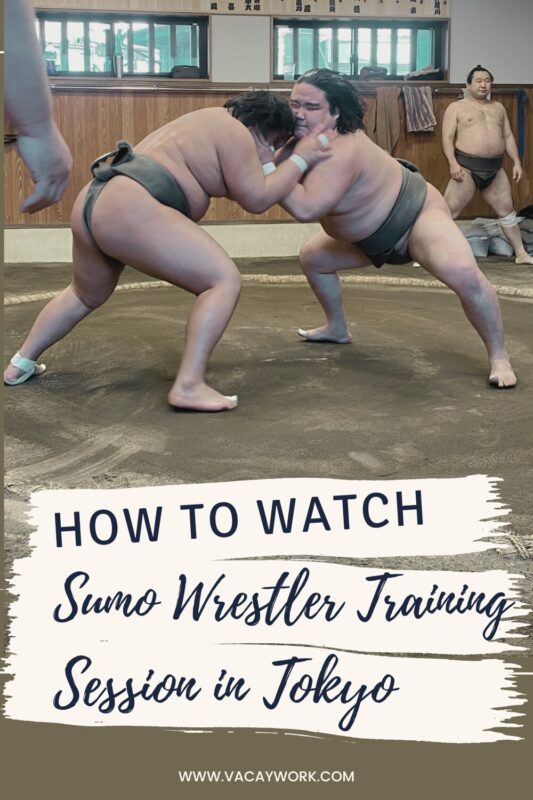
For example, Teppo is an exercise where wrestlers push forward with their hands, hips, and legs—kind of like a sumo warm-up.
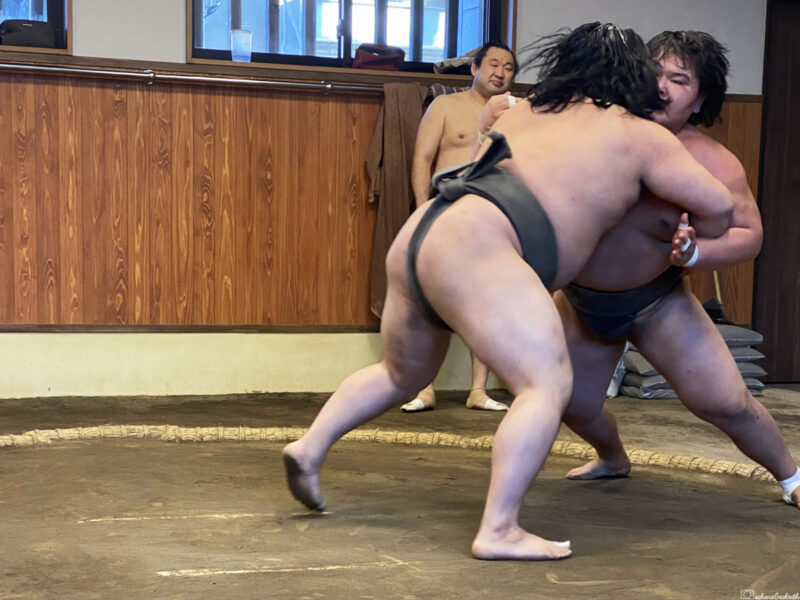
Then, the junior wrestlers go head-to-head. Even though it’s just practice, it feels like a mini-match. You’ll end up cheering for one of them—I know I did, but my favourite lost!
What to Expect on a Sumo Stable Visit in Tokyo
Every sumo stable tour in Tokyo includes a Japanese-speaking guide because, let’s be honest, stables don’t just let people walk in. Foreign visitors must be accompanied by a local guide.
And yes, all sumo training tours happen only in the morning since that’s when wrestlers are fresh and ready for their intense training sessions. By afternoon, they’re usually resting.
These tours aren’t private, so you’ll be part of a small group with a shared guide.
Don’t stress about hiring a private guide—Japan’s already pricey, and that could easily double your costs. Plus, the group size is usually 6 to 8 people, so you won’t feel lost in a huge crowd.
Your guide will meet you at the nearest metro or train station to the stable you are visiting at least 30 minutes before the session starts, whether it’s in Ryogoku or Sumida Ward.
You’ll walk with your guide to the sumo stable (heya), and along the way, they’ll share interesting facts about sumo history, how stables work, upcoming matches, and more details about the heya you’re visiting.
In general, there are many customs and manners that the Japanese follow. The guide will explain the etiquette you should follow while watching the rikishis train at the sumo stable.
Once you arrive, it’s shoes off (and socks on, preferably) before entering the practice hall. Your backpack gets its own spot too!
You’ll be sitting right in front of the practice area on the floor with your legs folded, staying zen for about 1.5 to 2 hours.
There won’t be any commentary during the practice—wrestling training is a sacred traditional ritual, not a tourist show.
But you’ll get a handout explaining sumo moves and rules they follow, so you won’t be lost.
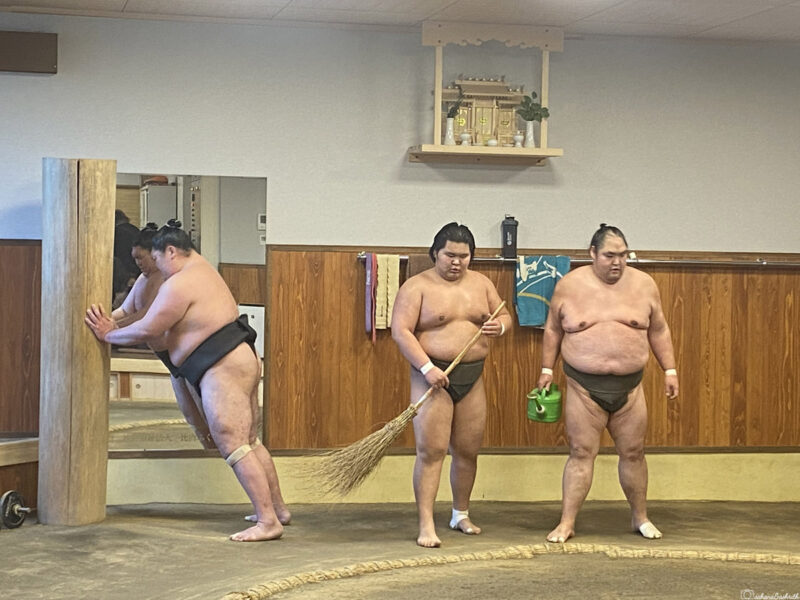
The junior wrestlers will be sweeping the arena, keeping the soil even, and wiping down the Teppo wood while the wrestlers carry out their daily routine.
Then the real action begins—wrestlers spar while their mentor watches closely, correcting them as they go.
After practice, you’ll get a chance to take a photo with two of the senior wrestlers.

Finally, you can ask the guide all your questions about sumo rituals, traditions, and matches—just don’t ask for a sumo selfie!
Where can I see sumo wrestlers in Tokyo?
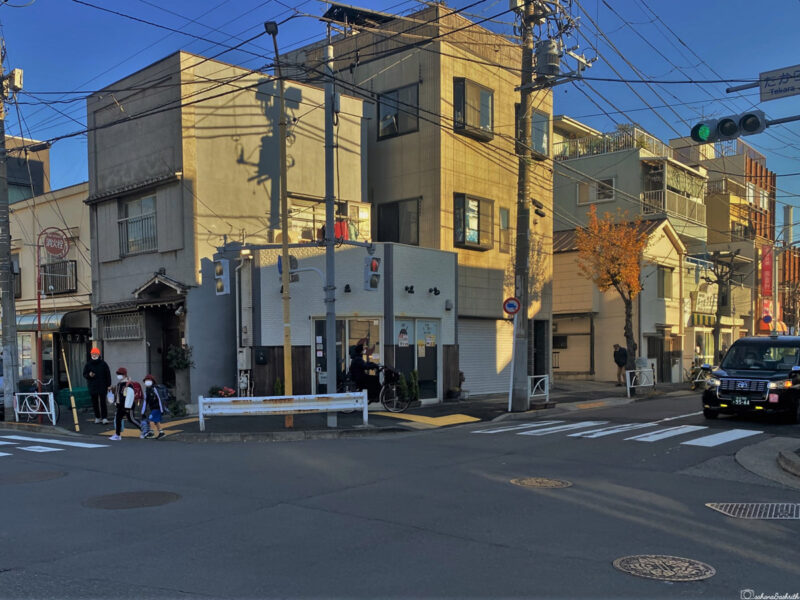
If you want to see sumo wrestlers in Tokyo, Ryogoku is the place to be—it’s like the sumo headquarters! Sumida Ward also has plenty of sumo stables.
We visited Oshiogawa Beya stable in Sumida Ward during a with a local guide.
Best Time to Visit Sumo Stables
Mornings are the only time when visitors can tour sumo stables in Japan. Wrestlers train in morning from 6:30 to 10 a.m. during tournament periods, and from 7 to 11 a.m. in the week leading up to the event.
How Much Does a Sumo Stable Tour Cost?
A visit to Sumo training stable in Tokyo costs between 8,000 and 10,000 yen per person. If you’re booking for just one person, you’ll need to pay for two.
In 2022, we paid around 14,000 yen for two people. Even if only one person had booked, the price would have stayed the same—14,000 yen.
How to Book a Sumo Stable Tour in Tokyo?
You can book the tour in Tokyo on either Viator or Rakuten Travel Experience. We chose Rakuten because they’re local experts.
On Rakuten website, Pick your date, select your group size, and use any international credit or debit card to book.
It’s best to log in and book on Rakuten, as you earn rewards for every tour. For example, I earned discounts on a tuna fish auction tour after booking the sumo stable visit with my points!
While you can choose the date, you won’t be able to pick a specific stable.
Since all sumo stables train in the morning, there’s no need to look for other tour slots. The tours are set according to the stable’s schedule
Once your booking is confirmed, the local guide will email you with all the details.
About a week before your tour, they’ll follow up with the exact address, the stable name, and etiquette rules—everything from dos and don’ts to helpful tips.
If you provide the name of your hotel /hostel you are staying in Tokyo, they’ll even send you clear directions to the nearest station.
Sumo Stable Etiquettes every visitor must follow
Timing is key: Don’t show up fashionably late, but don’t arrive too early either.
Shoes off: Before stepping on the tatami floor, remove your shoes (and preferably socks too). It’s part of the tradition, and no one wants dirt inside the stable.
Pack light: Space is tight in sumo stables in Japan, so don’t bring large bags or luggage. Travel light for this experience.
Hats and phones off: Inside the stable, hats and phones are a no-go. Turn off your phone to keep the focus on the sumo morning training tour without distractions.
Photos? Ask first: You’ll need permission, and always turn off the flash and shutter sound. Some stables allow photos only after practice.
No videos allowed: Filming is strictly off-limits. Even a quick clip can get you removed from the stable, so don’t risk it.
Wear comfortable and Modest Clothing : Sumos tables are not temperature controlled. So if you are visiting the stable in winter, wear warmer clothes. In summer keep it light.
Mind your sitting position: Sit in the “seiza” position (legs folded under you) or with knees up and feet together. Never stretch your legs toward the ring—it’s considered rude to show the soles of your feet to the wrestlers.
Stay quiet : Once the training starts, you need to stay seated and quiet for the next 1-2 hours. Moving or making noise is a big no-no during sumo wrestling practice Tokyo.
No snacking: Eating, drinking, or smoking isn’t allowed inside the stable. I carried the Higashi sweets in my pocket everywhere in Japan. But never ate one piece while at the stable.
No talking: Even whispers can distract the wrestlers, so hold off on conversations. The focus should be on the sumo wrestlers during their practice.
Respect the ring: The sumo ring is sacred, so don’t stand in or around it. Only wrestlers are allowed in that space.
Stay until the end: Leaving before the session ends is disrespectful. Stay for the entire duration of the training.
Kids need a chaperone: Children can attend, but they must be supervised by a parent or guardian at all times. If they can’t follow the rules, they might be asked to leave.
Cover up tattoos: Tattoos aren’t widely accepted in traditional places like sumo stables in Japan. It’s best to cover them up if possible.
How to Get to Sumo Stables in Tokyo
Most sumo stables of Tokyo are in the Ryogoku district, with some located in Sumida Ward. To get there, Tokyo’s public transportation—metro, subway, or trains—is your best bet.
Cabs can cost a lot, sometimes more than the tour itself!
Tokyo’s trains and buses start running at 5:30 a.m., and since practice usually begins around 8 a.m., it’s best to arrive by 7:45.
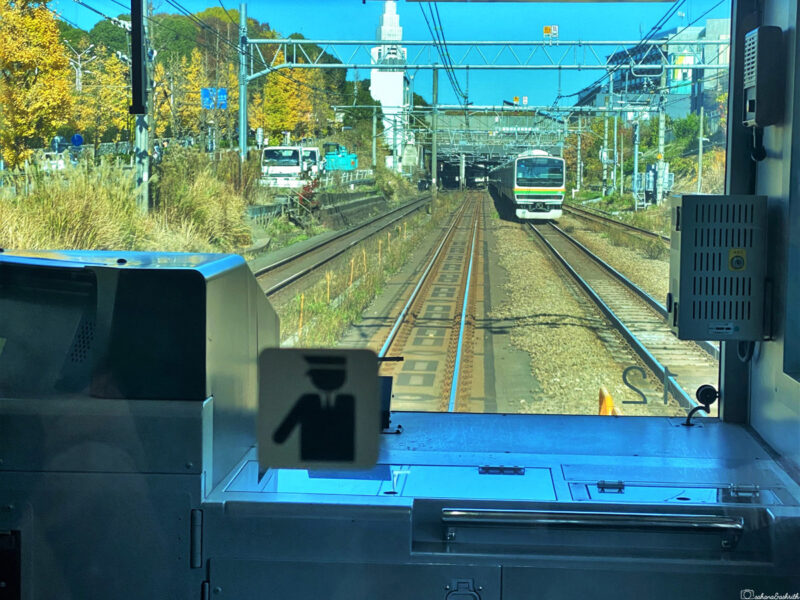
For stables in Ryogoku, head to Ryogoku Station on the Toei Oedo Line.
If your stable is in Sumida Ward, use the Toei Asakusa Line or the Tokyo Metro Hanzomon Line.
Using an app like Japan Transit Planner can make navigating Tokyo’s complex transport system a breeze.
I used it across Japan, and it was a lifesaver on more than one occasion!
Other Sumo Experiences in Tokyo
Besides sumo stable tours in Tokyo, you can either attend a real sumo wrestling match or dine at a Chanko Nabe restaurant for a sumo meal and live show.
When can you see sumo wrestling matches in Japan?
The Japan Sumo Association oversees professional sumo, holding six tournaments yearly. Three are in Tokyo (January, May, September), with one each in Osaka (March), Nagoya (July), and Fukuoka (November). Each tournament lasts 15 days.
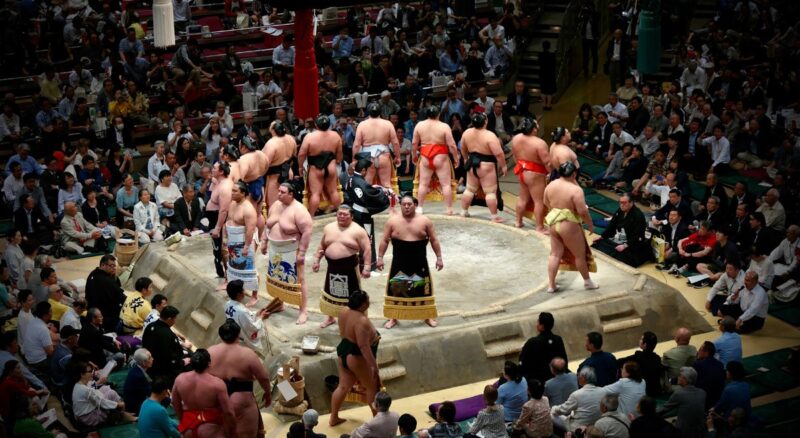
So, if you’re in any of these cities during tournament time, you can catch a real sumo wrestling match!
Just make sure to book your Sumo wrestling match tickets in advance—it’s a local favourite, and seats fill up fast.
Sumo Experience and Chanko Nabe Lunch
If you can’t catch a sumo tournament or morning practice, you could try lunch with a sumo wrestler, but it’s more of a fun show than the real deal.
Head to Yokozuna Tonkatsu Dosukoi Tanaka, a restaurant run by a retired sumo pro.
You’ll get a live sumo performance (in English) while eating chanko nabe—the hearty stew that sumo wrestlers eat- It is made of chicken and pork.
So, if you’re a vegetarian traveller in Japan, Chanko Nabe sumo experience might not be for you.
There’s some entertainment, like testing your strength against a wrestler, exhibition matches, and a chance to snap some photos or pick up sumo souvenirs.
But let’s be clear—it’s not an authentic sumo experience like visiting a stable or watching a live match. It’s more of an entertaining show run by ex-wrestlers, with food, drinks, and laughs.
Personally, I’d choose a stable tour or watching an actual match over this any day. It’s fun, but if you’re after the real deal, the other options are much better!
Conclusion
If you’re after an authentic sumo experience in Tokyo, the sumo stable tour is a must. It only runs in the mornings (6:30 to 11 a.m.) and lets you watch intense training while learning about rich sumo culture firsthand.

It’s serious stuff—imagine big guys, small belts, and lots of discipline.
For live action, nothing beats a sumo wrestling match.
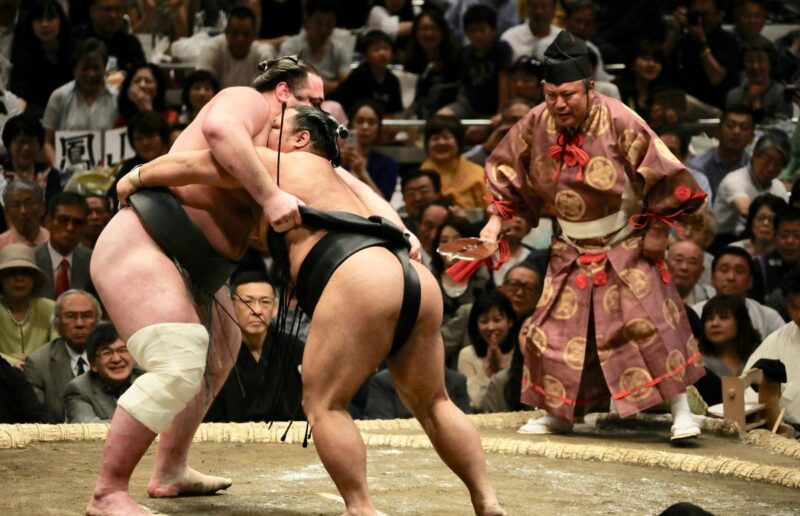
Tournaments happen six times a year—three in Tokyo (January, May, September) and others in Osaka, Nagoya Aichi Prefectural Gymnasium, and Fukuoka.
It’s the ultimate sumo experience, but be sure to book tickets early or risk missing out!
If you want something more relaxed, try the Chanko Nabe tour. It runs year-round, where you can enjoy a meal with ex-wrestlers and a live sumo show.
You’ll dig into a hearty stew, enjoy some sumo-style banter, and maybe even have a go at wrestling (if you dare). It’s all about fun and food.
Sumo stable tours are perfect for culture buffs, live matches for sports fans, and Chanko Nabe for those after a foodie experience with a sumo twist!