
Disclaimer: Some links in this post are affiliate links. If you book through them, we earn a small commission at no extra cost to you. See our Privacy Policy for details.
50 Amazing Facts About Austria I Found While Travelling
Austria isn’t just another Alpine country—trust me, I thought so too until I spent two weeks there with my mum on a budget trip.
This place has crazy history, wild war stories, stunning landscapes, weird laws, amazing food, and the quirkiest festivals. Oh, and the people? Some habits are just… unique.
So, here are 50 facts about Austria that blew my mind. And honestly, once you read these, you’ll see why Austria feel intriguing, a bit quirky, and definitely worth a visit!

Austria vs The World: Fun Comparisons
1. Austria vs Australia: The Hilarious Mix-Up
Austria and Australia are nowhere near each other, but people mix them up all the time! Even when I say Austria, someone always asks about kangaroos, not the pristine lakes by the alps behind meadows.
Google doesn’t help either—it often shows Australia-related results instead of Austria facts. And yes, social media is full of tweets making the same mistake.
This mix-up is so common that a rumour claims Austrian airports have a help desk for lost travellers heading to the wrong continent—but that’s just a myth!
2. Austria vs Germany: Big differences you should know
Because Austrians speak German, people often assume they’re German—but they absolutely hate that! The name Österreich actually means Eastern Realm, not Eastern Germany.

I learned this the hard way at a restaurant in Krems of Wachau valley. The servers wore Lederhosen and Dirndls, and the menu had German beer like Hofbräu. Thinking it was a German restaurant, I asked the waiter—who immediately looked annoyed.
“We just serve German beer,” She said coldly. “Our food is Austrian—just like us.” So, if you’re visiting Austria, don’t mix them up!
3. Vienna feels like a different world.
Austria has nine regions, and I explored four during my trip—but Vienna? It felt like a whole different world! The city is vibrant yet laid-back, effortlessly blending history with a modern, carefree vibe.

Nowhere else in the world have I ever felt so easy to be carefree as I did in Vienna—what I wore, what my mum wore, how I walked, what and how I ate.
I saw young folks sitting on the sidewalks beside a food joint, eating without a care.

Food & Drink Facts
4. Think Croissants Are French? Think Again!
Like most people, I thought croissants were French—until a walking tour in Vienna set me straight. Turns out, these buttery, flaky pastries actually come from Austria, where they were first called Kipfel in the 13th century!

Legend has it, Kipfel was shaped like a crescent to celebrate Austria’s victory over the Ottomans, whose symbol was the crescent moon.
Some say a Viennese baker later brought them to France.
Whatever the truth, one thing’s certain—croissants have deep Austrian roots!
5. Austria has a day just for strudel
One of the most famous Austrian food is apple strudel– sweet treat made with thinly rolled dough, apples, sugar, and spices (I could really smell the cinnamon!). And it even has its own celebration—National Apple Strudel Day on June 17th!

I personally loved cheese strudel, which I tried at Café Hawelka in the most famous part of Vienna Stephansplatz, a legendary spot since 1939.
While devouring it, a waitress there told me how locals celebrate—baking at home, sharing with loved ones, or grabbing a slice from a bakery for a picnic. Sounds like a delicious tradition!
6. Austria’s coffee culture is legendary
Austria takes coffee seriously—so much so that you’d think they grow it! But like the rest of Europe, Austria doesn’t grow coffee.

So why is Austrian coffee culture so special?
It goes back to the 1680s when the Austrians defeated the Turkish army, who left behind sacks of coffee beans. Locals experimented and soon mastered the art of brewing. Today, Vienna coffeehouses serve some of the world’s finest blends.
While exploring Vienna attractions, don’t miss a traditional Viennese coffee—strong black espresso topped with whipped cream. It’s kickass!
7. Austrian wine: Top producer and big consumer!
Austria is among the top wine exporters and ranks in the Top 10 for wine consumption per capita!

The Wachau Valley, a UNESCO-listed wine region, produces some of the best Austrian white wines—rich, dry, and full of character—all while offering stunning Danube River views from almost every corner.
8. Austrians converted a Christian Abbey into a beer garden.
The Augustiner Brewery in Salzburg is a must-visit for beer lovers.

Originally a monastic abbey, it now serves traditional Austrian beer in a grand hall decorated with religious artwork and statues of saints.
9. Austria was doing organic farming before it was cool
In Austria, healthy eating isn’t a trend—it’s a way of life. While “organic food” became a global buzzword in the 2000s, Austria was ahead of the curve.
The country’s first organic farm started in 1927 in Carinthia!

At a cosy restaurant in St. Gilgen, I raved about the Schupfnudeln, only for the waitress to casually mention that 80% of their ingredients were organic.
No surprise—over 15% of Austria’s crops are grown organically. Maybe that’s why everything tastes so fresh!
10. Austria is more Vegan than you can imagine.
A surprising truth about Austria is that, despite their love for meat, there’s plenty of vegan and vegetarian food.
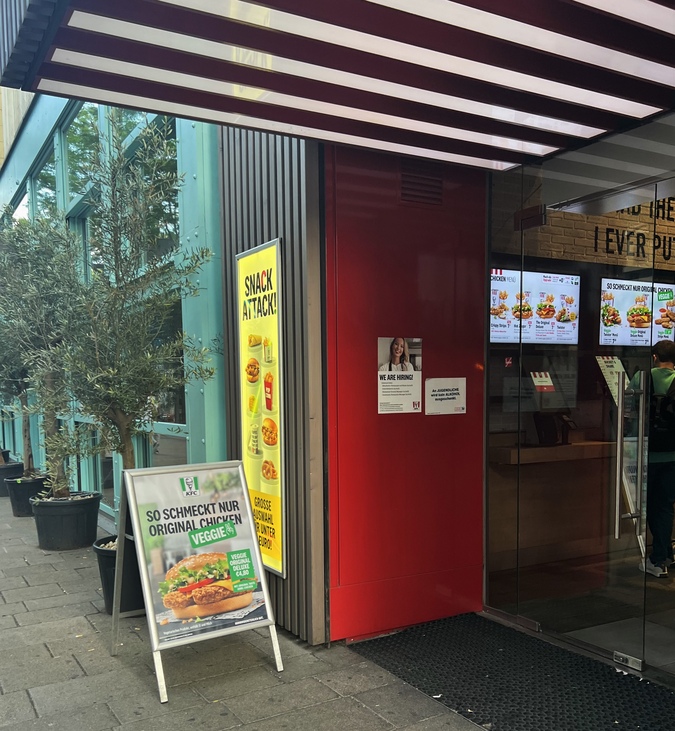
Outside India, Vienna was the first place where I found a veg burger at KFC! They even have a brand called Veganista that specialises in vegan ice cream.
History & Royals
11. Austrian history is older than we have heard.
Austria’s history stretches from prehistoric times to World War I and beyond. The Danube River and Austrian Alps have been home to humans since 8000 BC!
By 450 BC, salt mining thrived before Bavarians of germany, Romans, and later the Habsburg dynasty took over.
The Austrian Empire rose in the 12th century, but after World War I, the Austria-Hungary split, creating Austria, Hungary, Czechoslovakia, and Yugoslavia. Austria became a democratic republic in 1945.
12. World’s oldest salt mine is in the Austrian alps.
Tourists flock to Hallstatt in Salzkammergut area because some call it the most beautiful village in the world.

I don’t agree with that, but one truth is undeniable—Hallstatt has the oldest salt mine in the world, with a history dating back 7,000 years!
The whole Salzkammergut region means “salt territory,” and even Salzburg translates to “salt fortress.” and the river Salzach once used to transport salt. Now it is a calm river where you can chill in the evening after wandering enough in Old town.
13. Austria’s royal dramas: Sisi, Franz Joseph & scandals
The Habsburg dynasty had its fair share of drama, but none as fascinating as Emperor Frazn Joseph 1 and his wife Elisabeth (Sisi) from Bavaria

At just 16, Sisi married Habsburg king Franz Joseph, but palace life at the Hofburg wasn’t for her.
The Bavarian princess hated the strict court rules, spent hours on her appearance, and even used diamond pins in her floor-length hair. She often escaped on long trips, avoiding her duties.
She took extreme diet and exercise routine. Plus wore a tight corset to maintain 16″ waist!
Franz Joseph and Sisi had a son after 3 option!
Their son Crown Prince Rudolf tragically died in a murder-suicide at Mayerling in 1889.
Later, in 1898, an Italian anarchist assassinated his wife Sisi in Geneva. After his arrest, the happy murderer said, “Because I am an anarchist, I am poor, I love the workers, and I desire to see the death of the rich.”
Meanwhile, Franz Joseph’s brother Ludwig Viktor made headlines by openly embracing his homosexuality, a shocking move in Austria-Hungary at the time. Despite personal losses, Franz Joseph ruled the empire for an incredible 68 years.
14. Most powerful empress of Austria had 16 children
The most powerful ruler in Europe in the 1740s was Queen Maria Theresa of Austrian Hofburg empire.

She had 16 children, which meant she spent 12 years pregnant and at least 16 years nursing newborns during her 40-year reign.
So, for half her rule, she was either expecting or caring for a baby—an interesting fact I picked up on a walking tour in Vienna!

She is famous for her reforms in education and the military but notorious for using her children as political pawns.
She got them married into royal families across Europe—whether they liked it or not—to strengthen her empire!
15. Innsbruck’s Golden Roof—not actually gold!
The Goldenes Dachl (Golden Roof) is Innsbruck’s most famous landmark. But guess what? It’s not made of real gold!

Those 2,657 shimmering tiles? They’re fire-gilded copper. Built in the 1500s for Emperor Maximilian I and his wife, Bianca Maria Sforza, this Austrian landmark was a royal VIP balcony—perfect for watching events in the square below.
So, maybe it should’ve been called the Royal Roof instead!
16. Austria’s royals sparked World War I
If you’re visiting Hallstatt on your own (which I highly recommend over an organised tour), you’ll pass through a charming little town called Bad Ischl. This is where the Austrian royals decided to kick off a war- World war 1 in 1914

In 1914, Archduke Franz Ferdinand, heir to the Austro-Hungarian throne, and his wife were assassinated by a Serbian-backed terrorist.
This set off a chain of events—Austria declared war on Serbia from Kaiser Villa in the small town of Bad Ischl. Russia backed Serbia, Germany supported Austrian royals – Then the alliance formed giving birth to the cruel World war 1 which ended in 1918.
17.Hitler’s Austrian Roots
Many don’t realise that Adolf Hitler was born in Austria, not Germany.
His birthplace, Braunau am Inn, is a quiet town near the Austria-Germany border, about 60 km from the beautiful city Salzburg.
In fact, Hitler was an Austrian citizen until he became a German citizen in the 1930s. He spent quite a bit of time in Vienna, trying to get into art school and living in dormitories.

In 1938, he stood on the Hofburg Palace balcony, addressing Austrians with promises of prosperity. Instead, his rule led to destruction, leaving a dark mark on Austria history.
18. Austria’s greatest inventors and their impact
It is crazy when a Salzburgian shows a house to you on the busy street of Makartplatz and says, “Christian Doppler, who invented science phenomena responsible for measuring speed in RADAR sensor, was born in this building”!
The Red bull, Swarowski crystal, Porsche and the guy who distinguished blood type – The list of Austrian inventions go on.
Culture & Traditions
19. Austria’s forests are growing—and you can own one.
Ever wondered why Austria is so green despite its industries? I did too—especially when I stayed in Tirol – the mountainous region of the country.

Turns out, while the world battles deforestation, Austria’s forests are actually growing!
Even crazier? 81% of Austria’s forests are privately owned!
A hiker I met at Nordkette, Innsbruck, told me he owns a piece of forest himself. Locals carefully manage their land, sell timber, and replant trees using scientific forestry methods—keeping Austria’s green spaces thriving!
20. Austria’s window box flowers are pure magic
One of the most charming things about Austria is that Homes aren’t just pretty—they’re blooming!

Tyrolean houses are famous for their window box flowers, but no matter where you go, you’ll see balconies and windowsills bursting with colourful blooms.
Austrians have mastered the art of mixing floral species, turning their homes into picture-perfect wonders. Whether in a quaint Austrian village or a bustling city, flower-filled windows make everything feel straight out of a postcard!
21. Austria’s musical heritage—A country of composers
Music is everywhere in Austria. Walk through Vienna, you’ll hear street performers and students practising in Mirabell Gardens of Salzburg, and live concerts almost every evening.

All this ties back to Austria’s legacy of music composers like Mozart. Whether you realise it or not, you’ve probably heard one of his compositions—like the famous Twinkle, Twinkle, Little Star sonata. And of course, there’s Eine Kleine Nachtmusik.
22. Viennese waltz still thrives in Austria.
The Viennese Waltz isn’t just a dance—it’s a big part of Austrian culture. This elegant, fast-paced ballroom dance started in Vienna in the 18th century and is still going strong.
On my walking tour, my guide Elisabeth told me how learning the waltz is just part of growing up in Austria.
It’s a tradition passed down through generations, especially during Austrian festivals. The monarchy may be gone, but the waltz still fills Vienna’s grand ballrooms today!
23. Yodelling in Austria: More than just a fun sound!
Think Austria and Switzerland only share flower-filled balconies? They also share yodelling! It’s a way of singing where you switch between high-pitched falsetto and deep chest voice—fast!

Yodelling is a huge part of Austrian music. No one knows exactly where it started, but in the Tirol region, you can hear it at a Tyrolean folk show.
Back in the day, mountain folk used yodelling to communicate across Alpine valleys. Today, it’s a proud part of Austrian festivals and folk performances
24. Street art & graffiti scene: bold, creative & bizarre
Vienna has given the world famous painters like Gustav Klimt, and its art schools are highly regarded. So, it’s no surprise that Austrians love artistic expression—even on the streets!

One of the best places to see Vienna street art is Donaukanal, the city’s biggest legal graffiti zone. But some graffiti across Austria left me confused—even as an architect and street art admirer!
And some subway stations in Vienna are more than just place to wait – They are architectural marvel and museums themselves.
It goes beyond Vienna. Even in traditional towns like Melk known for it’s yellow+white stripe huge abbey on hilltop, you find artistic sculptures—figures of huge naked women, some sleeping, some standing.

25. Street bachelor parties in Austria are a spectacle
Spot a group singing on the street, dressed in funny costumes, and sipping beer? That’s an Austrian bachelor party in action!

The bride or groom-to-be wears a costume and parades through town while friends stop strangers—especially seniors—to join the fun. Some give marriage advice, others just sing along.
It’s a lively part of Austrian traditions, and the songs sound amazing—I just wish I knew the lyrics!
It’s a lively tradition, and the songs sound amazing—I just wish I understood the lyrics! You might come across one in Vienna or Salzburg, making your trip even more memorable.
26. Austria’s younger generation still helps on family farms
Many farms, privately owned forests, and family-run cafés of the country rely on the owners themselves due to a worker shortage. Finding farmhands isn’t easy, so families manage most tasks on their own, with kids helping when they can.

Every homestay or café owner we met said, “My son/daughter studies in Vienna but comes home for summer.”
Many young Austrians return during peak seasons to keep family farming running, balancing city life with their roots.
Daily Life & Travel Quirks
27. Shopping in Austria is slow—but that’s their charm
From Austrian food produce like cheese to handcrafted jewellery and pure honey, there’s no shortage of local treasures. But if you’re shopping in Austria, bring patience!

In old town markets and boutique shops, attendants serve one customer at a time—no rush, no small talk. When I bought Salzburg’s famous enamel earrings, there was just one other shopper, yet we were helped separately, in near silence.
It’s nothing like the lively markets in India or Turkey, where shopkeepers juggle customers while chatting away!
Even in Vienna’s flea markets and traditional bakeries, the pace is relaxed. Austrians value quality over speed—they work to live, not live to work!
28. Austria feels bigger than it looks on the map
Austria ranks 114th in size, and I thought 15 days would be plenty to explore this small country. But the higher I went, the more I realised—Austria isn’t just wide, it’s tall!

The Austrian Alps hide stunning villages, castles, waterfalls, and even hot springs. Every turn in the mountains brings a new surprise. Austria may look small on a map, but with its towns spread along the slopes, it feels much bigger than it seems!
29. Austria isn’t always cool!
Most bloggers say, “Austria never gets hot,” which might have been true before climate change. But in July-August 2022, I faced a heatwave with prickly heat and temps over 30°C – – It can get super hot in this beautiful alpine country!
I ended up buying summer wear and it turned out to be an added cost to my Austria trip

Even the mountain town of Kirchberg hit its all-time high of 32°C. And back in 2013, Carinthia recorded 39°C—the hottest ever in Austria!
30. Air conditioning isn’t common in Austria
Since Austria’s climate was historically mild, air conditioning was never a priority. Even today, only a few hotels offer it. It is rate especially in traditional Austrian buildings that can’t be retrofitted.
Locals don’t mind—many love fresh air and dislike sudden temperature changes. But with Austrian summers getting hotter, AC can be a lifesaver. If you need it, check carefully before booking your stay!
31. Austrian public transport is fast, reliable, and strict!
Austria’s public transport is top-notch—metros and trams in Vienna, electric buses in Salzburg, express and sleeper trains and even ferries on lakes. And the best part? They’re always on time!

On one of the busiest days in Salzburg, our bus was just two minutes late, and the driver apologised at every stop. Punctuality is taken seriously here.
But there’s no leeway—if you’re even 10 metres away from the stop, the driver won’t wait. We learned this the hard way when we missed a bus from Salzburg to Maria Plain (an easy hiking trail. with stunning views. all along), despite running for it.
In Austrian cities, public transport runs like clockwork—no waiting, no exceptions!
32. Austria’s train views are stunning—until the noise barriers show up
Train rides in Austria offer breathtaking views of meadows, mountains, and lakes—until tall noise barriers appear near villages. Even if just one or two houses are nearby, Austria ensures peace and quiet.

For travellers, these walls might block the view, but they’re a reminder of Austria’s high quality of life and strict noise regulations.
33. Austrian taxis vs Uber—locals aren’t fans!
On a private day trip to the Alps, my Austrian driver made one thing clear—Austrians prefer local taxis over Uber.

Uber has had a tough time in Austria. The Vienna Commercial Court even banned it temporarily after a legal battle over local business licences. It’s back now, but not exactly welcome.
A taxi driver in Innsbruck told me, “We want them out.” So while Uber does work here, don’t be surprised if most people stick to traditional taxis instead.
34. The sudden traffic update on radio even when it is off
Driving back from Grossglockner (the highest point in Austria) to Salzburg, our car’s music player was off—until it suddenly switched on! A German voice came through, giving a real-time traffic update.

Our driver explained it’s TMC (Traffic Message Channel), a system that broadcasts traffic alerts via FM radio. Austria is one of the few countries where this happens.
Super handy during ski season when roads get packed! In fact, near Mittersill, 117 km away, we got an update about Salzburg traffic!
35. Road rules in Austria: Cars wait, people walk
In Austrian cities, road rules aren’t just suggestions—everyone actually follows them! Pedestrians and drivers wait for the green signal, and on side streets without signals or zebra crossings, cars automatically stop for walkers and cyclists.

Motorbikes? Barely exist. And stepping onto a cycle lane? Unthinkable.
This respect for road-sharing is one reason the quality of life in Austria is so high. No honking, no chaos—just smooth, stress-free streets.
36. Everything shuts on time without a minute delay
Austria may be a top tourist destination, but don’t expect flexible hours. Shops, attractions, and even summer slides close exactly on time—no exceptions!
Most places operate Monday to Friday, 8-hour shifts. On Saturdays, shops shut by 4 PM, and Sundays? Forget it!
Even restaurants in touristy spots close on time. We learned this in Innsbruck’s old town, where staff started shooing people out 20 minutes before closing!
Travel & Adventure
37. Restoration never stops in Austria
With centuries-old Austrian landmarks everywhere, something is always under repair! If you’re visiting UNESCO sites in Austria or famous Vienna attractions, expect scaffolding—restoration never stops.

During my trip, Kirch Mariahilf near Mariahilf District 6 area of Vienna, a section of Salzburg Fortress, parts of Dürnstein Abbey in Wachau, and charming Tyrolean houses were all being restored.
Even the Austrian National Library and Vienna’s Parliament were under heavy renovation and closed for visitors.

While it might block a perfect photo, it’s how Austria keeps its rich history intact.
38. Palace and Museum burnout is a real thing in Austria.
Austria has over 1,000 museums and more than 40 castles and palaces. If you don’t plan ahead, the sheer number of options can be overwhelming.

You might just find yourself standing there, frustrated, thinking, “Which one should I visit?” if you don’t research before hand.
39. Austria houses many zoos and museums with dinosaurs!
I’m not really a fan of zoos, but here’s a fun fact—Schönbrunn Zoo is the oldest in the world! It’s home to rare species like pandas and orangutans.

If that’s not your thing, Austria’s museums have something just as thrilling—dinosaur skeletons!
40. There are only a few people in Austria!
In Austria, don’t be surprised if service at restaurants and shops feels slow. The country has a major labour shortage—there are more jobs than people to fill them!
One big reason? Austria’s population density is just over 100 people per sq km, way lower than India’s 480. Plus, over 20% of Austrians are ageing!

This means some places feel almost empty. Even though two-thirds of Austrians live in Vienna, certain non-touristy spots in the city look deserted.
In rural areas, it’s even quieter. I once sat in Kirchberg for two hours watching the sunset—only two people passed by! This emptiness is part of daily life in Austria.
41. Age doesn’t matter in Austria for travelling.
In Austria, hiking trails aren’t just for young adventurers—you’ll see people of all ages enjoying the outdoors. Even in cities like Vienna, elderly locals stroll through historic streets, proving that age doesn’t slow them down.

Travelling here is easy, thanks to well-designed public transport. Austria’s buses and trains are wheelchair-friendly, with step-free access.
Plus, anyone over 65 gets great discounts on trains, museums, and other attractions.
With well-designed transport, accessible trails, and discounts for seniors, everyone can explore comfortably – Talk about Quality of life in Austria
42. Austrian Hiking Signs: Duration Over Distance
In Austria, hiking isn’t just a weekend activity—it’s part of daily life. So, maintaining and marking trails is done professionally.

There are two main walking terms:
The hiking trails are marked with yellow arrow-shaped signs, showing three difficulty levels:
Instead of distance, the signs show the duration of the hike. An Austrian hiker, Adi, explained that this makes sense because altitude plays a huge role in hiking time.

43. Tirol is a region shared between 2 countries
Did you know Tyrol isn’t fully Austrian? Yep, part of it—South Tyrol—actually belongs to Italy! But here’s the twist: it wasn’t always that way.

Back in World War I, Italy couldn’t decide whether to side with Austria-Hungary (which ruled all of Tyrol) or the Allies.
So, Britain and France made them an offer: join us, and we’ll give you South Tyrol after the war. Italy said yes, the Allies won, and boom—Austria lost this chunk of land in the Treaty of London (1915).
But here’s the funny part—South Tyroleans don’t exactly feel Italian. As my host in Kirchberg put it: “We’re Italians by passport, Germans by language, and Austrians by heart.”
Unexpected & Weird Facts
44. Austria’s farm machines look like spaceships
Farming is a big deal in Austria, and so is its cutting-edge agriculture industry. With some of the most advanced farming machines in the world, it’s no surprise to see massive, oddly shaped equipment rolling through villages.

Whether you’re on a train, bus, or hiking through the countryside, don’t be shocked if you spot a truck carrying a machine that looks more like a spaceship than a tractor!
45. Organic food consumers smoke their lungs out.
Many Austrians take healthy living seriously— organic food, hiking in the Austrian Alps, and cycling everywhere. Some even try to avoid meat and go vegan.
But don’t be shocked if, mid-conversation about clean eating, they light up a cigarette—yes, even over breakfast! Despite their love for fitness, smoking in Austria is still pretty common.
46. Weed in Austria: Legal or not?
Walk through Vienna’s Museum Quartier on a weekend, and you’ll definitely catch a whiff of weed—maybe even get some second-hand smoke! Hemp shops are common in Austrian cities, and you’ll even see cannabis plants on balconies.

Makes you think weed is legal here, right? Well, not exactly. It’s a grey area.
Smoking weed for fun is illegal, but stats show that around 40% of young Austrians have tried it at least once.

There are some weird laws in Austria when it comes to weed.
Growing cannabis is legal—as long as the plants don’t flower! CBD and hemp products (without THC) are fully legal and sold everywhere, but farmers can only grow EU-approved hemp varieties.
47. Austrians are obsessed with lottery
I could hardly believe my eyes—there were so many “Lotto” booths in every city I visited!
Wherever there was a Tabák Trafik sign (Tobaco traffic), there was a lottery booth right next to it.

No matter the time of day (or night), you’d always find at least two or three people lining up to buy lottery tickets.
48. Austria’s bees: Sweet honey but unexpected stings!
Salzburg is known for its honeybees, and you can even follow a bee trail to learn about them. Mountain honey is one of the best things to buy in Austria! But watch out—wild bees are everywhere too.
If you’re dining outdoors or cruising the Danube River, expect a few buzzing visitors. I even got stung on a Danube cruise—my wrist turned blue in 30 minutes and hurt for an hour!
49. Austrian cows: Admire from afar or risk danger!
Austria’s Alpkäse (Alpine cheese) and rich milk come from healthy Alpine cows, which roam the Austrian Alps in summer and graze in pastures year-round. You’ll even see them along hiking trails!

But keep your distance—there have been cases of cows attacking and even killing hikers who got too close.
While driving the Grossglockner High Alpine Road, I wanted to touch a cow, as we do in India. Luckily, a farmer warned us—despite being 5 metres away, the cow was already agitated!
50. Austrians aren’t rude—just direct!
If you’re visiting Austria, don’t expect small talk—Austrians get straight to the point! They’re not trying to be rude; it’s just their culture.

Like when I apologised to my host in Tirol for being five minutes late, she didn’t say, “No worries!” Instead, she went, “Yeah, I waited, but I used the time to practise a new language.” No fuss, just facts!
At an H&M store in Vienna, I asked a salesperson for a size 30 minutes before closing. Her reply? “Sorry, I can’t help now. Come tomorrow at 10—I’ll get you everything you need.”
Even when I stopped a car near Schafberg for directions, the driver rolled down her window and said, “If you need a lift, I can’t. But how else can I help?”
It might take time to get used to, but Austrian culture values efficiency and honesty over pleasantries.
What next?


Hello.
Being Austrian i can’t explain how perfect you have described our country.
It was a very enjoyable read.
Hi Viktoria. I am glad to recieve such comment from Austrian 🙂 I wrote what I Knew. Me and mom loved your country 🙂